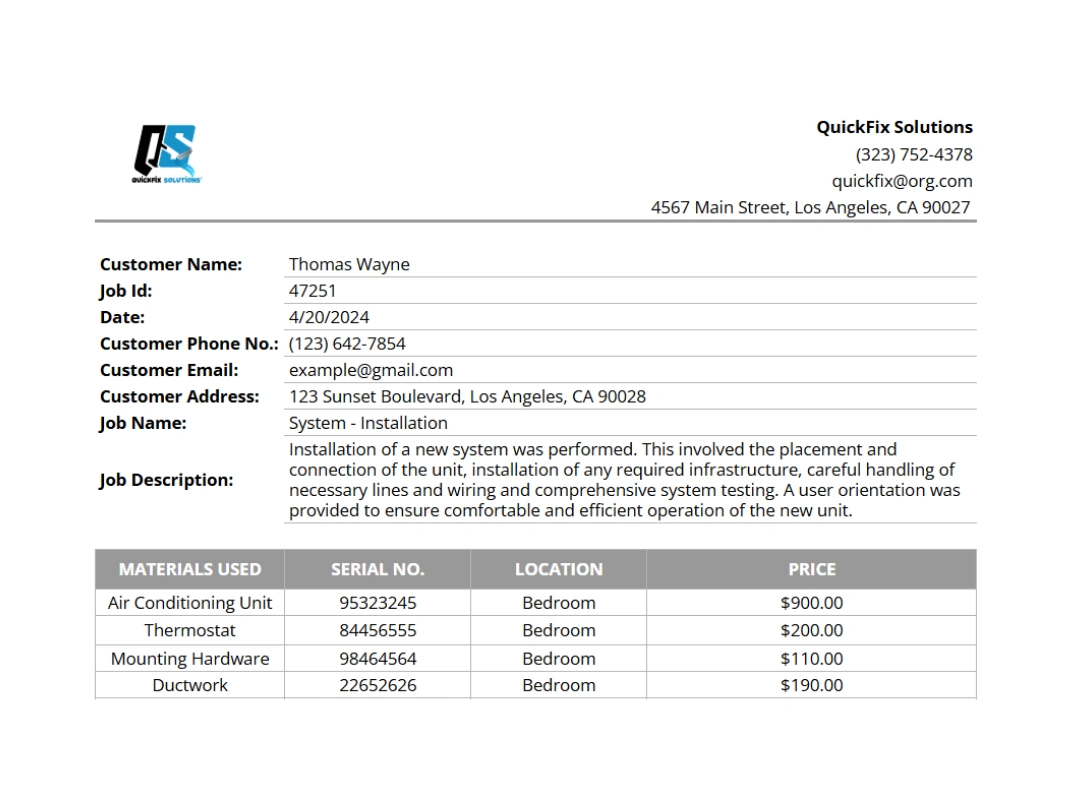
Every field service business runs on documentation, even if nobody calls it that. The work order tells the tech where to go. The estimate tells the customer what it’ll cost. The invoice gets you paid. But sitting right in the middle is the document most companies do worst: the field service report.
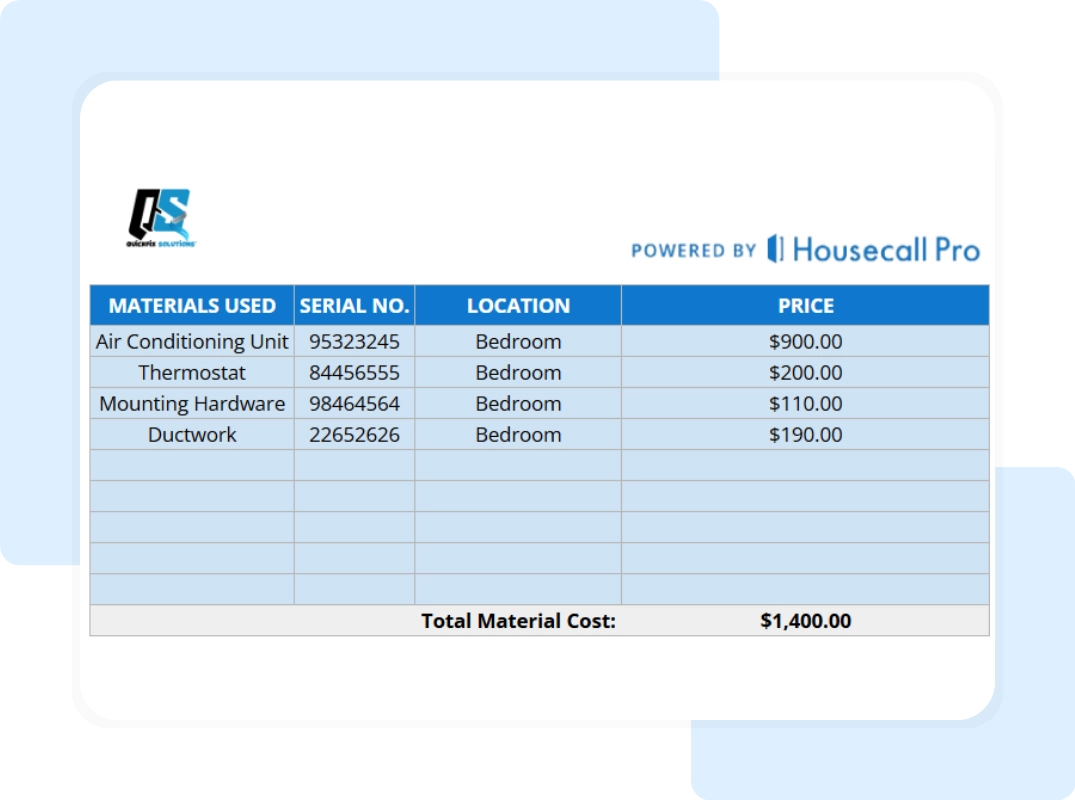
A service report is what your tech leaves behind after the job is done. It’s the record of what was actually performed, what materials went in, how long it took, what it cost, what’s under warranty, and what the customer agreed to pay. Done well, it’s the difference between a clean invoice and a callback two weeks later asking, “Wait, what did we charge for?”
Done badly — or not at all — it’s how disputes happen. How warranty claims fall apart. How parts go missing from the truck inventory. How techs spend their evenings rewriting illegible carbon-copy forms instead of being home with their families.
A standardized field service report template solves all of that. It gives every tech the same form, the same fields, and the same pricing structure — so every job that closes leaves a clean record. This guide walks through how to use our free template to document jobs faster, bill more accurately, and stop losing money to bad paperwork.
What Belongs in a Complete Field Service Report
A field service report is more than a glorified receipt. It’s a legal document, a billing reference, and a customer-facing piece all in one. To do all three well, it needs to cover five things.
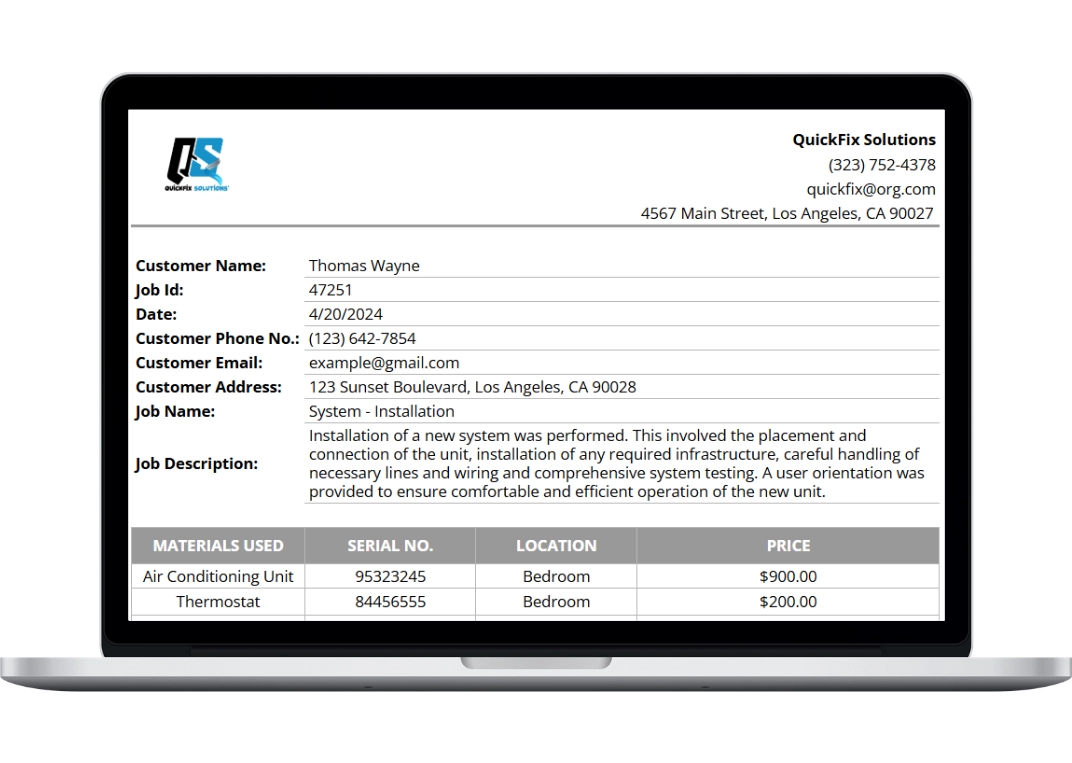
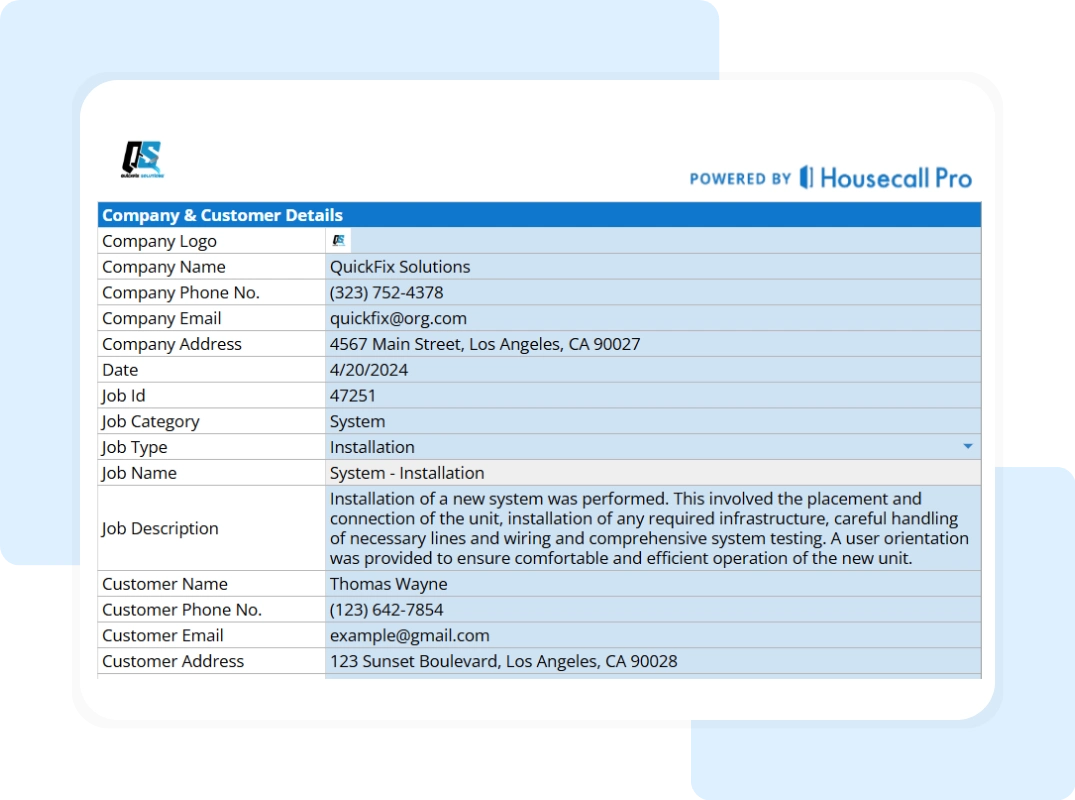
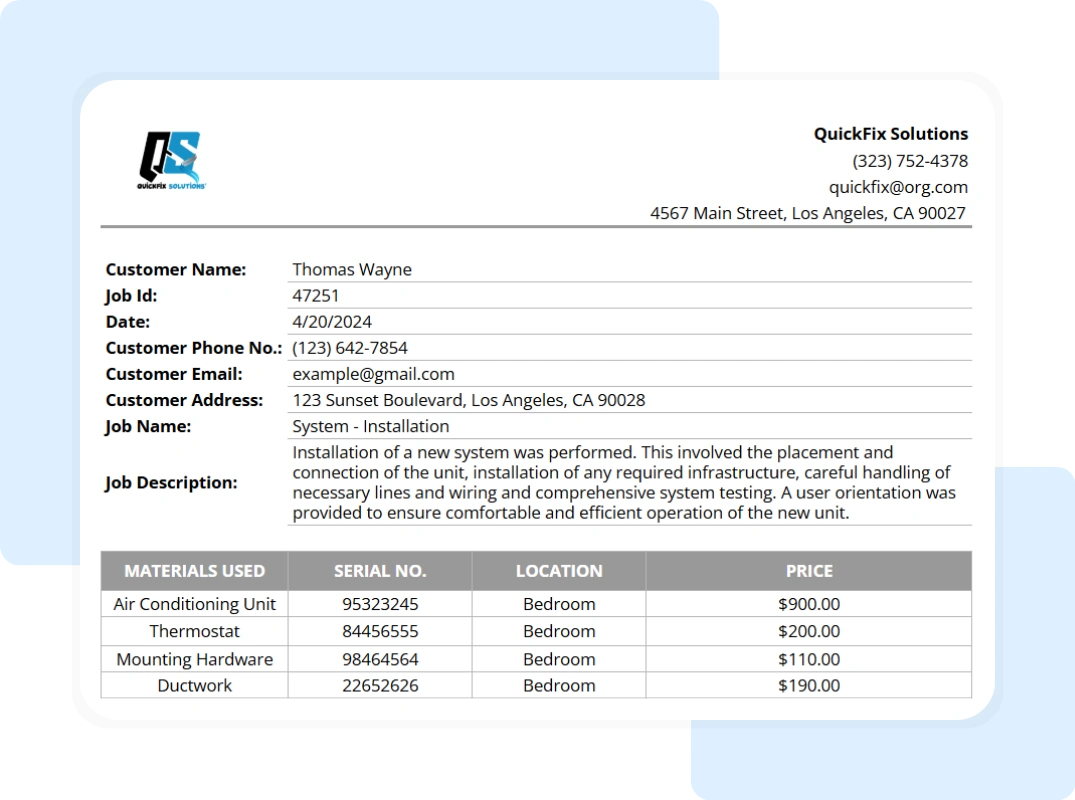
1. Company and Customer Information. Both sides of the contract. Your business name, logo, address, phone, and email at the top of every report. The customer’s name, address, phone, and email so the document is tied to a real account and a real service location.
2. Job Identification and Description. Job ID. Job category and type. Date of service. A plain-language description of what was actually done — not “fixed it” but “Installed new condenser unit, connected refrigerant lines, pressure-tested system, and provided customer with warranty documentation.” Specificity protects you when memory gets fuzzy.