Want to win more jobs with less effort?
Grow your business and send quick quotes with our home service software.

Want to see your potential revenue?
See what businesses like yours earn with Housecall Pro in 1 - 2 minutes.
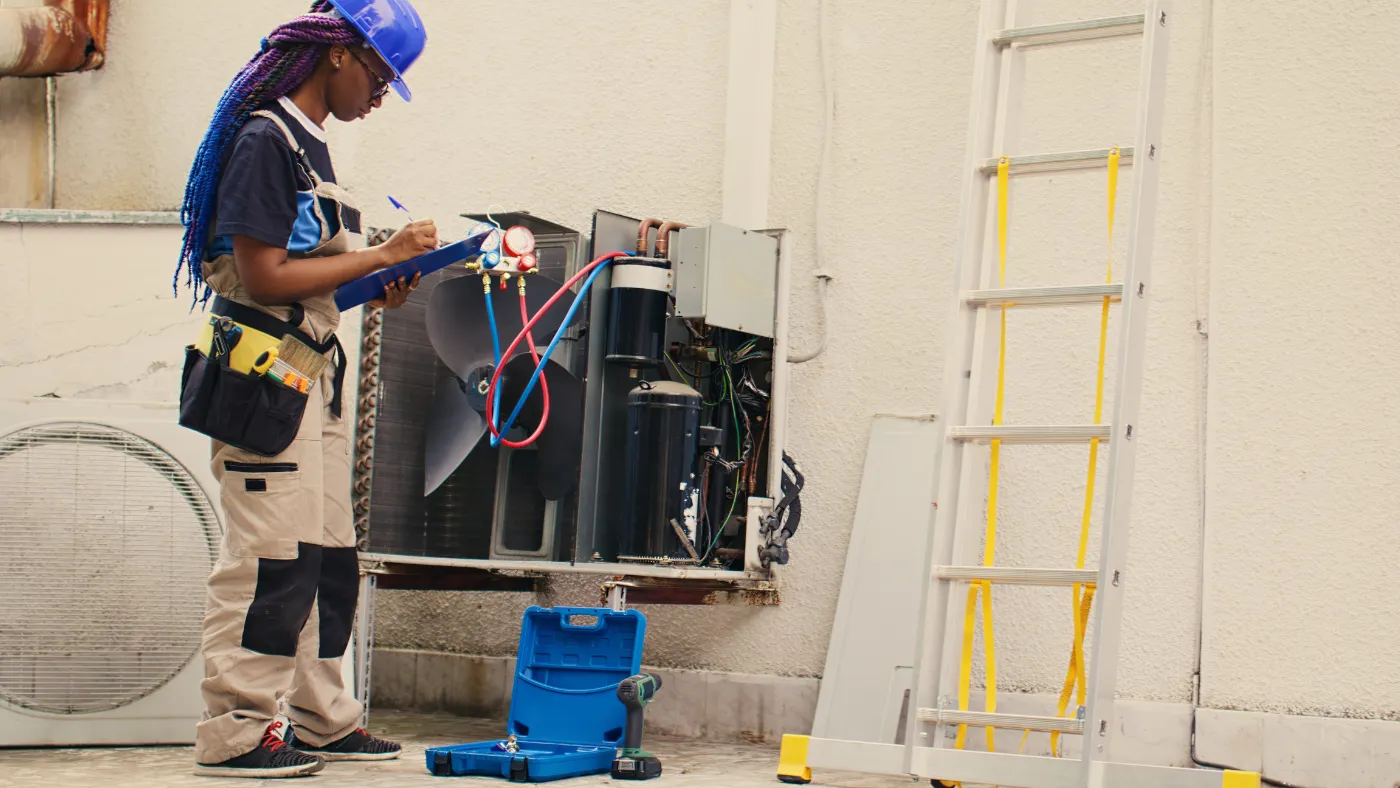
Most HVAC businesses need licenses, permits, or both to legally operate. State rules set the baseline, but cities and counties often add their own approvals. That’s where many new owners get tripped up.
You might think you’re ready to start booking jobs, then find out you can’t pull permits, advertise locally, or even operate from your home address without filing another form.
In this guide, you’ll learn which HVAC business licenses and permits you may need, how requirements differ by state and city, what the process costs, how long approvals take, and what changes when you move from residential to commercial work. The goal is simple: help you stay compliant and avoid delays before you book your first job.
Key takeaways
Here are the most important things to keep in mind about HVAC licensing and permits:
Licenses and permits aren’t the same: Licenses authorize your general HVAC work, while permits approve specific jobs or locations.
Requirements vary by location: Always check both state and local rules; cities and counties often require their own approvals.
Job size affects licensing: Some states require higher-level licenses once projects exceed certain dollar thresholds.
Licenses don’t automatically transfer: If you expand into a new city or state, verify local requirements before taking work.
Table of contents
- What licenses do you need to start an HVAC business?
- HVAC license and permit requirements by location
- Residential vs. commercial HVAC licensing and permit requirements
- Insurance, bonding, and certifications
- How to get an HVAC business license step by step
- How much does an HVAC business license cost?
- How long does it take to get licensed and permitted?
- Penalties for operating without a license or permit
- How Housecall Pro’s HVAC business software can help
What licenses do you need to start an HVAC business?
To operate legally, most HVAC companies need both a general business license and a trade-specific contractor license. The exact mix depends on your location and the services you plan to offer. Even solo pros typically need these credentials to pull mechanical permits or advertise their services.
At a minimum, most HVAC businesses need:
- General business license: Issued at the city or county level, this allows your business to operate legally in your local area. Almost every HVAC business needs one—even in states that don’t require a specific trade license.
- HVAC contractor license: A state-issued credential tied to the HVAC trade. You’ll usually need to verify work experience or apprenticeship hours, pass a technical exam, and show proof of insurance.
- Local operating permits or contractor registration: Some cities and counties require additional approvals before you can advertise, dispatch techs, pull mechanical permits, or work from a home office—even if you already hold a state license.
It’s important to remember that these licenses belong to the business or a qualifying individual. They don’t automatically carry over from a previous employer. Even if you’ve spent years in the field, you’ll need your own credentials once you start your own HVAC company.
Additional registrations you may need to operate and hire
Beyond trade licensing, you may need several administrative registrations before you can invoice customers, collect taxes, or hire employees.
Depending on your business model and state laws, this can include:
- DBA (Doing Business As) registration: Required if you operate under a trade name different from your legal business name.
- Sales tax permit: Necessary in states that charge tax on HVAC labor, materials, or equipment. You must register before collecting tax from customers.
- Employer Identification Number (EIN): Required if you hire employees or operate as an LLC or corporation.
- State employer registration: Needed to handle payroll taxes and workers’ compensation once you hire techs.
A single license rarely covers every part of running a trade business. Plan for both trade licensing and business registration so you’re fully compliant before you send your first invoice or your first employee into the field.
HVAC license and permit requirements by location
HVAC licensing rules often exist at multiple levels of government. In most cases, you’ll need approval from both the state and your local city or county before taking jobs.
Before you invest in marketing, trucks, or uniforms, check your state’s contractor licensing board or Department of Revenue website to confirm the current requirements.
State requirements
Many states regulate HVAC work through a contractor licensing board or labor department. State-level licenses typically apply once you begin performing HVAC work independently, bidding on jobs over a certain dollar amount, or pulling permits.
For example:
- California requires HVAC contractors to hold a state contractor license for most paid HVAC work exceeding $500 in total labor and material costs.
- Colorado does not require a statewide HVAC license, though it regulates plumbing and electrical licensing at the state level.
In states without a dedicated HVAC license, you may still need business registration, bonding, or permit approvals before beginning work. Because definitions and dollar thresholds vary, always verify requirements directly through your state’s licensing authority.
City and county business permits
Holding a state-level HVAC license doesn’t automatically clear you to work everywhere in that state. Local governments often have their own layer of requirements before you can legally dispatch techs.
These may include:
- City or county business licenses
- Local contractor registration
- Approval to pull mechanical permits
For example, in Chicago, IL, you need a City of Chicago general contractor license to pull permits and perform permitted work within city limits. If you work as an HVAC subcontractor under a licensed general contractor, you typically don’t need that separate city license.
If you work across multiple cities, you may need separate licenses or registrations for each jurisdiction.
Home-based HVAC businesses
It’s common for solo pros to run operations from a home office. Even if customers never visit your house, local zoning laws may still apply. Local governments use these rules to ensure business activities don’t disrupt residential neighborhoods.
Common home-based business requirements at the city or county level include:
- Home occupation permits
- Local zoning approvals
- Restrictions on vehicle parking, signage, or equipment storage
- Homeowners association (HOA) approvals, if applicable
Skipping these steps can delay approvals or trigger fines, so confirm zoning rules before listing your home as your business address.
Reciprocity and expanding into new states
Many HVAC pros assume their license automatically transfers across state lines, but that’s not always the case.
“Some states, especially in the South, have reciprocity deals that can save you from retaking exams, but plenty don’t,” says Sergey Nikolin, president and co-founder of Product Air Heating & Cooling, LLC. “Knowing this ahead of time can save you headaches and open doors when you’re ready to grow.”
If you plan to grow beyond your current service area, confirm whether reciprocity applies—and what additional paperwork you may need to stay compliant. Eligibility rules, experience requirements, and fees vary.
Residential vs. commercial HVAC licensing and permit requirements
While residential and commercial HVAC share core technical skills, commercial work typically involves more oversight, higher license tiers, and additional documentation.
Here’s how they usually differ:
- Licensing triggers: Residential jobs often have lower dollar thresholds. Commercial work may require advanced contractor classifications.
- Permits and inspections: Residential permits are usually issued per job. Commercial projects often require plan reviews and multiple inspections.
- Bonding: Less common for small residential jobs, but frequently required for commercial contracts.
- Documentation: Homeowners may ask for proof of license and insurance. Commercial clients typically require license numbers, certificates of insurance (COIs), and bonds before you can bid on jobs.
For many HVAC businesses, starting with residential work is simpler and faster. If you plan to move into commercial HVAC, confirm all licensing tiers and bonding requirements before submitting bids. Missing paperwork can cost you the contract.
Insurance, bonding, and certifications
Insurance and bonding aren’t licenses, but you often need them before your license application gets approved.
Common requirements include:
- General liability insurance: Covers property damage and injuries.
- Workers’ compensation insurance: Generally required as soon as you hire your first employee, even if they’re part-time.
- Bonding: Protects the customer or business if work isn’t completed to code or contract. These are more common in commercial work and some local licensing.
- Optional certifications: HVAC certification isn’t legally required, but it builds your reputation and shows you have advanced knowledge.
How to get an HVAC business license step by step
Getting licensed can feel overwhelming, but it’s more manageable when you follow a clear process.
- Choose your business structure. Start by deciding how you want to legally structure your business. Most HVAC pros choose between a sole proprietorship or limited liability company (LLC). This choice affects your taxes, personal liability, and how you’ll register for your trade license.
- Register your business. Register with the state and file a DBA if you aren’t operating under your legal name. This establishes your legal business identity.
- Secure insurance and bonding. Have proof of coverage ready before applying for licenses.
- Apply for licenses and permits. Submit your experience verification, exam results (if required), proof of insurance, and fees.
Starting this process early helps you avoid idle weeks where you’re ready to work but still waiting on approval.
Get In Touch: 858-842-5746
Let us earn your trust
On average, Pros increase monthly revenue generated through Housecall Pro by more than 35% after their first year.
See plan options and feature breakdown on our pricing page.
How much does an HVAC business license cost?
HVAC license costs vary widely by state, city, and license classification. Expect a combination of one-time fees and recurring renewal costs.
Upfront costs may include:
- State HVAC contractor license application and exam fees
- Local business license registration fees
- Initial permit registrations
- Bonding setup fees, if required
Total startup licensing costs often range from several hundred to several thousand dollars.
Ongoing costs may include:
- Annual or biennial license renewals
- Insurance premiums
- Permit fees per job
Fees change, so verify the latest pricing directly through official state and local websites. The Small Business Administration (SBA) can help you find the right agencies and links for your location.
How long does it take to get licensed and permitted?
Timelines vary based on your state and whether exams are required. Some approvals happen almost instantly, while state-level HVAC licenses require more time.
In general:
- Local business licenses can be approved the same day or within a few days.
- State HVAC licenses often take several weeks, especially if they require exams, background checks, or experience verification.
- Permits for individual jobs are usually issued within a few days, but can take longer for commercial projects or more detailed plan reviews.
Penalties for operating without a license or permit
Running an HVAC business without the required licenses or permits can lead to serious legal and financial setbacks, even if you do the work perfectly. Authorities often find out about unlicensed work during inspections or when a neighbor or competitor files a complaint. It’s always safer to wait for your approvals than to risk your company’s future.
Common consequences for unlicensed work include:
- Heavy fines or civil penalties.
- Stop-work orders that halt jobs mid-project.
- Inability to pull future permits or schedule inspections.
- Lost contracts, especially for commercial work.
How Housecall Pro’s HVAC business software can help
Once you have your HVAC licenses and permits in place, your next challenge is keeping that documentation organized.
When a homeowner, inspector, or commercial property manager asks for documentation, you need to find it fast. You also need clean records tied to each job.
With Housecall Pro’s HVAC software, you can:
- Schedule jobs and dispatch techs without juggling spreadsheets.
- Create professional estimates and invoices tied to each job.
- Store customer records, job notes, and documents in one system.
- Track job history and performance with built-in reporting.
If you’re serious about building a compliant, professional HVAC business, your back office matters just as much as your fieldwork. Try Housecall Pro free for 14 days and see how it helps you stay organized, get paid faster, and grow with confidence.
Frequently asked questions
-
Is an HVAC company considered a contractor?
-
Yes, HVAC companies are considered contractors in most statesbecause they perform regulated mechanical work and are responsible for pulling permits.
-
What kind of permit is needed for HVAC?
-
Most HVAC installations and major repairs require a mechanical permit issued by the city or county where the work takes place.
-
What states don’t require an HVAC license?
-
States like Colorado, Illinois, Kansas, and Indiana don’t issue statewide HVAC licenses. However, they may still require contractor registration, local licenses, or permits. It’s important to check your state and local rules before starting work.
-
Can you do HVAC without a degree?
-
Yes, you can typically do HVAC work without a degree. Most states don’t require a college degree, but they do require hands-on experience, apprenticeships, or passing an exam to become licensed.