Want to see your potential revenue?
See what businesses like yours earn with Housecall Pro in 1 - 2 minutes.

When a pipe bursts or a drain clogs, customers don’t want to guess if you can help—they need to know right away. That’s why having a clear, organized plumbing services list is important: It shows homeowners exactly what you do and gives them the confidence to book right away.
This guide walks you through how to build an easy‑to‑navigate plumbing services list and display it on your website so customers can find what they need.
Key takeaways
Here’s how to structure your plumbing services to win more work:
Organize by need: Group services into clear categories like “Repairs,” “Installation,” and “Maintenance” so customers can find what they need fast.
Lead with high-demand jobs: Put emergency repairs and common fixes at the top of your list so customers in a rush don’t leave your site.
Balance core services and add‑ons: Core services solve immediate problems; add-ons increase job value without overwhelming new visitors.
Price strategically: Use flat-rate or hourly pricing where it makes sense and standardize prices to keep quotes consistent.
Track performance: Review which services drive the most profit and adjust your offerings accordingly.
Table of contents
Core categories to include in your plumbing services list
Make it easy for customers to skim your services and find what they need. First, group your similar services into categories, then list each service along with a brief description of what’s included.
Core repair services
Most customers call a plumber when something breaks and they need a repair now. List these core services first so customers in a rush can see you have the solution.
The example below fits a residential plumber who also handles light commercial work for offices and small businesses.
- Drain and sewer repairs
- Clog removal (snaking/rooter)
- Drain cleaning (indoor and outdoor)
- Sewer line repair and replacement
- Trenchless pipe repair using cured-in-place pipe (CIPP) lining or epoxy lining
- Hydro-jetting interior and exterior lines
- Water heater repair
- Tankless and traditional water heater repairs
- Gas line troubleshooting
- Routine maintenance and flushing for conventional or tankless units
- Interior and exterior leak repairs
- Faucet repair and replacement
- Pipe repairs (copper, PEX, PVC), including spot repairs and lining
- Toilet and bidet repair
- Shower and tub repair
- Interior leak detection
- Interior fixtures
- Bathroom: Sinks, faucets, toilets, bidets, showers, and tubs
- Kitchen: Sinks, faucets, soap and purified water dispensers, water filtration systems, garbage disposals, and dishwashers
- Water quality
- Repair and troubleshoot water filtration systems (salt-based, salt-free, and dual-tank)
- Filter replacement and salt refills
- Cleaning and removal of mineral build-up
- Water softener system repairs
- Valve and seal replacement
- Gas lines
- Repair gas lines to water heaters, stoves, ovens, and fireplaces
- Gas leak detection and repair
- Damaged pipe replacement
- Pumps
- Sump pump repair and clog removal
- Sewage ejector pump repair
- Booster pump repair
- Water replacement pump repair
- Shallow well pump repair
Core installation services
Installation jobs often come from renovations or key system replacements, but this work can also lead to long‑term relationships. When you showcase your expertise and build trust during an install, customers are more likely to call you back for future repairs and upgrades.
- Water heater installation (tank and tankless)
- Toilet and bidet installation
- Sink and faucet installation (kitchen and bathroom)
- Shower and bathtub installation
- Garbage disposal installation
- Dishwasher and appliance water‑line hookups
- Water filtration and softener system installation
- Pipe and plumbing line installation or repiping
- Sump pump installation
- Outdoor plumbing installation (hose bibs, irrigation lines, and similar work)
Preventive or routine maintenance services
Preventive maintenance stops small leaks from becoming expensive disasters. Offering a comprehensive preventative maintenance service package gives customers peace of mind—and gives you steadier, more predictable revenue.
We cover this in more detail below, but here are some routine checks you might offer in a maintenance plan:
- Whole-home plumbing inspections
- Drain and sewer line inspections (including camera inspections)
- Water heater maintenance and flushing
- Leak detection and prevention checks
- Pipe corrosion and pressure testing
- Fixture inspection and maintenance (faucets, toilets, shutoff valves)
- Sump pump inspection and testing
- Backflow prevention testing and certification (where required)
- Preventive drain cleaning
Pro tip: Offer a basic plumbing inspection as a free add‑on to certain jobs or as a short‑term promotion to introduce customers to your maintenance plans.
Seasonal or situational services
Seasonal and one‑off services can fill gaps between emergencies and big projects. What you offer here will depend on your climate and local demand.
- Winter pipe insulation and freeze prevention
- Spring plumbing inspections and leak checks
- Summer water usage and pressure evaluations
- Fall plumbing system winterization
- Emergency plumbing repairs (if you offer 24/7 service)
- Vacation or vacant property plumbing checks
- Flood response and water damage mitigation support
- Storm-related drain and sewer inspections
- New homeowner plumbing assessments
- Plumbing system preparation for renovations or remodels
Specialty or add-on services
Specialty services help you stand out and bring in more revenue per job. These services typically include upgrades, comfort features, or niche work that not every local plumber does.
- Tankless water heater installation and upgrades
- Whole-home water filtration and softener system installation
- Smart leak detection and automatic shutoff systems
- High-efficiency fixture upgrades
- Gas line installation and inspection
- Sewer camera inspections
- Hydro-jetting services
- Bathroom and kitchen plumbing upgrades
- Recirculating hot water system installation
- Light commercial or commercial-grade plumbing enhancements
→ Just getting started? Check out our guide to launching a plumbing business for step-by-step guidance and expert tips.
How to build your plumbing service list

A great services list doesn’t just describe what you do, it quietly sells for you. The goal is to help customers recognize their problem on the page and feel comfortable booking you to solve it. Follow these steps to turn your service list into a booking tool.
Step #1: Start with your expertise and service area
First, make your service area crystal clear. Include a simple map or list of cities and neighborhoods to help people self‑select, so you’re not quoting jobs for customers in areas you can’t realistically serve.
Then, highlight what makes you the right choice:
- Licenses and certifications (like Master Plumber status or backflow certification)
- Training and years of experience
- Memberships in trade associations or local business groups
This kind of detail helps build trust before anyone even picks up the phone.
Step #2: Identify what your clients ask for most often
Put your best-selling services at the top of the list. Review your job history to see which services you complete most often. Scan calls, online requests, and quotes for repeat patterns in what people ask for.
If your most common or highest‑value services are buried halfway down the page, busy customers may never see them. If you offer 24/7 emergency service, place it near the very top and make it easy to tap and call.
Pro tip: Use Housecall Pro’s reporting tools to sort your completed jobs by category. This shows you exactly what your local market is asking for.
Step #3: Balance “core” vs. “optional” add-on services
Core services are the everyday jobs that keep your business running. These should be front and center. Make it clear that you handle both installation and ongoing maintenance for the systems and fixtures you install.
Optional add‑on services work best as simple, clear upgrades that:
- Solve a real problem (comfort, efficiency, or long‑term savings)
- Pair naturally with a core service
- Take only a sentence or two to explain
Separating add-ons from your regular services keeps customers from being overwhelmed during their initial search while still giving you or your techs the option to mention them on-site.
For example, you might offer a bidet seat install as an add-on to a standard toilet replacement for improved comfort and water efficiency. The customer gets a working toilet either way, but the upgrade gives them a clear benefit without complicating the original job.
Pro tip: Adding a small before‑and‑after gallery for upgrades like bidets, filtered‑water taps, or kitchen sink accessories can help spark ideas and interest in your add-ons.
Step #4: Use seasonal trends to guide offerings
Seasonal demand varies by market, but it usually follows the weather. Anticipating seasonal shifts allows you to market the right service at the right time. For example:
- Winter: In colder regions, focus on pipe insulation, freeze prevention, and water heater flushes.
- Summer: Promote outdoor spigot repairs, sewer line inspections, irrigation hookups, and higher‑usage concerns like leak repairs or low-pressure troubleshooting.
Align your website, promotions, and maintenance plans with what customers are actually calling about during these peak periods.
Step #5: Document tasks clearly to keep your team consistent
A clear playbook keeps your team on the same page and your jobs profitable. When everyone handles a service the same way, you know how long it should take and what it will earn. Consistency also teaches your techs to explain exactly what’s included—and what costs extra.
For each service:
- Spell out the scope of work with step‑by‑step tasks and typical completion times (for example, a toilet install might take 90–120 minutes; a basic faucet repair around an hour).
- List the tools and materials needed so techs can finish jobs in one trip as often as possible.
- Add quality checkpoints to make sure every customer receives the same level of service.
Pro tip: Use Housecall Pro’s plumbing material list template to standardize your material needs by service and keep inventory synced with your offerings.
Get In Touch: 858-842-5746
Let us earn your trust
On average, Pros increase monthly revenue generated through Housecall Pro by more than 35% after their first year.
See plan options and feature breakdown on our pricing page.
How to price and package your plumbing business services
To price your services well, you need a clear picture of what each job actually costs you—labor, materials, and a fair share of overhead, such as fuel, vehicles, software, and insurance. Use a job costing calculator to find your total cost per service, then add a profit margin. Compare your prices to local competitors; you may need to adjust to remain competitive.
Check out our comprehensive guide to pricing plumbing jobs for more information.
Hourly vs. flat-rate pricing
Plumbers typically lean on two pricing models:
- Flat-rate: The customer pays a set price for the job, including labor and materials. Customers like this model because it lets them budget for the service and avoid surprise fees. Flat-rate pricing works best for maintenance packages or small, standard upsells or add-ons.
- Hourly: You get paid for each hour spent on the job. This model is helpful when it’s hard to estimate how long a job will take or how much material you’ll use. For example, complex leaks, repiping, or major kitchen and bath remodels.
Many plumbers use a hybrid approach—flat rate pricing for common, tightly scoped tasks and hourly for bigger or more complicated projects.
Learn more: Flat Rate vs. Hourly Pricing: Which is Better for Your Business?
Creating service tiers (basic, standard, premium)
Service tiers let you increase your average job value while giving your customers more choices. Instead of a single “yes or no” option, customers can pick the level of service that fits their budget and expectations.
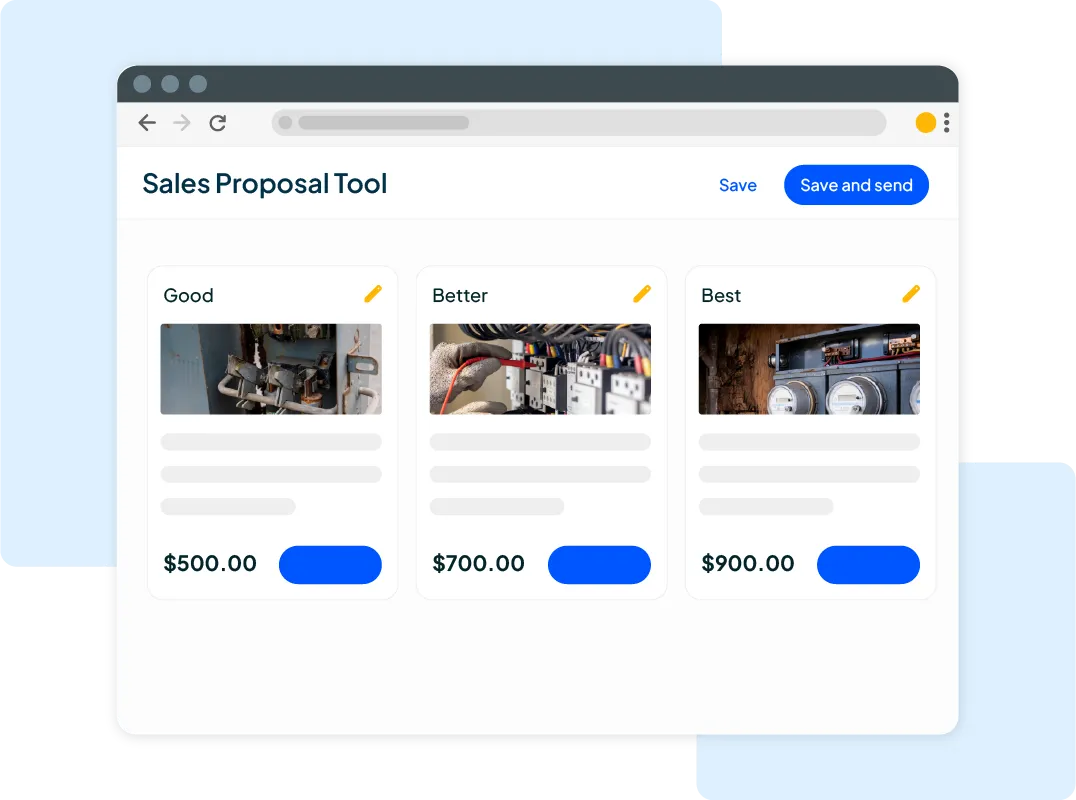
A simple structure might look like “Good, Better, Best” tiers:
- Basic: Standard repair. Covers the care of the main problem at a budget‑friendly level.
- Standard: Basic repair plus a few upgrades, such as better components, additional checks, or a warranty.
- Premium: Repair with top‑tier materials, extended warranties, priority scheduling, or an annual system inspection.
For tiers to work, spell out exactly what’s included in each and make sure every tier feels like a solid deal. The top tier should clearly solve a real problem worth spending money on, not just bundle “nice‑to‑have” add‑ons.
Setting up recurring service contracts or plans
Recurring service contracts or maintenance plans create predictable revenue for your business and strengthen long-term customer relationships. A simple maintenance plan might bundle high-value preventive services, like:
- Annual whole-home inspections
- Water heater maintenance
- Drain checks and preventive cleaning
- Priority emergency response
Group these into clear, easy-to-understand plans. Highlight the value of each service and the savings compared with scheduling each visit separately. Service plans also work well with tiered pricing—as long as every tier offers clear value.
Ready to create your own maintenance packages? Use Housecall Pro’s free plumbing service contract and plumbing maintenance schedule templates to help shape your new plan, then manage them with the Service Plans feature.
Managing and scaling your plumbing services
Scaling your business isn’t just about doing more jobs. It’s doing more of the right jobs with less chaos and fewer callbacks. Using a structured approach helps you grow without losing control or sacrificing service quality.
Follow these tips:
- Tighten operations: Build best practices for each service, including checklists and standard tools. Watch metrics like completion times, repeat visits, customer reviews, and profit margins to catch problems early.
- Market profitable recurring jobs: Build a base of steady monthly revenue by promoting maintenance plans and service contracts with offices, small retail, or property managers.
- Invest in team training: Train techs to your standards and follow up regularly so small issues don’t snowball into bigger ones. Cross‑train people on multiple services to make scheduling easier, and pair new hires with experienced plumbers so every crew member works the same way in the field.
- Adjust your services based on performance: Review how each service performs. Drop or rework jobs with weak margins, high labor costs, or frequent customer complaints. Keep a running list of service requests you currently say “no” to; if demand grows, that list can guide your next expansion move.
How Housecall Pro’s plumbing software can help
Housecall Pro’s plumbing business software is built to help you organize operations and scale. It’s specifically designed for Pros, so it fits how trades actually work in the field.
Our software centralizes all the essential elements of running a successful plumbing business in one platform. So whether you’re a solo owner-operator or expanding into multiple service locations, you can spend more time with your team and customers and less time juggling paper notes and spreadsheets.
Here are some of Housecall Pro’s key features:
- 24/7 online booking: Let customers book specific services directly on your website, with bookings automatically appearing on your service calendar.
- Professional estimates: Build professional quotes in the field and convert them to jobs with one tap.
- Service plans: Automate your recurring revenue with managed maintenance contracts.
- Communication: Keep customers informed with automated appointment reminders, confirmations, and “on my way” messages
- Custom dashboards and reports: Track revenue, job performance, and profitability.
Ready to simplify your operations and grow your plumbing business? Start a free 14-day trial of Housecall Pro today to explore its features risk‑free.