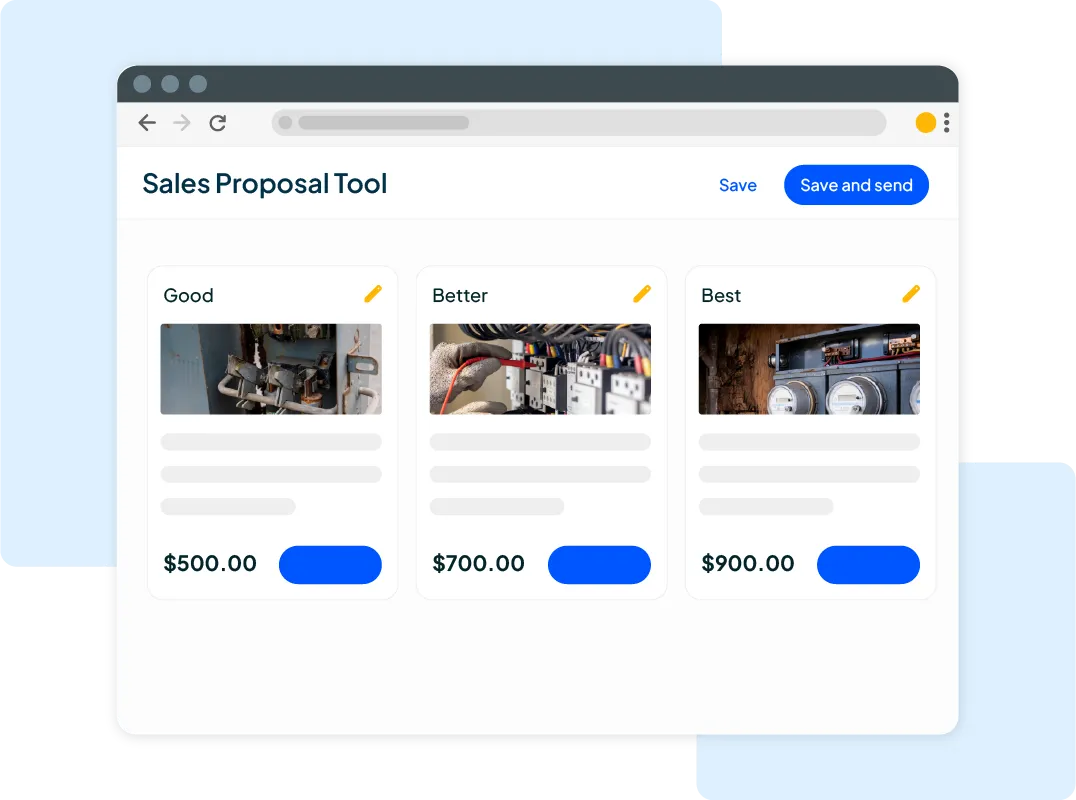
Want to win more jobs with less effort?
Grow your business and send quick quotes with our home service software.

Want to see your potential revenue?
See what businesses like yours earn with Housecall Pro in 1 - 2 minutes.
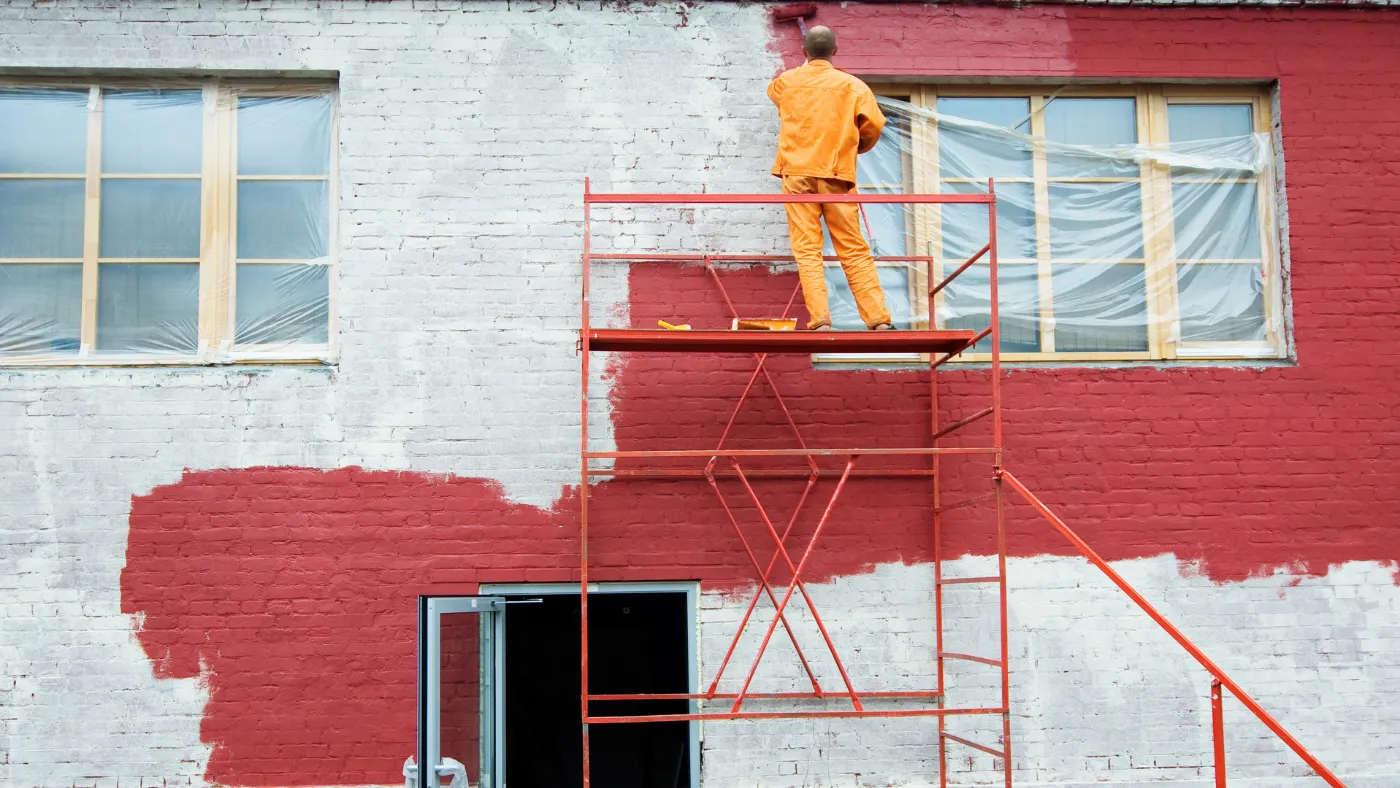
Painting pricing needs to do two things: cover your real labor and material costs and protect your profits if surprises show up after work begins. A room might look simple during the walkthrough—until sanding reveals peeling trim, soft drywall, or hidden water damage. When that happens, underpricing can hurt fast.
That’s why profitable painting contractors don’t guess. They track production rates, calculate overhead, and factor in prep time, warranty exposure, and real crew efficiency. When you base your painting estimates on data—not gut feel—your margins stay consistent from job to job.
This guide breaks down 2026 painting prices and shows you how to build estimates that protect your profit without overcomplicating your quoting process.
2026 painting pricing overview
In 2026, painting jobs are typically priced between $2–$6 per square foot for interiors and $1.50–$4 per square foot for exteriors. Most single rooms range from $400–$1,200, while full interior repaints of 1,500–2,000 square foot homes commonly fall between $3,000 and $8,000.
But square footage alone doesn’t determine price. Labor hours, prep requirements, ceiling height, surface condition, and crew efficiency have a bigger impact on profitability than the paint itself.
Profitable painting contractors calculate pricing in three steps:
- Determine the true labor and overhead cost per job
- Add material expenses
- Apply a target profit margin (commonly 20%–40%)
The core pricing formula is:
Labor + Materials + Overhead = Break-even
Break-even ÷ (1 − target margin) = Final price
Most businesses standardize around one primary pricing model—per-room, per-square-foot, hourly, or tiered—and apply structured add-ons for repairs, high ceilings, detailed trim, cabinet refinishing, and other complexity factors. Using a consistent pricing model is what keeps two similar homes from producing two very different profits.
Key takeaways
Before diving into models and formulas, here’s what matters most when pricing painting jobs in 2026:
Price from labor hours, not square footage: Production rate determines profitability.
Separate prep from base scope: Repairs and heavy sanding should never be absorbed into standard rates.
Standardize one pricing model: Consistency improves margin control as volume grows.
Have a minimum charge for small jobs: Your time driving, setting up, and cleaning up still costs money.
Review production annually: Adjust pricing when wages, materials, or efficiency change.
Inconsistent pricing usually comes from unclear production rates or prep scope. Fix those first.
Table of contents
- Average painting prices in 2026
- Residential vs. commercial painting pricing
- Painting service price list for common jobs
- Common painting add-ons and upgrades
- Painting pricing models
- Factors that affect painting pricing
- How to set painting prices
- Example painting price calculations
- How to explain painting pricing to customers
- How Housecall Pro helps you price painting jobs
Average painting prices in 2026
In 2026, interior painting typically ranges from $2–$6 per square foot, while exterior painting ranges from $1.50–$4 per square foot.*
These are common U.S. price ranges for residential painting. Use them as a reference point, not targets. Your final pricing should reflect your actual costs—how long jobs take your crew, what you pay in wages and burden, your overhead, and the level of finish you deliver.
*Price ranges in this article are based on aggregated 2026 industry data from Angi, HomeAdvisor,and Thumbtack.
Average price for interior painting
Interior painting typically falls within that $2–$6 per square foot range, which amounts to $400–$1,200 per room or $3,000–$8,000 for an average 1,500–2,000 square foot home. Projects on the lower end usually involve minimal prep, standard ceiling heights, and straightforward color schemes. Pricing trends higher when jobs include detailed trim work, vaulted ceilings, multiple color changes, or significant patching and surface repair.
Even “simple” interior jobs can expand once prep starts, so account for labor, materials, and potential change requests to protect your margins.
Average price for exterior painting
In 2026, exterior painting typically ranges from $1.50–$4 per square foot, or roughly $2,500–$10,000+ for a full-home repaint. The lower end usually applies to single-story homes with minimal scraping and straightforward surfaces that require little prep work. Homes with multiple stories, extensive prep, trim detail, or damaged siding typically fall toward the higher end of the range.
Pricing varies based on surface condition, home height, siding material, and regional labor costs. Peeling paint, wood rot, stucco repairs, and multistory access can dramatically increase labor hours, which means your pricing must reflect more than just square footage.
Residential vs. commercial painting pricing
Residential and commercial projects operate differently, and your pricing should reflect that. The expectations are different, the way the work is scheduled is different, and the way profit is made is different. If you price both the same way, one of them will eventually cost you.
Residential painting prices
Residential painting is usually priced by room, by total square footage, or as a flat quote for the entire project. Most homeowners care about the final result, not how you calculate the hours behind it. To avoid confusion, clearly outline what’s included: number of coats, level of prep, whether repairs are covered, and if trim, ceilings, or doors are part of the base price. Clear scope upfront prevents pricing disputes later.
In 2026, typical residential painting pricing falls within these ranges:
| Job Type | Typical Range |
| Bedroom (10×12) | $400–$800 |
| Living room | $600–$1,500 |
| Kitchen | $500–$1,200 |
| Whole home (1,500–2,000 sq ft) | $3,000–$8,000 |
| Interior trim (per linear foot) | $1–$3 |
Adjustments are commonly made for ceiling height, surface damage, trim complexity, furniture moving, and the number of colors.
Commercial painting prices
Commercial painting is usually priced per square foot or submitted as a formal competitive bid. Unlike residential work, commercial projects often involve clearer production patterns and larger open areas, which makes square-foot pricing more practical. That said, the scope can expand quickly once scheduling requirements, safety standards, and coordination with other trades come into play.
In 2026, commercial painting prices typically fall within these ranges:
| Pricing Type | Typical Range |
| Per square foot | $1.50–$5+ |
| Hourly (specialty repair) | $60–$100 |
| Small office repaint | $5,000–$15,000 |
| Large facility | Bid-based |
Commercial jobs introduce additional variables:
- After-hours scheduling
- Lift rentals
- Compliance standards
- Insurance and bonding
- Project staging
Margins are often tighter on commercial jobs, but you can make up for that with speed and volume. Pricing discipline also matters more because small estimating errors multiply across larger spaces.
Painting service price list for common jobs
Breaking your pricing into small, large, and emergency categories makes quoting faster and helps set clear expectations with customers. While every project is different, most painting work falls into predictable tiers based on scope and the labor required.
Small jobs
Small painting jobs take less time overall, but they still require setup, masking, prep, and cleanup. Travel time and prep don’t shrink just because the job is smaller, so minimum charges are important on these projects. These fees typically range from $250–$500, depending on your market and operating costs.
In 2026, common prices for small painting jobs include:
| Job | Price Range | Factors Affecting Cost |
| Single room repaint | $400–$1,200 | Size, ceiling height |
| Door repaint | $100–$300 | Surface prep, coats |
| Accent wall | $100–$300 | Texture, color change |
| Minor drywall repair | $50–$300 | Patch size, sanding |
Large jobs
Large painting projects involve more coordination, material logistics, crew management, and multiday scheduling. When jobs stretch over multiple days or weeks, you have more money tied up in labor and materials. That makes it even more important to keep a close eye on your margins.
In 2026, common prices for large painting jobs include:
| Job | Price Range | Factors Affecting Cost |
| Whole home interior | $3,000–$8,000 | Trim detail, repairs |
| Exterior repaint | $2,500–$10,000+ | Scraping, height |
| Commercial office | $5,000–$50,000+ | Access, timeline |
| Apartment complex | Bid-based | Volume, staging |
Emergency services
Emergency painting isn’t the same as a planned repaint. Calls such as storm damage touch-ups, fire or water remediation prep, and last-minute commercial fixes all involve urgency, disruption, and schedule reshuffling—and that speed has a cost.
For true emergency service calls, pricing is typically structured like this:
| Service Type | Price Range |
| Emergency service call | $150–$300 |
| After-hours work | 1.5–2x standard rate |
For emergency-related projects that expand into larger scopes, typical 2026 ranges include:
| Job | Price Range | Factors Affecting Cost |
| Whole home interior | $3,000–$8,000 | Trim detail, repairs |
| Exterior repaint | $2,500–$10,000+ | Scraping, height |
| Commercial office | $5,000–$50,000+ | Access, timeline |
| Apartment complex | Bid-based | Volume, staging |
Premium pricing reflects urgency, schedule disruption, and potential overtime pay. Emergency rates should always be preset and standardized—not improvised on the spot. When rates are set ahead of time, your team can quote confidently and consistently without guessing under pressure.
Common painting add-ons and upgrades
Add-ons are where a lot of painting profit actually lives. Your base rate should cover standard prep and two coats—but not every wall is standard. The key is to price add-ons based on real labor time, material cost, and drying cycles—not emotion or guesswork. If something adds time, it adds cost. Simple as that.
Common painting add-ons and their 2026 price ranges include:
| Add-On | Typical Range |
| Drywall repair | $50–$300 |
| Major patching | $200–$800 |
| Ceiling repaint | $1–$3 per sq ft |
| Trim repainting | $1–$3 per linear ft |
| Cabinet painting | $3,000–$10,000 |
| Wallpaper removal | $1–$3 per sq ft |
Clearly itemizing these services protects your margins and helps customers see exactly how the total price is built. When customers understand what changed in scope, they’re far less likely to question the final invoice.
Painting pricing models
Most painting businesses choose one primary pricing structure, then apply consistent adjustments based on job conditions. Using one base pricing model helps your team quote faster, makes pricing easier for customers to understand, and keeps your margins more consistent as you grow.
Flat-rate painting pricing
Flat-rate pricing means charging a fixed price regardless of how long the job takes. It’s one of the most common approaches for residential interiors because it simplifies the sales process.
Best for:
- Standard bedrooms and living spaces
- Clearly defined repaint projects
- Fast phone or in-home estimates
Why it works:
- Easy for homeowners to understand and approve
- Reduces back-and-forth during quoting
- Speeds up estimating for common jobs
Watchouts:
- Underestimating prep time can quickly erode margins
- Oversized rooms must be clearly defined or adjusted
- Additional repairs discovered mid-job should trigger add-ons
Most painters protect this model by defining standard room dimensions and clearly outlining what prep is included in the base rate (light patching and sanding, not full resurfacing).
Per-square-foot painting pricing
Per-square-foot pricing means charging a set rate based on total paintable area. This approach works well when projects scale up and room-by-room pricing becomes inefficient.
Best for:
- Full-home repaints
- Large open floor plans
- Commercial spaces
Why it works:
- Scales naturally with project size
- Makes pricing easier to standardize
- Reduces disputes about room count or layout
Watchouts:
- Paintable area must be clearly defined
- High ceilings, trim detail, and complex layouts require adjustments
- Extensive prep work cannot be absorbed into the base rate
Most contractors establish a base square-foot rate and then layer in structured adjustments for ceiling height, trim complexity, surface condition, and access constraints.
Hourly painting pricing
Hourly pricing involves billing for actual labor time plus materials. This model is typically reserved for situations where the scope is uncertain or repair-heavy.
Best for:
- Drywall repairs and patchwork
- Touch-ups and small service calls
- Projects with unpredictable surface damage
Why it works:
- Protects profit when scope is uncertain
- Allows work to begin without overcommitting to a fixed price
- Accounts for unexpected prep or repair time
Watchouts:
- Requires clear communication before work begins
- Customers need estimated time ranges upfront
- Labor rates should be documented in writing
Painters who use this model typically establish clear hourly rates in advance and provide detailed labor breakdowns to keep pricing transparent.
Tiered painting pricing
Tiered pricing structures present customers with multiple service levels at different price points. Instead of building custom quotes from scratch, you package services into clear options.
Best for:
- Interior repaint projects
- Whole-home packages
- Premium finishes
Why it works:
- Encourages customers to choose higher-value options
- Reduces negotiation by presenting structured choices
- Makes upgrades feel intentional
Watchouts:
- Each tier must clearly define what is included
- Premium options must reflect real labor or material upgrades
- Confusing packages can slow down approvals
A common structure might include Basic (walls only), Standard (walls + trim), and Premium (walls + trim + ceilings + minor repairs). When tiers are clearly defined, average job value increases without complicating the estimate process.
Factors that affect painting pricing
Even when you use a consistent pricing model, no two painting jobs are identical. Certain job conditions should always trigger adjustments to your estimate.
- Surface condition and prep work: Peeling paint, nail pops, cracks, water stains, and damaged drywall increase labor time.
- Ceiling height and architectural detail: Vaulted ceilings, crown molding, wainscoting, built-ins, and detailed trim slow work and require additional precision.
- Number of colors and finish changes: Multiple colors, accent walls, or sheen changes increase labor time and require additional setup and cleanup between applications.
- Paint type and material quality: Premium paints, specialty finishes, and stain-blocking primers increase material costs and may require extra coats.
- Access and staging requirements: Tight stairwells, limited workspace, heavy furniture, or multistory exteriors slow setup and extend labor hours.
- Exterior exposure and substrate type: Stucco, brick, wood siding, and previously failed coatings require different prep methods and drying times.
- Timeline and scheduling pressure: Rush jobs, phased completion, weekend work, or weather windows may justify premium pricing.
- Local labor rates and operating costs: Insurance, vehicles, equipment, licensing, and regional cost of living should be reflected in market-appropriate pricing.
Applying these adjustments systematically keeps your estimates defensible. When every surcharge is tied to added labor or material cost, pricing becomes predictable instead of reactive.
How to set painting prices
Painting isn’t just “paint on walls.” It’s labor-heavy, prep-driven work where small miscalculations stack up fast. One underestimated day of sanding or extra coat time can quietly wipe out your margin. Crew speed, surface condition, and scope clarity all play a bigger role than most contractors realize.
Step 1: Calculate your baseline costs
Before thinking about markup or market positioning, determine what it actually costs to complete a painting project the right way. That means looking beyond “hours on site” and accounting for the full scope of time and resources involved.
Factor in:
- Labor: Crew wages, payroll taxes, workers’ comp, and benefits
- Overhead: Insurance, vehicles, fuel, sprayers, ladders, materials, office costs
- Nonbillable time: Travel, masking, setup, prep, cleanup, and customer communication
Use these formulas:
Labor cost per job
(Hourly wage × labor burden) × total labor hours
Overhead cost per job
Total monthly overhead ÷ monthly billable hours × (job hours + nonbillable hours)
Break-even job cost
Labor cost per job + overhead cost per job
This break-even number is the minimum you must charge before profit. Anything below it means you’re paying to work.
Step 2: Research local painting rates
Once you know your internal costs, review local pricing patterns. This isn’t about copying competitors—it’s about understanding what customers expect to pay in your area.
Market awareness helps when:
- Explaining pricing differences
- Positioning premium finishes
- Validating that your rates are competitive for your service level
Your internal costs determine your floor. Local expectations help shape how you communicate value.
Step 3: Choose your primary pricing model
Most painting businesses operate more efficiently when they standardize around one main pricing approach and layer adjustments on top.
Common structures include:
- Per-room pricing for straightforward residential work
- Per-square-foot pricing for whole homes and commercial spaces
- Fixed pricing for clearly defined repaint scopes
- Hourly billing for repair-driven or uncertain projects
The more consistent your structure, the easier it is for your team to quote confidently.
Step 4: Add a profit margin
Painting rates must support growth, equipment replacement, and warranty callbacks—not just cover current expenses.
Many painting companies aim for profit margins between 20% and 40%, depending on specialization and market demand.
Use this formula to calculate your target price:
Break-even cost ÷ (1 − target margin)
Example:
$5,000 ÷ 0.70 = $7,143
Profit should be calculated deliberately, not left to chance at the end of the month.
Step 5: Set minimum charges and base service fees
Even short repaint jobs require setup, travel time, and cleanup. If your minimum price is too low, small projects quietly drain profits.
To determine your minimum:
- Calculate the cost of sending a crew out
- Include setup and teardown time
- Add a reasonable margin
Many painting businesses set minimums between $250 and $500, depending on local conditions. Jobs requiring rushed scheduling or off-hours work may justify higher minimums.
Step 6: Use add-ons to adjust for job complexity
Not every project fits neatly into a base rate. Instead of inflating your standard pricing, create defined adjustments for conditions that increase time or difficulty.
Examples include:
- Extensive drywall repair
- High ceilings
- Multiple color transitions
- Heavy scraping or sanding
- Cabinet refinishing
Estimate the additional time required, convert it to a flat, repeatable fee, and apply it consistently. Always present these as separate line items so customers understand the scope difference.
Step 7: Use pricing tools and software
A pricing strategy only works if your team can apply it quickly and accurately. Estimating tools reduce mental math, prevent missed line items, and improve professionalism.
With Housecall Pro, painting businesses can:
- Build a standardized Price Book
- Create professional estimates using Estimates
- Track profitability with Job Costing
- Monitor performance inside Reporting
Systemizing your pricing ensures your numbers stay consistent even as your team grows. The goal isn’t faster quotes. It’s a more predictable profit.
Step 8: Review and update pricing regularly
Costs shift over time—especially wages, materials, fuel, and insurance. Efficiency also increases as crews gain experience.
- Review pricing at least annually
- Compare estimated hours against actual hours
- Adjust minimums if small jobs begin to underperform
Check your numbers regularly so your profits don’t slowly shrink without you noticing.
Get In Touch: 858-842-5746
Let us earn your trust
On average, Pros increase monthly revenue generated through Housecall Pro by more than 35% after their first year.
See plan options and feature breakdown on our pricing page.
Example painting price calculations
Looking at real-world numbers makes painting estimates easier to understand and replicate. The examples below show how baseline costs, margins, and add-ons combine to create a final price using average 2026 painting rates.
Example 1: Interior bedroom repaint
Scope: 12×12 bedroom, standard ceilings, light patching
Pricing model: Per-room
Estimated baseline cost: $550
Target margin: 30%
Add-ons: None
Total Price: $550 ÷ (1−0.30) = $786
This is a straightforward repaint with minimal prep. Because the scope is predictable, a flat per-room structure keeps the estimate simple while still protecting margin.
Example 2: Whole-home interior
Scope: 2,000 sq ft interior, multiple color changes, moderate drywall repair
Pricing model: Per square foot
Baseline cost: $3.10 per sq ft × 2,000 sq ft = $6,200
Target margin: 30%
Add-on: Drywall repair package = $900
Total Price: ($6,200 ÷ (1−0.30)) + $900 = $9,757
The base square-foot rate covers standard prep and two coats. Repair work is priced separately, so heavier prep doesn’t distort pricing for simpler homes.
Example 3: Small commercial office
Scope: 3,500 sq ft office suite, standard height, open layout
Pricing model: Per square foot
Baseline cost: $2.35 per sq ft × 3,500 sq ft = $8,225
Target margin: 30%
Add-ons: None
Total price: $8,225 ÷ (1−0.30) = $11,750
Commercial jobs are typically measured by square footage because layouts are more uniform. The pricing reflects labor efficiency, staging time, and materials while remaining scalable across larger spaces.
How to explain painting pricing to customers
When your pricing is transparent, customers are much less likely to question the final invoice.
- Clarify what the base service includes: A standard repaint covers preparation, protection of surfaces, materials, labor, and cleanup—not just paint application.
- Outline how pricing is calculated: Explain whether pricing is based on room size or square footage, and how factors like ceiling height or surface condition influence labor time.
- Break upgrades out separately: Repairs, ceiling work, cabinet refinishing, and specialty finishes should appear as independent line items so customers see the difference between standard service and enhancements.
- Focus on preparation and craftsmanship: Much of the labor cost comes from prep, detail work, and protection—not just the paint itself.
- Document everything clearly: Provide written, itemized estimates so customers understand the scope and how additional work will be handled if new issues arise.
How Housecall Pro helps you price painting jobs
Painting prices are yours to set, but consistency is what protects your margins from one project to the next. Surface prep, ceiling height, color changes, and hidden damage can quickly shift the scope of work. Without a structured pricing system, estimates can vary from crew to crew — and that’s where profitability starts to slip.
Housecall Pro helps you standardize your pricing without boxing you in. You can set clear base rates, apply structured add-ons, and make adjustments on the spot—without redoing the math every time.
Instead of rebuilding every quote from scratch, you can price faster, present clearer proposals, and keep your numbers aligned with real labor and material costs as your business grows. That means fewer pricing mistakes, fewer awkward scope conversations, and more predictable profit.
With Housecall Pro’s painting software, you can:
- Create digital price books: Set standardized pricing by room, square footage, or service type.
- Add condition-based adjustments: Apply drywall repair, high-ceiling surcharges, trim upgrades, or specialty finishes as separate line items.
- Generate estimates quickly: Build professional quotes without manual calculations or on-the-spot math.
- Track production and job costs: Compare estimated labor time to actual hours to refine pricing over time.
- Collect approvals online: Allow customers to review and approve detailed painting estimates digitally.
Start your free Housecall Pro trial and see how consistent pricing helps you save time, protect your margins, and grow with confidence.
Painting pricing FAQs
How much should I charge per square foot for interior painting?
In 2026, interior painting typically costs between $2–$6 per square foot. However, your exact rate should be based on your labor cost, overhead, prep time, and target profit margin—not just national averages. If your production rate improves or your labor costs increase, your per-square-foot rate should change accordingly.
Is per-room or per-square-foot pricing more accurate for painting?
Per-room pricing works best for standard residential layouts with clearly defined rooms. Per-square-foot pricing is more accurate for full-home interiors, exteriors, or commercial spaces. The right model depends on layout complexity and how your crew’s production rate scales from job to job.
How often should painting prices be updated?
Painting prices should be reviewed at least once per year. You should adjust sooner if wages, fuel, or material costs increase.
If wages rise 10% and production time stays the same, your per-room or per-square-foot rate must increase to maintain your target margin.
What profit margin should painting contractors aim for?
Painting contractors should typically aim for a 20%–40% profit margin, depending on overhead and market conditions. For example, if your break-even cost is $4,000 and you apply a 25% margin, divide $4,000 by 0.75 to reach $5,333. That calculation ensures the intended margin is preserved.
Should prep work be included in base painting pricing?
Light prep work should be included in your base rate, but major repairs should be priced separately. Minor sanding and patching are standard. Large drywall repairs, heavy scraping, or water damage should be itemized.