Want to win more jobs with less effort?
Grow your business and send quick quotes with our home service software.

Want to see your potential revenue?
See what businesses like yours earn with Housecall Pro in 1 - 2 minutes.
When a storm hits, you need to focus on clearing properties and keeping your crews moving. A clear snow removal contract helps you settle the details beforehand, from when you’ll start plowing to how you’ll charge for extra work. That means fewer payment disputes, last-minute requests, and disagreements about what’s included.
A snow removal contract spells out when you’ll provide service, what areas you’ll clear, how you’ll charge for work, and who’s responsible if damage, delays, or other issues come up. This guide covers what to include, an example you can customize, and ways to keep your agreements organized throughout the season.
Quick answer: What should a snow removal contract include?
A snow removal contract, also called a snow plow agreement or snow plowing contract, should include your business and customer information, the property covered, the scope of work, snowfall service triggers, pricing, payment terms, liability provisions, cancellation terms, and signatures from both parties. It should give you and your customer a clear understanding of when service starts, what they’re paying for, and how you’ll handle changes or problems during the season.
Table of contents
- What should you include in a snow removal contract?
- Residential vs. commercial snow removal contracts
- Snow removal contract template and example
- How to write a snow removal contract (step-by-step)
- How to get snow removal contracts
- Common mistakes to avoid when writing a snow removal contract
- How to manage snow removal contracts without the paperwork
What should you include in a snow removal contract?
Every snow removal contract should explain the work you’ll do, when you’ll do it, and how you’ll handle payment, liability, and unexpected situations. The more specific your contract is, the less likely you’ll run into misunderstandings.
Here’s what you should include in a snow removal contract:
- Business and client details: List your business name, address, phone number, email address, and any required license or insurance information. Include the customer’s name and contact information, along with the address where you’ll provide service.
- Scope of work: Describe exactly what services are included. For example, you might provide driveway plowing, sidewalk shoveling, and de-icing in one contract. Also list exclusions so customers know which requests will cost extra.
- Property description and service areas: Identify the specific areas you’ll maintain, including driveways, sidewalks, entrances, loading docks, parking lots, or fire lanes. Use a property map or labeled photos to show service boundaries and agreed snow-pile locations.
- Snowfall service triggers: Explain what conditions trigger service, such as snowfall reaching two inches or icy conditions requiring de-icing. Include how you’ll measure accumulation, when customers can expect service, and how you’ll handle ongoing or back-to-back storms.
- Pricing and payment terms: Specify how you’ll charge for your services, whether it’s per push, seasonal, or hourly. Include payment due dates, accepted payment methods, late fees, and any additional charges for services outside the original agreement.
- Liability, insurance, and warranty information: Explain each party’s responsibilities if property damage, delays, or accidents occur. Include proof of insurance if appropriate and clarify any limitations on liability or warranties related to your work.
- Termination clauses: Outline how either party can cancel the agreement, including any required notice periods, termination fees, or circumstances that allow either one to end the contract early.
- Signatures and dates: Lastly, leave space for both parties to sign and date the agreement. Include the service period so everyone knows when coverage begins and ends.
Pro tip: If signed paperwork keeps getting lost between the office and the truck, use Housecall Pro’s Estimates and E-Signatures features to send estimates and collect customer approval before work starts. Keep the signed estimate with the job details so you can refer back to the approved work and pricing.
Residential vs. commercial snow removal contracts
The property type changes what your contract needs to say. Use the same core terms, then adjust the details below.
| Property type | Residential | Commercial |
| Common contract | Per-push or seasonal | Seasonal or full-service |
| Typical properties | Driveways, walkways, small HOAs | Lots, entrances, sidewalks, fire lanes |
| Service standard | Clear after an agreed snowfall depth | Response windows and ongoing ice treatment |
| Clauses to stress | Obstacles, vehicle access, pile locations | Liability, insurance, access, return visits |
Homeowners usually want simple terms and a clear price. Commercial and HOA customers usually want written response times and proof of insurance before they sign.
Snow removal contract template and example
Use this example as a starting point, then adjust it for your services, pricing, property details, and local requirements. Because contract laws vary by state, consider having your agreement reviewed by a qualified attorney before using it with customers.
Business information
Contractor: [Company name]
Address: [Business address]
Phone: [Phone number]
Email: [Email address]
Customer information
Customer: [Customer name]
Service address: [Property address]
Phone: [Customer phone number]
Email: [Customer email]
Service period
Services begin on [start date] and end on [end date].
Scope of work
Contractor agrees to provide snow removal services for the following areas:
- [Driveway]
- [Sidewalks]
- [Walkways]
- [Parking lot]
Service will begin when snowfall reaches [2 inches] or [another agreed-upon trigger]. Services included under this agreement are [plowing, shoveling, salting, de-icing].
Accumulation will be measured using [agreed measurement method or source]. Contractor will begin service within [response window] after the service trigger is met, subject to [agreed weather, access, or other limitations].
During ongoing storms, repeat visits will be handled as follows: [return-visit schedule and any additional charges].
Excluded services: [services not covered]. Snow will be placed in [agreed locations shown on the attached property map, if applicable].
Pricing and payment terms
Customer agrees to pay [$___ per visit / \(___ for the season]. Payment is due [upon completion / within 30 days / monthly]. Additional services requested outside this agreement will be billed separately at [\)___] after customer approval.
Accepted payment methods: [payment methods]. Late-payment terms: [applicable fees and timing].
Liability and insurance
Contractor will maintain appropriate liability insurance throughout the contract period. Customer is responsible for identifying and communicating the presence of hidden obstacles, including sprinkler heads, curbs, decorative landscaping, or other items that could be damaged during snow removal.
Customer will keep agreed service areas accessible by [moving vehicles, unlocking gates, or other requirements]. Blocked access will be handled as follows: [notification, return visits, and any additional charges].
Termination
Either party may terminate this agreement by providing [30 days’] written notice. If the agreement is canceled before the end of the contract term, [termination fee or refund policy] applies.
Acceptance
By signing below, both parties agree to the terms of this snow removal agreement. This agreement becomes effective on [date].
Contractor signature: ______________ Date: _________
Customer signature: ______________ Date: _________
How to write a snow removal contract (step-by-step)
Start with the property and the work you’ll need to do, then build your agreement around those details.
- Gather the details before you start writing: Before opening a template, collect the information you’ll need to customize the agreement. Walk the property, note the areas that require service, discuss the customer’s expectations, and determine whether they’ll need extras like sidewalk clearing or de-icing. Take photos and mark obstacles or snow-pile locations while you’re there.
- Match the contract to the customer’s needs: Choose the agreement that best fits the property and your pricing strategy. A customer who wants a predictable winter bill may prefer seasonal pricing. Someone who only wants to pay when you plow may prefer a per-push agreement.
- Define your service standards: Don’t stop at listing the work you’ll perform. Decide what will trigger service, how you’ll handle back-to-back storms, and what customers can expect if snowfall continues throughout the day. Include realistic response windows that account for your route and crew capacity. For example: “Service begins within [4 hours] after snowfall reaches [2 inches].” Adjust both numbers to what your route and crew can actually handle.
- Price the work realistically: Consider the property’s size, average snowfall, travel time, labor, equipment, fuel, and de-icing materials before finalizing your pricing. If you’re offering a seasonal contract, make sure the price accounts for both lighter and heavier-than-average winters.
- Plan for exceptions: Decide how you’ll handle customer-requested extras, parked vehicles that block access, or equipment breakdowns during a storm. Explain any extra charges, service limitations, and how you’ll notify customers about delays.
- Review the agreement with the customer: Walk through the contract together before asking for a signature. Encourage questions, confirm that both of you have the same understanding of the service, and make any agreed-upon changes before work starts.
- Store signed contracts where you can find them: Once the agreement is signed, keep a digital copy that’s easy to access during the season. Having it available from your phone makes it easier to answer questions about pricing, service areas, or response times while you’re out on a route.
Read more: How to price snow removal jobs
How to get snow removal contracts
Writing a solid agreement helps you close, but you still need customers to send it to. Follow these steps to land residential, HOA, and commercial snow plow contracts.
- Start close to home: Look at properties near you or near your existing routes, like neighbors, small businesses, churches, and HOA communities. Ask owners and property managers who handles their plowing now, and offer a free walkthrough quote. If you already have customers, ask them for referrals too.
- Quote on site: Walk the property, note the areas you’ll clear, and mark obstacles and snow-pile locations. A quote based on what you saw looks more credible than one sent from the office.
- Offer two options: Give customers a per-push price and a seasonal price. Let them choose the one that fits their budget, and make sure each price covers the work you’d be signing up for.
- Show your insurance up front: Commercial property managers and HOA boards often ask for proof of coverage before they’ll consider a bid. Have your certificate ready.
- Send the agreement fast: Send the contract soon after the walkthrough, while the details are fresh. With Estimates and E-Signatures, the customer can approve it from their phone.
- Follow up once: If you haven’t heard back, check in after a couple of days. Ask whether they have questions about the scope or pricing.
Common mistakes to avoid when writing a snow removal contract
A contract is easier to get right before a storm than to sort out during a disagreement. Check for these gaps before you send it to a customer:
- Using vague snowfall triggers: Saying you’ll plow “when needed” leaves too much open to interpretation. Specify the snowfall depth or weather conditions that trigger service.
- Overlooking obstacles on the property: Hidden sprinkler heads, decorative borders, or parked vehicles can slow work or lead to damage. Document known obstacles, agree on who will keep service areas accessible, and explain what happens if your crew can’t get through.
- Treating every customer the same: A homeowner’s driveway and a commercial parking lot have different service expectations. Customize each contract to match the property’s needs instead of relying on a universal template.
- Leaving repeat visits undefined: A long storm may require several passes. Explain when you’ll return and whether those visits are included or billed separately.
- Promising response times you can’t meet: Build your commitments around your route, staffing, and equipment so customers have realistic expectations during busy storms.
How to manage snow removal contracts without the paperwork
A signed contract is only the beginning. During the season, you’ll need to check service details, confirm pricing, and keep track of when agreements end. If those records are buried in filing cabinets or email threads, answering a simple customer question can take longer than it should.
Housecall Pro helps you keep customer agreements and job details organized from the first estimate through the final invoice:
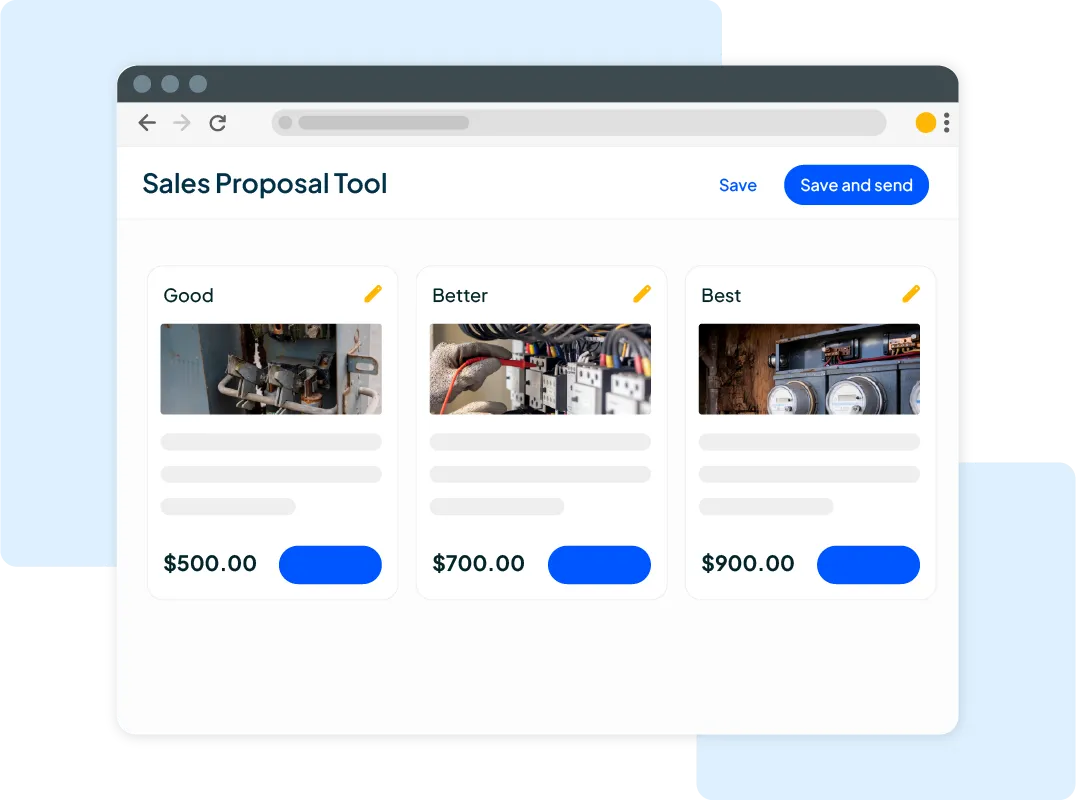
- Create digital agreements with Estimates and E-Signatures: Use Estimates and E-Signatures to outline the work, share pricing, and collect customer approval before you send a crew. Housecall Pro has helped Pros create 40M+ estimates.
- Keep contracts and job details together: Store property photos, service maps, insurance documents, and signed agreements in one place, so your team can access them from the office or the field.
- Keep seasonal agreements from slipping through: Use Service Plans to track recurring services, renew contracts, and keep maintenance customers on schedule without relying on spreadsheets or calendar reminders.
- Connect contracts to invoices and payments: Use the agreed pricing to build invoices and let customers pay online, so there’s less billing work to catch up on after a storm. Pros who use Payments with Housecall Pro get paid 2x faster.*
- Access everything from your phone: Review customer information, signed agreements, and job details between stops on your route.
Spend less time searching for paperwork and more time keeping jobs on track. Housecall Pro’s snow removal software brings customer information, scheduling, and invoicing together so you can stay organized throughout the season. Start your free 14-day trial.
*Avg. experience of Pros processing at least half of their payments with Housecall Pro over the past year.
Snow removal contract FAQ
Do snow removal contractors need a written contract?
Snow removal contractors may not legally need a written contract, but it’s a good idea for every snow removal job. A contract documents your pricing, service triggers, response expectations, and liability terms, which helps reduce disputes if questions come up during the season.
How much should I charge for a snow removal contract?
Charge enough to cover the property’s size, average snowfall, travel time, labor, equipment, fuel, and de-icing materials, plus a cushion for heavier-than-average winters. A per-push price ties your revenue to each storm, while a seasonal price has to cover every visit you’ve agreed to provide, so add visit caps or heavy-storm charges to the contract.
What’s the difference between a seasonal and a per-push snow removal contract?
A seasonal contract charges one fixed price for snow removal throughout the season, while a per-push contract charges customers each time service is performed after a qualifying snowfall. Seasonal contracts offer more predictable revenue, whereas per-push agreements give customers greater flexibility in winters with lighter snowfall.
How do I protect my snow removal business from payment disputes?
To protect your snow removal business from payment disputes, create a detailed written contract that clearly defines your pricing, service triggers, payment schedule, and any additional charges. Having a signed contract helps ensure both parties are on the same page and can be a good reference if a customer questions the work that was performed. Keep dated photos of the cleared areas with the signed agreement so you can show both what was promised and what was done.
Should snow removal contracts include a snowfall trigger?
Yes, snow removal contracts should include a snowfall trigger. Including a threshold helps eliminate confusion about when customers can expect you to arrive. For example, “service begins when snowfall reaches two inches, measured at [agreed source],” along with a separate trigger for icy conditions.
Can I use the same snow removal contract for every customer?
It’s not a good idea to use the same snow removal contract for every customer because each property is different. Residential driveways, commercial parking lots, and HOA communities have different service expectations, pricing structures, and response requirements. Because of that, it’s important to customize the contract for each customer.