Want to win more jobs with less effort?
Grow your business and send quick quotes with our home service software.

Want to see your potential revenue?
See what businesses like yours earn with Housecall Pro in 1 - 2 minutes.
Window cleaning prices can get messy fast. One house has easy first-floor glass, the next has storm windows, screens, tracks, mineral stains, and ladder work. Without a clear pricing strategy, it’s easy to undercharge.
This guide walks through 2026 window-cleaning rates, common pricing structures, and how to build quotes that stay competitive while supporting growth. You’ll also learn how Housecall Pro’s window cleaning software can help you create faster, more consistent quotes.
Quick answer: How much should you charge for window cleaning in 2026?
Many window cleaning businesses charge $10–$18 per window or $4–$8 per pane, with total residential jobs often falling between $150 and $450 (see methodology). Hourly rates commonly range from $45–$75 per cleaner, while commercial jobs often run $50–$100 per hour depending on building size, access, and frequency.
Your final price should depend on pane count, access difficulty, window condition, service frequency, and whether you’re cleaning inside, outside, or both. Use a clear pricing system to quote quickly, explain your rates clearly, and make sure each job is worth taking.
Matt Garcia, owner of MG Cleaning Systems, recommends building your rates around your actual production time instead of relying only on local averages. “Knowing the math behind it gives you confidence,” Garcia says. “If I can’t make it work with this math equation, then something in my process is broken.”
Key takeaways
Here’s a quick overview of window cleaning costs:
Residential pricing: Residential cleaning jobs typically range from $150–$450, depending on size, window count, and type.
Commercial pricing: Commercial cleaning jobs are typically $50–$100 per hour, depending on building size and service frequency.
Add-on services: Extras like screens, shutters, or mineral removal average $2–$75 each.
Pricing models: Charge per window ($10–$15) or per pane ($4–$8) for clarity and consistency.
Table of contents
- Window cleaning pricing methodology
- Average price for window cleaning in 2026
- Residential window cleaning prices
- Commercial window cleaning prices
- Factors that affect window cleaning prices
- What’s the best way to charge for window cleaning?
- How do you set window cleaning prices? (Step by step)
- Step 1: Calculate your costs
- Step 2: Set your target profit margin
- Step 3: Calculate your base rate per window or pane
- Step 4: Count the windows or panes
- Step 5: Add access or complexity charges
- Step 6: Add screens, tracks, and other add-ons
- Step 7: Apply your minimum service charge
- Step 8: Review the job after completion
- Example window cleaning price calculations
- How to adjust window cleaning prices for your local market
- Window cleaning add-on services and pricing
- How to explain window cleaning prices to customers
- Recurring vs. one-time window cleaning pricing
- When to raise your window cleaning prices
- Window cleaning software that keeps your pricing consistent
Window cleaning pricing methodology
The price ranges in this guide are built from aggregated data across home service platforms and contractor cost studies. Sources include Angi, HomeAdvisor, Thumbtack, and U.S. labor data from the Bureau of Labor Statistics, using the latest available pricing and wage data.
These numbers reflect typical residential and light commercial window cleaning rates across the U.S. Your actual pricing will vary based on:
- Local labor rates and cost of living: Higher-cost markets usually need higher rates.
- Building height and access difficulty: Ladder work, roof access, and lift equipment increase the job cost.
- Window type and pane count: French panes, storm windows, skylights, and large picture windows take more time.
- Window condition: Hard-water stains, paint overspray, and construction debris require extra labor.
- Service scope: Interior-only, exterior-only, and full interior/exterior cleaning should be priced differently.
- Business overhead: Insurance, vehicles, software, admin time, and marketing all need to be covered.
- Service frequency: Recurring clients may qualify for lower per-visit pricing if the account stays profitable.
Use these averages as a baseline to gut-check your pricing; always adjust based on your real costs, local market, and target profit margin.
Average price for window cleaning in 2026
Average window cleaning pricing varies based on the model you use. Per-window and per-pane pricing are the most common for residential jobs, while hourly, square-foot, and flat-rate pricing are often used for commercial or unpredictable jobs.
| Pricing model | Typical rate | Best for |
| Per window | $10–$18 | Standard residential homes |
| Per pane | $4–$8 | French panes, multipane windows, detailed homes |
| Hourly | $45–$75 per cleaner | Heavy buildup, post-construction, unclear scope |
| Square foot | $0.10–$0.35 | Commercial properties and large buildings |
| Storefront flat rate | $40–$75 per visit | Small recurring storefront accounts |
| Minimum service charge | $100–$150+ | Small jobs, one-off cleanings, exterior-only work |
Table: Typical U.S. window cleaning rates by pricing model, 2026. Ranges reflect national averages across residential and light commercial jobs; rates vary by market and job complexity.
Residential window cleaning prices
Most residential window cleaning pros price jobs using per-window or per-pane rates, then adjust for access, layout, and add-ons. Starting with a base rate keeps pricing consistent, while adjustments help you avoid undercharging for tougher jobs.
| Residential pricing type | Typical range |
| Per window | $10–$18 |
| Per pane | $4–$8 |
| Small home, 10–15 windows | $150–$275 |
| Medium home, 20–25 windows | $250–$450 |
| Large home, 30+ windows | $450–$900+ |
Keep in mind:
- Per-pane pricing: More precise for French panes, divided-light windows, and older homes.
- Per-window pricing: Faster to quote, but may need upcharges for complex layouts.
- Final quote adjustments: Screens, tracks, skylights, hard-water stains, and second-story work can increase the total.
Commercial window cleaning prices
Commercial window cleaning is usually priced differently from residential work because the jobs are larger, more frequent, and more dependent on access. A weekly storefront route may take 20 minutes per stop, while a quarterly office-building cleaning may require a crew, water-fed pole, lift, or off-hours scheduling.
For basic storefront maintenance, many window cleaners charge a flat rate per visit. For larger commercial buildings, hourly, square-foot, or custom pricing is often more accurate.
Common commercial pricing models
Commercial pricing should match the property type and service schedule. A small storefront may be simple enough for a flat recurring rate, while a multi-story office building needs a custom quote.
| Commercial job type | Typical pricing approach |
| Small storefront | $40–$75 per visit |
| Restaurant or retail space | Flat rate or hourly |
| Office building | Hourly, square-foot, or custom quote |
| Multistory, medical, or institutional buildings | Custom quote based on access, safety requirements, and equipment |
How commercial quoting differs from residential
Commercial window cleaning usually involves more than counting panes. You may need to account for business hours, public access, safety requirements, parking, repeat scheduling, and crew efficiency.
When quoting commercial jobs, consider:
- Frequency: Weekly or monthly work may justify a lower per-visit rate.
- Access: Lifts, water-fed poles, or harnesses should increase the quote.
- Timing: Early morning, evening, or weekend service may cost more.
- Consistency: Repeat layouts can become faster and more profitable over time.
- Contract terms: A 12-month storefront agreement may be priced differently from a one-time cleaning.
Commercial jobs may also come with insurance certificates, vendor forms, purchase-order requirements, and longer payment terms. “With commercial, make sure your insurance and all your paperwork are set before you do the job,” Garcia says. Confirm these requirements before finalizing the quote so administrative costs and payment delays don’t catch you off guard.
For storefront maintenance contracts, keep the quote simple. State the service frequency, what’s included, the per-visit rate, and whether extras like interior glass, mirrors, doors, or tracks are included.
Factors that affect window cleaning prices
Even with a standard pricing model, several variables influence the final price of a window cleaning job. These factors should be applied consistently to protect margins and avoid underquoting.
- Number of windows and panes: More panes mean more time on site. French windows, multipane windows, and older homes typically cost more to clean.
- Accessibility and height: Second-story work, ladder use, roof access, or lifts increase labor time and risk.
- Interior vs. exterior cleaning: Exterior-only jobs move faster. Interior cleaning adds setup, detailing, and coordination with the customer.
- Screens, tracks, and frames: Screens and track cleaning can add 20%–40% to the base price.
- Hard-water stains and buildup: Mineral deposits, paint overspray, or construction debris require specialty tools, chemicals, and extra labor.
What’s the best way to charge for window cleaning?
There’s no single best way to charge for window cleaning. The right pricing model depends on the type of job, how predictable the work is, and how much detail you need in the estimate.
For most residential businesses, per-window or per-pane pricing is the easiest place to start. For commercial jobs, hourly, square-foot, or flat-rate pricing may be more accurate.
Per-window pricing
Per-window pricing means charging one set rate for each window, regardless of the pane count. This works well for standard residential homes with simple layouts.
Why it works:
- Simple to explain: Customers understand the quote quickly.
- Fast to estimate: You can quote many jobs from photos, forms, or a quick walkthrough.
- Easy to standardize: Your team can use the same base rate on every quote.
Watchouts:
- Complex windows can be underpriced: French panes, bay windows, picture windows, and storm windows often need separate rates.
- Add-ons still matter: Screens, tracks, and hard-water stains shouldn’t be buried in the base price.
Per-pane pricing
Per-pane pricing means charging for each individual pane of glass. This model is more detailed, but it better reflects the actual work involved.
Why it works:
- More accurate for detailed homes: Multipane windows take longer and should cost more.
- Better margin protection: You’re less likely to undercharge for French panes or older windows.
- Clear scope: Customers can see how the window count affects the price.
Watchouts:
- It takes longer to count: You may need photos, a walkthrough, or a detailed intake form.
- Customers may need an explanation: Some homeowners think of a “window” differently than a “pane.”
Hourly pricing
Hourly pricing works best when you don’t know how much time or effort a job will involve. This is common for post-construction cleanup, neglected windows, heavy buildup, or commercial work where access is hard to judge upfront.
Why it works:
- Good for unknowns: You’re protected when the job takes longer than expected.
- Useful for special conditions: Paint overspray, mineral buildup, or hard-to-reach windows may not fit a standard rate.
- Better for some commercial jobs: Larger properties may be easier to price by crew time.
Watchouts:
- Customers may worry about open-ended costs: Give an estimated range before work begins.
- Crew efficiency matters: Track actual hours so your rate still supports profit.
Flat-rate or package pricing
Flat-rate pricing groups services into set packages, such as exterior only, interior and exterior, or premium service with screens and tracks included.
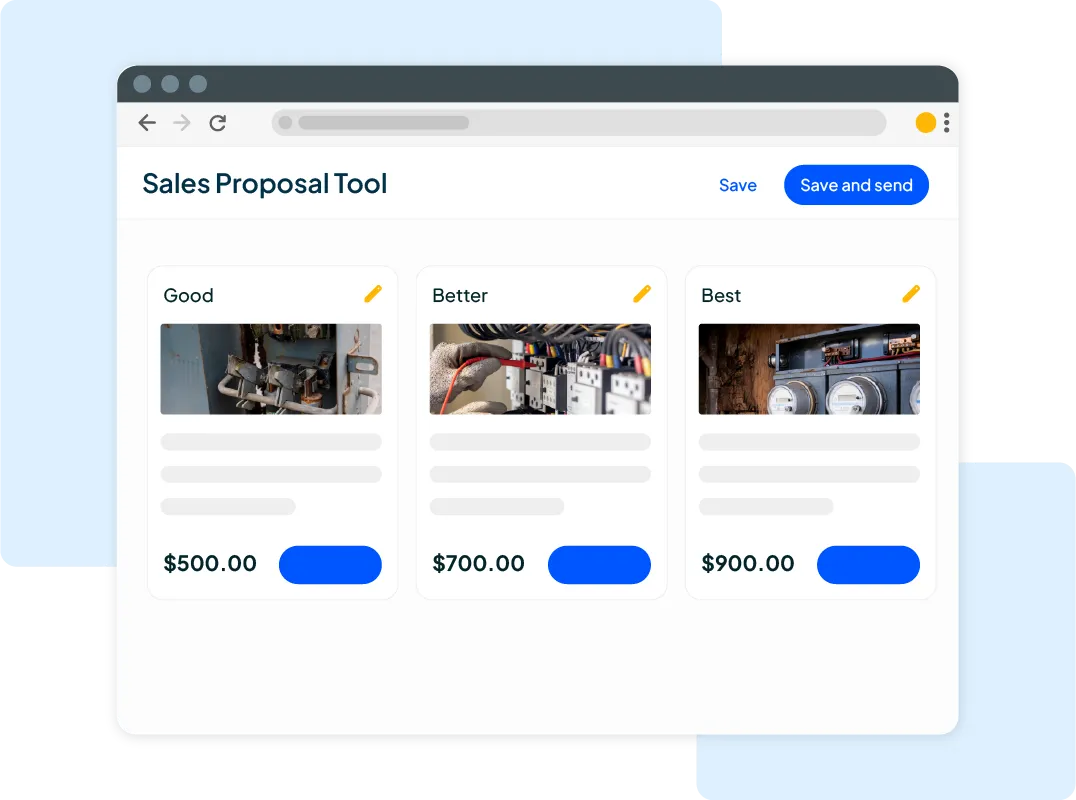
This matters more than most pros expect: according to a 2025 Housecall Pro survey of 1,000+ U.S. homeowners, 80% want to know what “good, better, best” options are available before making a decision. A simple three-tier structure—exterior only, full interior/exterior, or premium with screens and tracks—gives customers a choice without opening a price negotiation.
Why it works:
- Easier choices for customers: Packages help homeowners compare options.
- Higher average ticket: Bundles make add-ons easier to sell.
- Consistent quoting: Your team can use the same package structure across jobs.
Watchouts:
- Scope rules need to be clear: Define what each package includes and excludes.
- Large or complex homes still need adjustments: Add surcharges for high-access windows, storm windows, or heavy buildup.
How do you set window cleaning prices? (Step by step)
If you’re building or updating your window cleaning prices, the goal is to keep it simple, repeatable, and profitable. Here’s a straightforward way to set rates you can use across jobs.
Step 1: Calculate your costs
The price a customer sees is not the same as your profit. Before setting any rate, calculate what each job costs your business to complete. Your price needs to cover more than just the time spent cleaning windows.
Your job cost should include:
- Labor: Wages, payroll taxes, benefits, and labor burden.
- Travel: Fuel, drive time, parking, tolls, and vehicle wear.
- Supplies: Cleaning solution, towels, squeegees, blades, buckets, and screen tools.
- Equipment: Ladders, water-fed poles, safety gear, and replacement parts.
- Insurance: Liability, workers’ comp, vehicle insurance, and bonding when needed.
- Overhead: Admin time, software, marketing, rent, phones, and office costs.
Add those up to find your break-even job cost—the minimum a job needs to bring in before you make a profit:
Break-even job cost = Labor + materials + travel + overhead
Step 2: Set your target profit margin
Once you know your costs, decide how much profit you want to make on top of them. A common target for home service businesses is a net profit margin of 10%–20%, though actual margins vary widely based on overhead, route efficiency, and job mix.
Use this formula to set your floor:
Final price = Break-even job cost ÷ (1 − target profit margin)
For example, if a job costs $180 to complete and you want a 20% margin:
$180 ÷ (1 − 0.20) = $225
If you charge $200, the job brings in revenue but falls short of your profit target.
Step 3: Calculate your base rate per window or pane
With your cost floor and target margin set, you can work out what to charge per unit.
Decide whether you’ll price per window or per pane, then divide your target job revenue by the average number of units per job to get your base rate. Adjust up or down based on your market and what local competitors charge.
For example, if your target revenue per average job is $150 and most jobs average 25 panes, your base rate is:
$150 ÷ 25 = $6 per pane
Step 4: Count the windows or panes
With your base rate set, you can apply it to any job. Start by counting the number of windows or panes included in the work. Be clear about whether the quote covers exterior only, interior only, or both.
For a simple home, per-window pricing may be enough. For homes with French panes, divided-light windows, or several window styles, per-pane pricing is usually more accurate.
A simple formula could look like this:
Window cleaning base price = Number of windows × price per window
Or:
Window cleaning base price = Number of panes × price per pane
For example, if a home has 24 panes and you charge $6 per pane, the base price is:
24 panes × $6 = $144
Step 5: Add access or complexity charges
Some windows take more time, equipment, or risk. Build those adjustments into your pricing instead of handling them case by case.
Common complexity charges include:
- Second-story access: Add a flat fee or percentage increase for ladder-heavy work.
- Roof access: Charge more when windows require roof access or awkward positioning.
- Large picture windows: Price separately when they take longer than standard panes.
- Storm windows: Add a per-pane or per-window fee because removal and cleaning take extra time.
- Heavy buildup: Charge more for paint, construction debris, hard-water stains, or neglected glass.
Step 6: Add screens, tracks, and other add-ons
Add-ons should be priced consistently. This helps customers understand what they’re paying for and helps your team avoid making up prices on the spot.
For example:
Base exterior cleaning: $180
Screen cleaning: 12 screens × $3 = $36
Track detailing: $60
Total quote: $276
Step 7: Apply your minimum service charge
Minimum charges protect your business from losing money on small jobs. Even a quick exterior cleaning still includes drive time, scheduling, setup, cleanup, payment processing, and admin work.
Many window cleaning businesses set minimums of $100–$150+ or more—use your own break-even calculation to set the right number for your market.”
Set your minimum by calculating the least amount you need to cover drive time, setup, admin, and payment processing. For example, if a small job takes 30 minutes on site but 45 minutes of total travel and admin time, the minimum should cover the full 75 minutes—not just the cleaning time.
Step 8: Review the job after completion
After the job is done, compare your estimate against the real work. Look at time on site, add-ons sold, materials used, and profit after labor.
Track:
- Estimated time vs. actual time: Did the job take longer than expected?
- Base price vs. final cost: Did the quote cover the full scope?
- Add-ons: Were screens, tracks, or stain removal priced correctly?
- Profit: Did the job support your target margin?
If the numbers are off, adjust your base rate, add-on pricing, or complexity rules before the next quote.
Example window cleaning price calculations
Here’s how window cleaning pricing typically looks in real-world scenarios using common 2026 rates.
Example 1: Small residential home
- Scope: 12 windows with 2 panes each (24 panes total), exterior only
- Base rate: $6 per pane
- Calculation: 24 × $6 = $144
- Add-on: Screen cleaning (12 screens × $3 = $36)
- Total price: $180
Example 2: Medium two-story home
- Scope: 22 windows with mixed pane styles
- Service type: Interior and exterior cleaning
- Base price: $375
- Add-on: Track detailing ($90)
- Total price: $465
Example 3: Storefront
- Scope: Monthly exterior storefront cleaning
- Pricing model: Flat rate per visit
- Rate: $60 per visit
- Annual contract value: $720
How to adjust window cleaning prices for your local market
National averages are useful, but your local market should shape your final rates. A window cleaning business in New York City or San Francisco usually has higher labor, insurance, parking, and travel costs than a business in a smaller suburban or rural market.
Local pricing factors to review
Before setting your rates, check:
- Local labor costs: Higher wages mean your hourly and per-window rates need to rise.
- Cost of living: High-cost metros often support higher pricing.
- Drive time: Spread-out rural routes may need higher minimums to cover travel.
- Competitor pricing: Review local pricing on Google, Thumbtack, Angi, and nearby company websites.
- Customer type: High-end residential clients often expect itemized quotes; storefront clients typically want a flat recurring rate they can budget monthly.
Local market examples
Here’s how local pricing might shift:
| Market type | Pricing adjustment | Example |
| High-cost metro | Price above national averages | NYC, San Francisco, Los Angeles |
| Growing midsize city | Stay near or slightly above average | Nashville, Phoenix, Austin |
| Suburban Midwest | Stay near average with strong minimums | Suburbs outside Chicago, Columbus, Kansas City |
| Rural market | Lower base rates but higher travel minimums | Spread-out service areas with longer drive times |
You don’t need to match the cheapest quote in town. You need a price that covers the actual job: drive time, setup, cleaning, payment processing, and profit.
Window cleaning add-on services and pricing
Add-ons can increase your average job value without adding a new customer. They also help customers choose the level of service that fits their home.
| Add-on service | Typical add-on rate | Notes |
| Screen cleaning | $2–$5 per screen | Good recurring add-on for seasonal cleanings |
| Track detailing | $3–$6 per window | Takes extra time and should be priced separately |
| Hard-water stain removal | $20–$75+ | Price based on severity and chemicals needed |
| Skylights | $10–$25 each | Charge more for access difficulty |
| Storm windows | $5–$12 per pane | Removal and reinstallation add labor |
| Paint or construction debris removal | Custom quote | Often needs specialty tools and extra care |
| High-access surcharge | 10%–30%+ | Use for ladders, roofs, or difficult reach points |
Table: Common window cleaning add-on rates in the U.S., 2026. Prices are per screen, pane, window, or job depending on the service type.
Only recommend add-ons when there’s a clear reason: dirty screens, packed tracks, mineral stains, or skylights that take extra setup.
How to explain window cleaning prices to customers
Price questions are common in window cleaning, especially when customers compare quotes online.
According to Housecall Pro’s 2025 survey, 97% of homeowners say clear, upfront pricing influences their decision to hire a pro. Price questions aren’t a sign of pushback—they’re a sign the customer is ready to decide. Give them a clear answer and they’ll move forward.
Here’s how experienced window cleaning pros explain pricing:
- Start with what’s included: Explain whether the quote covers interior, exterior, screens, tracks, and detailing—not just the glass.
- Explain access and effort: Point out second-story work, ladder use, tight layouts, or hard-to-reach windows that increase labor time.
- Use condition-based reasoning: Mineral buildup, paint overspray, or neglected windows require extra tools and time.
- Be upfront about add-ons: Separating base service from extras helps customers see exactly what they’re paying for.
When a customer can’t afford the full scope, reduce the work instead of automatically discounting your rate. “If they want to stick to a budget, we can backtrack,” Garcia says. “We can do just the exteriors or pick the high-priority windows.” This gives the customer a lower-cost option while protecting the rate you need to complete the work profitably.
If a customer mentions a lower quote, don’t match it—explain what’s different. Ask what’s included: does it cover screens, tracks, and interior glass, or just exterior panes? A $80 quote and a $280 quote often aren’t for the same job. Focus on what they get: a consistent crew, professional equipment, and a service they won’t have to chase down or redo.
Recurring vs. one-time window cleaning pricing
Recurring window cleaning clients are usually worth a different pricing strategy than one-time jobs. Monthly, quarterly, and seasonal clients give you steadier revenue, easier scheduling, and less need to keep reselling the same customer.
As a general benchmark, recurring discounts typically range from 10%–20% off the single-visit rate, closer to 8%–15% for quarterly plans, and up to 20% for monthly commitments. If you can’t make the margin work above 15% off, raise your base rate first.
When recurring discounts make sense
Recurring discounts work best when the job gets easier over time. If a client books quarterly service, the glass usually has less buildup, the scope is familiar, and your crew can finish faster than the first visit.
Recurring pricing may make sense when:
- The route is efficient: The client fits into an existing service area.
- The job stays predictable: Window count and access do not change.
- The work gets faster: Regular maintenance prevents heavy buildup.
- The customer commits: Monthly, quarterly, or seasonal service gives you predictable revenue.
When recurring discounts don’t make sense
A recurring discount can hurt your margin if the account still takes too much time or travel.
Be careful with discounts when:
- The client is far from your normal route: Travel time can erase the discount.
- The property has difficult access: Ladders, roof work, or lifts still require extra time.
- The windows get dirty quickly: Trees, hard water, dust, or coastal air may keep the workload high.
- The client changes the scope often: Extra windows, screens, or tracks should be billed separately.
How to explain recurring pricing to customers
Frame recurring pricing as a maintenance plan, not just a discount. You’re giving the customer a better per-visit rate because the work is scheduled, predictable, and easier to maintain.
You could say:
“Your first cleaning is $325 because we’re removing the current buildup and cleaning the full interior and exterior. If you move to quarterly service, each visit would be $275 because the windows stay easier to maintain and we can keep you on a regular route.”
When to raise your window cleaning prices
Raise your rates when any of these conditions apply:
- Your labor costs went up: If wages, payroll taxes, or contractor rates increased, your per-window or per-pane rates should reflect that.
- Fuel, supplies, or equipment costs increased: Longer routes, ladder work, water-fed pole systems, squeegees, towels, blades, screen tools, and insurance all affect your real job cost.
- You’re booked out three or more weeks: If demand is consistently higher than your available schedule, a price increase can help protect your time and margins.
- Your estimate close rate is above 80%: If nearly every quote turns into a job, your pricing may not be creating enough hesitation—often a sign that you’re charging less than customers are willing to pay. Many successful service businesses target a close rate closer to 30%–50%, where some pricing pushback is expected and built into a healthy sales process.
Don’t worry about losing customers; raising pricing is a regular part of running a service business, and customers rarely choose on price alone. According to Housecall Pro’s 2025 survey, 72% of homeowners say they’d pay 10% more for a pro with a better customer service reputation. Clear communication, a professional quote, and showing up when you said you would can matter more than matching the lowest number in town.
For recurring clients, communicate increases early and clearly. Let them know what’s changing, when the new rate starts, and why the adjustment helps you keep providing reliable service.
For example:
“Starting next month, your quarterly window cleaning will move from $180 to $205 per visit because of higher labor and supply costs. Your current schedule and service details will stay the same.”
Read more: How to write price increase letter (template & examples)
Window cleaning software that keeps your pricing consistent
Inconsistent pricing is one of the most common reasons window cleaning businesses leave money on the job. When rates vary by technician or estimates get built from memory, jobs get underquoted and margins shrink without a clear reason why.
Window cleaning software like Housecall Pro addresses this by centralizing your pricing in one place. With a standardized setup, you can:
- Build a digital price book with per-pane, per-window, or hourly rates so every technician quotes from the same baseline.
- Add standard line items for screens, tracks, skylights, and hard-water removal—no improvising on the spot.
- Generate quotes on-site without manual math, and present them in a professional format before you leave the property.
- Set up recurring service plans that automate scheduling and apply your preferred recurring rate
- Accept online booking so customers can schedule without back-and-forth—41% of jobs booked online through Housecall Pro come in after hours.
If you’re building out your pricing system or moving off spreadsheets, it’s worth seeing how the tools work in practice. Try Housecall Pro free to see how it works for your business.
Window cleaning pricing FAQ
How much should a window cleaner charge?
Most window cleaners charge $4–$8 per pane or $10–$18 per window for residential work. A small home with 10–15 windows typically runs $150–$275; a medium home with 20–25 windows runs $250–$450. Higher prices apply for second-story access, hard-water stains, or interior-and-exterior service.
Is per-pane or per-window pricing better?
Per-pane pricing is more precise, especially for homes with French windows. Per-window pricing is faster for homes with standard layouts.
Do customers expect interior window cleaning?
Many customers book exterior-only service first, which is faster and typically costs 30%–50% less than a full interior/exterior clean. Interior cleaning is most common as a seasonal add-on—spring or pre-holiday—and should be priced separately to avoid scope creep.
How often should I raise my window cleaning prices?
Review pricing at least once per year to account for labor, insurance, and fuel increases.
How do you calculate window cleaning costs?
You can calculate window cleaning costs by factoring in the number of windows, window type, accessibility, labor time, and local rates, then pricing per window or per hour. A simple pricing formula is: (Number of windows × price per window) + add-ons (screens, tracks, hard-to-reach areas). For example: 20 windows × $12 per window = $240 base price, plus $40 for screen cleaning = $280 total quote.
Should I charge more for first-time window cleanings?
Yes. First-time cleanings almost always take longer than repeat visits. There’s no prior service record, so you don’t know the window condition in advance. Buildup from mineral deposits, oxidation, or neglect is common on windows that haven’t been professionally cleaned before. You’re also not yet on an efficient route, which means more drive and setup time relative to the job.
A common approach: charge your standard rate for the first visit, then offer a lower recurring rate once the account is on a regular schedule. For example, a first-time exterior cleaning might be $325, while quarterly maintenance visits drop to $275 because the glass stays easier to clean and the job fits your existing route.
Don’t discount the first visit to win the job. That’s the highest-effort cleaning you’ll do for that customer.
What equipment do I need to start a window cleaning business?
Basic residential window cleaning requires a squeegee, scrubber sleeve, extension pole, bucket, microfiber cloths, and cleaning solution. Professional starter kits from suppliers like WindowCleaner.com run $60–$200 depending on brand and components. For two-story homes, you’ll need a ladder; a standard extension ladder typically costs $120–$350.
Total startup equipment for low-rise residential work generally runs $300–$800. Adding a water-fed pole system—useful for exterior work above the first floor—costs $200–$800 for an entry-level pole, or $1,500–$4,000 for a complete system with pure water setup.
Before your first job, you’ll also need general liability insurance. Window cleaning businesses pay an average of about $900/year for a general liability policy, according to data from our business insurance partner, Coverdash. Factor all of this into your cost floor before you set per-window or per-pane rates