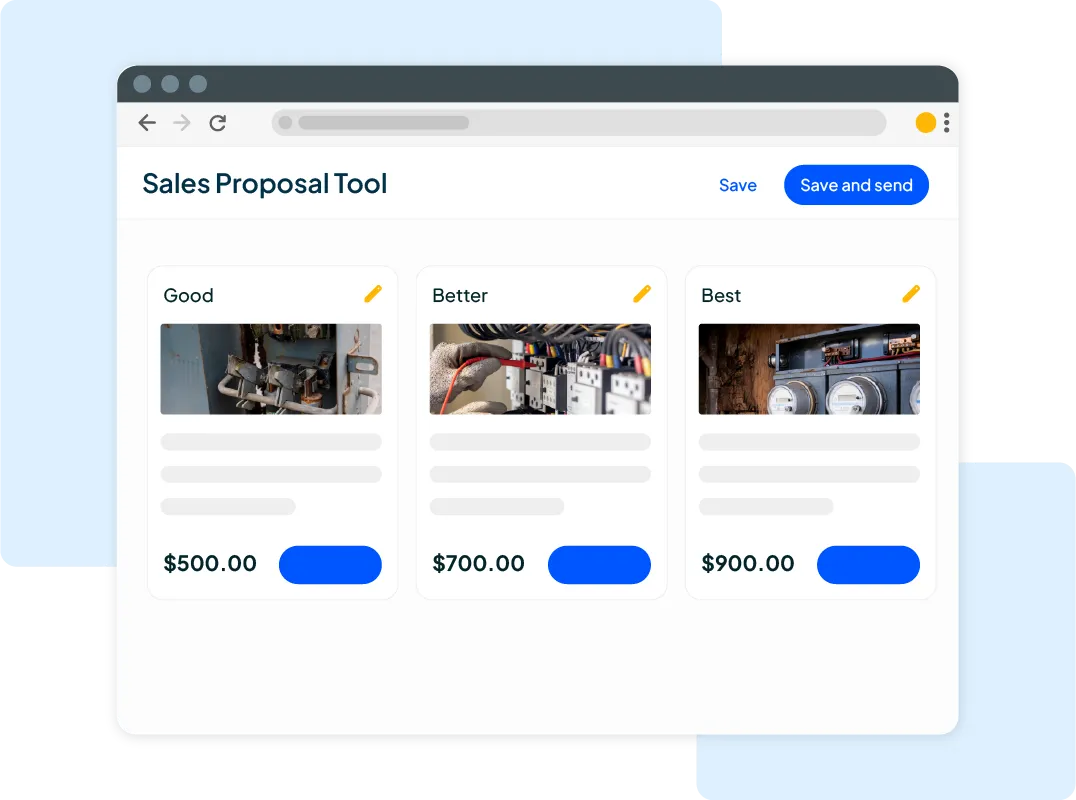
Want to win more jobs with less effort?
Grow your business and send quick quotes with our home service software.

Want to see your potential revenue?
See what businesses like yours earn with Housecall Pro in 1 - 2 minutes.
Google Ads puts your plumbing business at the top of search results when homeowners need emergency repairs, water heater replacements, or drain cleaning.
This guide walks through campaign setup, keyword selection, budget planning, and conversion tracking. You’ll learn what plumbing ads typically cost per click and per lead, how to target your exact service area, which ad types work best for different jobs, and how to turn clicks into booked appointments.
Whether you’re running your first campaign or improving an existing one, you’ll find benchmarks, examples, and specific steps to spend smarter and book more jobs.
Key takeaways
Here’s how to make Google Ads pay off for your plumbing business:
Focus on urgent, service-specific terms: Target phrases like “emergency plumber [city]” and “water heater repair near me” instead of broad terms like “plumbing services.”
Set tight location boundaries: Restrict your ads to ZIP codes or a radius you actually serve to avoid paying for clicks from areas you can’t reach.
Track every call source: Use call tracking to see which keywords and ads generate real jobs, then shift budget toward what converts.
Answer leads within five minutes: In plumbing emergencies, the first business to respond usually books the job.
Automate follow-up for missed calls: Use tools like Housecall Pro to send instant texts when you can’t answer, so leads don’t move on to the next plumber.
Table of contents
- What are Google Ads, and how do they work for plumbers?
- Google Ads vs. Local Services Ads for plumbers
- How much do Google Ads cost for plumbers?
- How to set up Google Ads for a plumbing business
- Common Google Ads mistakes plumbers should avoid
- Turning Google Ads clicks into booked plumbing jobs
- How Housecall Pro helps plumbing businesses get more value from Google Ads
What are Google Ads, and how do they work for plumbers?
Google Ads is Google’s paid advertising platform that lets businesses show up at the top of search results when people are actively looking for services.
Instead of waiting for customers to find you, Google Ads puts your business in front of people who already need a plumber—right when they’re ready to call or book. You choose the services you want to promote, the areas you serve, and the budget you’re comfortable with, and you only pay when someone clicks or contacts you.
Google Ads work well for plumbers because:
- You’re reaching people who have an active problem.
- You only pay when someone clicks your ad or calls you.
- They get you on page one of Google today, not months from now.
Types of Google ads plumbers can use
Google offers several ad options, but some fit plumbing better than others. Here’s a simple breakdown:
- Search ads: Text ads that appear at the top of Google search results. These work best for plumbers because they target urgent, local searches (think leaks, clogs, or no hot water).
- Display ads: Visual ads shown on websites and apps across Google’s Display Network. These can help with brand awareness, but usually don’t drive immediate leads.
- Shopping ads: Product‑based ads that show items for sale. Most plumbing companies don’t need these unless they sell fixtures or parts online
- Video ads: Short ads that run before or during YouTube videos. Helpful for brand recognition, but less likely to bring in same‑day service calls.
- App ads: Designed to promote mobile apps. Typically not a focus for plumbing businesses.
- Discovery ads: Ads that appear while people browse content in places like Gmail or Discover news feeds. Helpful for awareness, not quick bookings.
- Local Services Ads (LSAs): Pay-per-lead ads. LSAs appear above regular search ads and highlight calls and messages, so they’re great for home service pros.
- Performance Max and Smart campaigns: More automated campaign types that spread ads across Google’s network. They can be easier to start, but give you less control as your business grows.
Learn more: How to advertise your plumbing business (20+ ideas and tips)
Google Ads vs. Local Services Ads for plumbers
Both Google Ads and LSAs can drive local plumbing jobs, but they work differently. Google Ads helps you capture search traffic for specific, high-value jobs like tankless installs or trenchless repair, while Local Services Ads (LSAs) are designed to generate direct calls and messages from customers who are ready to hire.
Understanding how each platform works—and when to use one over the other—can help you build a more predictable pipeline of plumbing jobs without overspending on marketing.
The table below shows a side‑by‑side comparison of Google Ads vs. Local Service Ads. The cost estimates are based on 2026 home services benchmarks from industry marketing reports, including PPC chief and PerfoAds. Actual costs vary by market, competition, and job type.
| Feature | Google Ads | Local Services Ads (LSAs) |
| Where ads appear | Top of standard search results | Very top of the page, above other Google Ads |
| How you pay | Pay per click (PPC) | Pay per lead |
| Lead type | Clicks to your site or landing page | Direct calls and messages |
| Typical cost | $5–$30+ per click (can exceed $50 in competitive markets) | $25–$80+ per lead depending on location and job type |
| Setup time | Fast (immediate) | Slower (after background check) |
| Control over messaging | High (custom text and keywords) | Limited (automated format) |
| Best for | Targeted services and promotions | Direct calls and quick contact |
| Budget | Flexible daily budgets | Weekly budget cap |
Running search ads and LSAs at the same time can widen your reach, and many successful plumbers use both. You don’t need a complex setup for either platform. Just start small, track where your best leads come from, and shift your budget toward what’s working.
How much do Google Ads cost for plumbers?
Google Ads costs can vary a lot, but most plumbing businesses fall within a predictable range. What you pay depends on your market, the services you promote, and how competitive your area is.
Average cost per click (CPC) for plumbing keywords
Search ads run on a pay-per-click model, so you pay only when someone clicks your ad. Costs change frequently, but here’s a general framework:
- Based on 2026 benchmarks from PerfoAds and PPC Chief, many plumbing search terms fall somewhere in the $5–$30+ per-click range.
- High-intent emergency phrases like “emergency plumber near me” can exceed $30–$50+ per click.
- Costs are typically higher in competitive cities where more plumbers are bidding for the same jobs.
Average cost per lead (CPL) for plumbing Google Ads
Cost per lead shows what you’re paying for actual opportunities—like calls or form fills—not just clicks. Based on 2026 benchmarks from PerfoAds and PPC Chief:
- Typical plumbing leads fall around $50–$100+ per lead.
- Emergency services and high-competition markets often land at the higher end of that range or above.
- You can lower your cost per lead by improving your targeting, ad copy, and landing page experience.
Typical monthly Google Ads budgets for small plumbing businesses
Small and mid-sized plumbing companies might invest anywhere from $1,500 to $10,000+ per month in PPC across Google Ads, depending on their market, goals, and competition.
Here’s a simple example to show how the math might work. Your exact numbers will differ based on your market, close rate, and average ticket size:
- Define a revenue goal: If you want $15,000 in new revenue and your average job brings in $300, you need about 50 new jobs.
- Estimate leads needed: If roughly 1 in 3 leads turns into a job, you need about 150 leads.
- Estimate clicks needed: If about 1 in 5 clicks becomes a lead (a 20% conversion rate), you’d need around 750 clicks.
- Estimate ad cost: At an average of $10–$12 per click, 750 clicks would cost about $7,500–$9,000.
This example suggests you might need roughly $7,500–$9,000 in ad spend to hit that revenue goal, assuming your conversion rate and average job value hold steady.
What affects Google Ads costs the most
Several factors affect what you’ll actually pay:
- Keyword competition: Popular terms like “emergency plumber near me” usually cost more because many businesses want those clicks.
- Search term urgency: Searches tied to urgent problems (like burst pipes or no hot water) tend to cost more than more general search terms.
- Location targeting: Ads in large or affluent cities usually cost more than those in smaller or less competitive towns because more plumbers compete for the same local customers.
These factors work together to shape how much you’ll actually spend. Start with a budget you’re comfortable testing and track results closely so you can adjust toward what works best for your business.
Learn more: How to get more plumbing leads: 15 proven strategies
How to set up Google Ads for a plumbing business
You don’t need to be an advertising expert to get started. Focus on showing up for the right local searches and turning them into calls. Here’s the setup process at a high level.
Step 1: Choose the right plumbing keywords
Start with services people actually search for. Think like a customer with a problem:
- “Emergency plumber [city]”
- “Water heater repair [city]”
- “Drain cleaning near me”
- “Sewer line repair [city]”
Add your city or service area to narrow the focus. Skip vague or broad terms—more specific searches usually bring in netter leads because they’re tied to a clear need.
Step 2: Target your local service area
Limit ads to the areas you serve. You can target by:
- Cities and towns
- ZIP codes
- A radius around your shop or main service hub
Tighter targeting means fewer wasted clicks from people outside your service area and more budget going to the customers you can actually help.
Step 3: Write ads that get calls, not just clicks
Your ad needs to convince the homeowner to choose you over the competitor right below you. Keep your ad copy clear and direct:
- Call out the service (for example, “24/7 emergency plumbing” or “same‑day water heater repair”).
- Mention fast response or same‑day availability when you can offer it.
- Add basic trust signals like licensing, years in business, or “locally owned.”
- Include a CTA (like “Call Now for $50 Off”).
- Skip overly clever wording. In emergencies, customers want to see “can you fix my problem, and how fast?”
Step 4: Set up conversion tracking
Track phone calls from ads, calls from your website, and contact form or online booking request submissions. This lets you see which ads bring real jobs, not just traffic. If you don’t know which keywords are generating jobs, you’ll waste money on the ones that don’t.
Common Google Ads mistakes plumbers should avoid
Google Ads can bring in jobs quickly, but easy mistakes can burn through your budget. Watch out for these common missteps:
- Not tracking: If you aren’t tracking calls and forms separately, you’re just guessing. You need to know exactly which ad made the phone ring.
- Casting too wide a net: Relying only on “Broad Match” keywords can show your ad to the wrong people. Use “Phrase Match” or “Exact Match” to target homeowners who actually need a plumber.
- Ignoring winning search terms: When you see a specific search term bringing in real jobs, lock it in and add it as a specific keyword.
- Chasing vanity metrics: A high “Ad Strength” score looks nice, but it doesn’t pay the bills. Focus on your cost-per-lead, not the grade Google gives your ad copy.
- Outdated negative keyword lists: Search habits change. Update your “Negative Keywords” list regularly to block junk searches like “plumber salary” or “how to fix toilet.”
- Blindly accepting suggestions: Google’s auto-recommendations can increase their ad revenue, not your profit. Review every suggestion manually before applying it.
- Unsupervised automation: Combining broad keywords with “Smart Bidding” can spike your costs quickly. Keep a close eye on these settings to make sure you aren’t paying for low-quality leads.
- Assuming AI knows your business better than you: You know your service area, pricing, and jobs best. Use automation as a tool, but don’t let it make the decisions for you.
Turning Google Ads clicks into booked plumbing jobs
Getting the click is only half the job. What happens next decides whether that lead turns into paid work. Follow these tips to help win the job:
- Respond to new leads as fast as possible. Speed is everything. If you don’t answer, people with a plumbing emergency will call the next number on the list. Make sure someone is available to take calls during your ad hours.
- Give customers an easy way to book online. You can’t always answer the phone. If they visit your site, give them a simple way to schedule. Use Housecall Pro’s Online Booking to let customers book an appointment directly from your landing page, 24/7.
- Follow up automatically on missed calls. Missed calls don’t have to mean lost jobs. Use automation to save the lead. If you miss a call, set up an automatic text message that says something like “Sorry I missed you! I’m on a job. How can I help you?”
Learn more: 10+ marketing strategies to grow your plumbing business
How Housecall Pro helps plumbing businesses get more value from Google Ads
Running Google Ads brings in leads—Housecall Pro helps you turn those leads into booked jobs and repeat customers. Instead of juggling tools, you can manage everything in one place and stay organized as your business grows.
Housecall Pro is built for service pros and helps you:
Running ads generates the leads, and Housecall Pro helps you manage them. Housecall Pro’s complete plumbing software helps you convert more leads and keep your operations organized.
The platform built specifically for service pros helps with:
- Track calls and lead sources: See which campaigns and keywords are driving real jobs, so you can invest in what works.
- Book jobs online: Let customers schedule jobs from your website anytime, even after hours or while you’re on another call.
- Follow up automatically: Send texts or emails after missed calls or estimates without manual effort.
- Schedule and dispatch faster: Go from new lead to booked job without switching between systems.
- Customer history management: Store notes, estimates, and job history in one place for every customer.
Together, these tools help reduce missed opportunities and keep leads moving forward. Learn more about our plumbing software or start a free 14-day trial to see how Housecall Pro fits into your daily workflow.
Get In Touch: 858-842-5746
Let us earn your trust
On average, Pros increase monthly revenue generated through Housecall Pro by more than 35% after their first year.
See plan options and feature breakdown on our pricing page.
FAQ
-
How do I get more calls for my plumbing business?
-
To get more calls for your plumbing business, focus on high-intent local searches. Use Google Ads for service-specific keywords tied to your service area. Make your phone number easy to tap, respond quickly, and follow up on missed calls. Pair your ads with online booking so customers can schedule even when you’re on another job.
-
Are paid ads worth it for plumbers?
-
Paid ads can be worth it for plumbers when they’re set up with clear goals and tracking. They place your business in front of customers who need help right now. Results depend on location, competition, and how well calls are handled after the click. Ads work best when paired with fast response and simple booking.
-
How long before I see results from Google Ads?
-
You can start getting clicks and calls within hours of launching a Google Ads campaign. However, it typically takes two to four weeks to gather enough data to know which keywords and ads are bringing in quality leads. Plan to run campaigns for at least 30 days before making major budget decisions. During this period, track which search terms lead to booked jobs, not just phone calls, so you can optimize for real revenue.
-
What’s a good conversion rate for plumbing ads?
-
A good conversion rate from click to lead ranges from 10% to 25% for plumbing ads, depending on your landing page quality and how fast you answer calls. Your lead-to-job conversion rate matters more: aim for 25%to 40% of leads turning into paid work. If you’re converting below 10% from click to lead, check your landing page speed, call tracking setup, and whether your phone number is easy to find and tap on mobile.
-
How do I get more leads on Google Local Services Ads?
-
To get more leads on Google Local Services Ads, keep your profile complete and accurate, answer calls quickly, and dispute invalid leads. Reviews also matter, since customers compare options fast. Set a realistic weekly budget so your listing stays active during busy periods when demand spikes. Respond to messages within the app as quickly as you answer phone calls.
-
Is ten dollars a day enough for Google Ads?
-
In most markets, no. Plumbing clicks can be expensive, so a small budget may only produce a few visits, and $10 might not even get you a single click in a competitive area. Start with at least $500 to $1,000 per month if you want to test whether Google Ads can consistently bring in jobs. Watch lead quality closely and adjust spend based on actual results, not just traffic.
-
What’s the difference between Google Ads and Google Local Services Ads for plumbers?
-
Google Ads charges per click and gives you control over keywords, ad copy, and landing pages. Local Services Ads charge per lead, appear at the very top of search results, and connect customers directly to your phone. Many plumbers run both: Local Services Ads for immediate calls and Google Ads for targeting specific high-value services like water heater replacement or sewer line repair.