Want to win more jobs with less effort?
Grow your business and send quick quotes with our home service software.

Want to see your potential revenue?
See what businesses like yours earn with Housecall Pro in 1 - 2 minutes.

Your website is often the first place customers check to see if you’re a credible and trustworthy electrician. So, it’s important that it makes a good first impression.
You don’t need a flashy design or clever wording. The best electrician websites focus on three things that matter: being easy to find, easy to trust, and easy to contact.
This guide breaks down what high-performing electrician websites include using real examples and practical tips you can apply yourself. To get started faster, download our electrical website template or use our website builder to launch a professional site that looks good, attracts potential customers, and converts visits to booked jobs.
Learn more: 9+ Marketing Strategies to Grow Your Electrical Business
Key takeaways
Here are the core elements of a great electrician website:
User-friendly design: A clean, easy-to-navigate site turns visitors into paying customers.
Trust-building elements: Clear contact info, visible CTAs, and real photos show professionalism.
SEO and visibility: Optimized pages, updated Google Business Profiles, and internal links help customers find you.
Automation tools: Platforms like Housecall Pro streamline booking, lead capture, and customer management to turn visitors into booked jobs.
Jump ahead
- What makes a good electrician website?
- Best electrician website examples (and why they work)
- Should you hire a web designer or do it yourself?
- Electrician website SEO fundamentals (what actually helps you rank)
- Common electrician website mistakes to avoid
- Get the most from your electrician website with Housecall Pro
What makes a good electrician website?
A good electrician website doesn’t have to be fancy, but it should communicate your experience, expertise, authority, and trust—what Google calls EEAT. This helps homeowners feel comfortable hiring you and allows search engines to rank your pages accurately. Clear services, visible credentials, and real reviews all work together to build credibility, improve search engine optimization (SEO), and turn visits into booked jobs.
The best electrician websites include the following elements:
- Clear contact info and calls to action: Your website should make it obvious how customers can contact you or book a service—without searching or scrolling.
- Service area pages: Service area pages help your website show up in local searches and reassure homeowners that you actually work where they live.
- About page that builds trust: Your About page should explain who you are, how your business started, and why customers should trust you in their home.
- Clear value propositions: Your website should explain why someone should choose you—not just what services you offer. Highlight what sets you apart on your homepage and service pages.
- Reviews and testimonials: Customer reviews are one of the strongest trust signals on an electrician website and should be easy to find.
- Original visuals: Real images help homeowners trust your work more than stock photos ever will.
- Clear, customer-focused copywriting: Your website copy should reassure homeowners and guide them toward taking action. Write in plain language that addresses common concerns and explains what to expect.
- Blog or resource section: Helpful content builds authority and attracts local search traffic from homeowners looking for answers.
Get In Touch: 858-842-5746
Let us build your electrician website
On average, Pros increase monthly revenue generated through Housecall Pro by more than 35% after their first year.
See plan options and feature breakdown on our pricing page.
Best electrician website examples (and why they work)
Strong electrician websites make their value obvious right away. The best examples usually share a few traits:
- Fast load times: Your site should load in under two seconds. A slow site can cause frustrated users to leave and may rank lower in search results.
- Clean, modern layout: Keep the design simple and uncluttered so users can quickly find key information like services, pricing, and contact options.
- Consistent branding: Stick to the same logo, color palette, and tone across all pages to reinforce recognition and trust.
- Mobile responsiveness: Most customers search on their phones. Your site should look and work great on any screen size.
- SEO-friendly structure: Optimize your titles, meta descriptions, and schema markup so Google can understand and rank your pages.
- Accessibility: Follow Americans with Disabilities Act (ADA) and Web Content Accessibility Guidelines (WCAG) requirements. This involves using readable fonts, clear navigation, and alt text so all users can access your content.
As you review the electrician website examples below, pay attention to structure and clarity, not just visuals. The sites that perform best make it easy for both homeowners and search engines to understand what the business does.
1. Mister Sparky
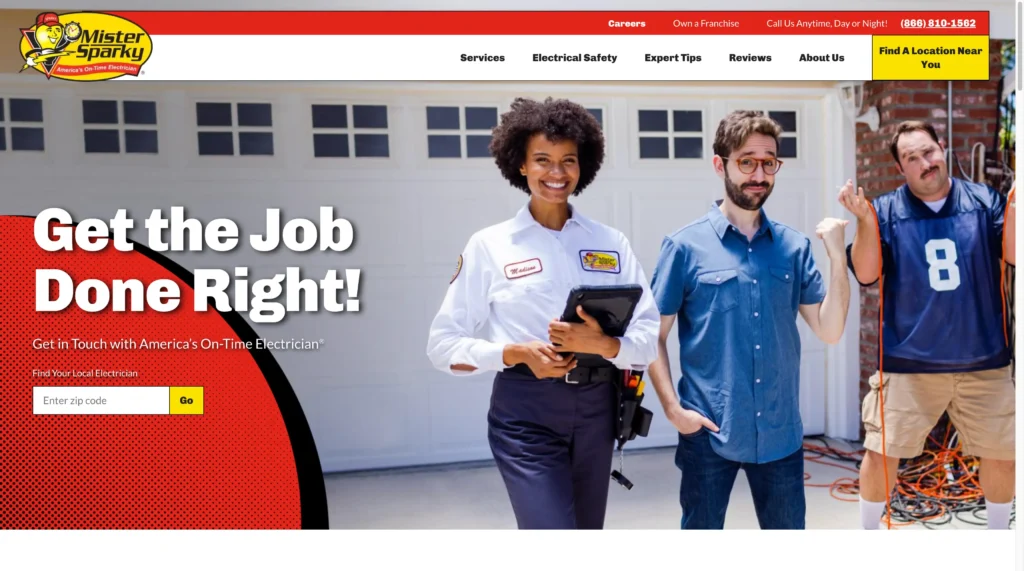
Mister Sparky’s website is a strong example of consistent branding. Bold yellow and red accents make the site instantly recognizable, while the playful hero imagery adds personality without undermining professionalism. The result is a site that feels memorable, trustworthy, and easy to navigate.
Highlights:
- Clear, prominent slogan and value props
- Upfront pricing and satisfaction guarantee reinforce trust
- Strong brand consistency across all locations
2. Magothy Electric
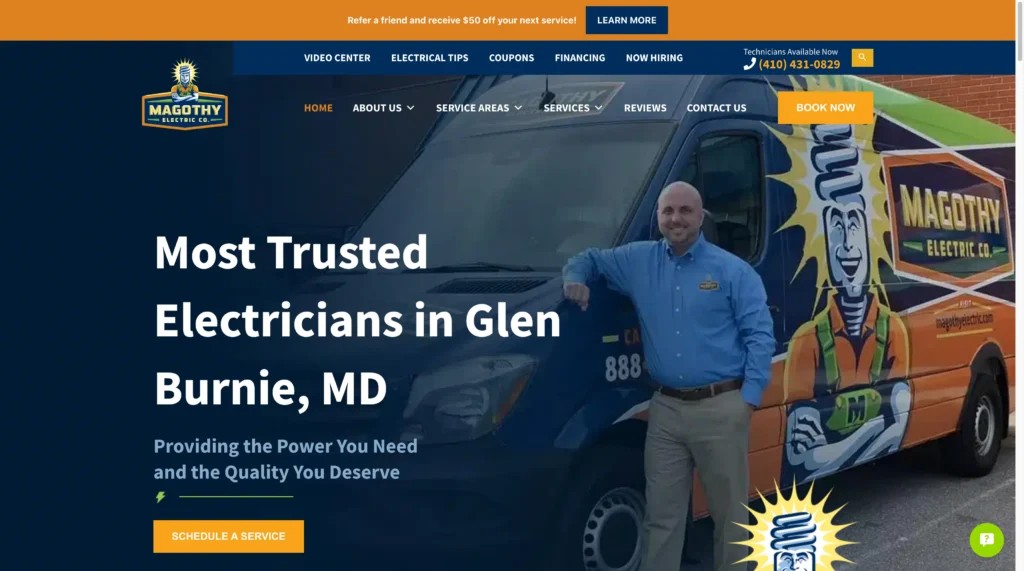
Magothy Electric’s website shows how strong branding and trust signals work together. A built-in chatbot encourages immediate engagement, while real project photos add authenticity and set clear expectations for quality. The site does a good job balancing visual credibility with practical information.
Highlights:
- Clear service area and contact information
- Detailed, easy-to-understand service descriptions
- Customer testimonials featured prominently
3. CSI Electric
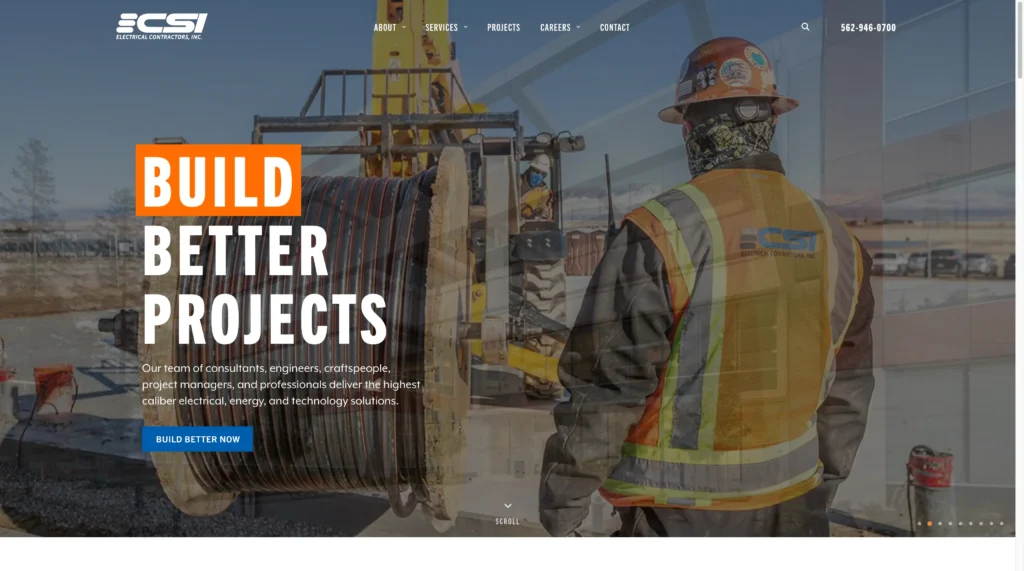
CSI Electric’s website shines for its clean, minimalist design that keeps the focus on family values and company culture. The layout is simple and intuitive, making it easy for visitors to find key information without distractions. It’s a strong example of how a straightforward design can feel professional, confident, and effective.
Highlights:
- Strong focus on corporate and industrial electrical services
- Showcases high-profile projects, including SoFi Stadium
- Clear emphasis on safety standards and team expertise
4. A&P Electrical
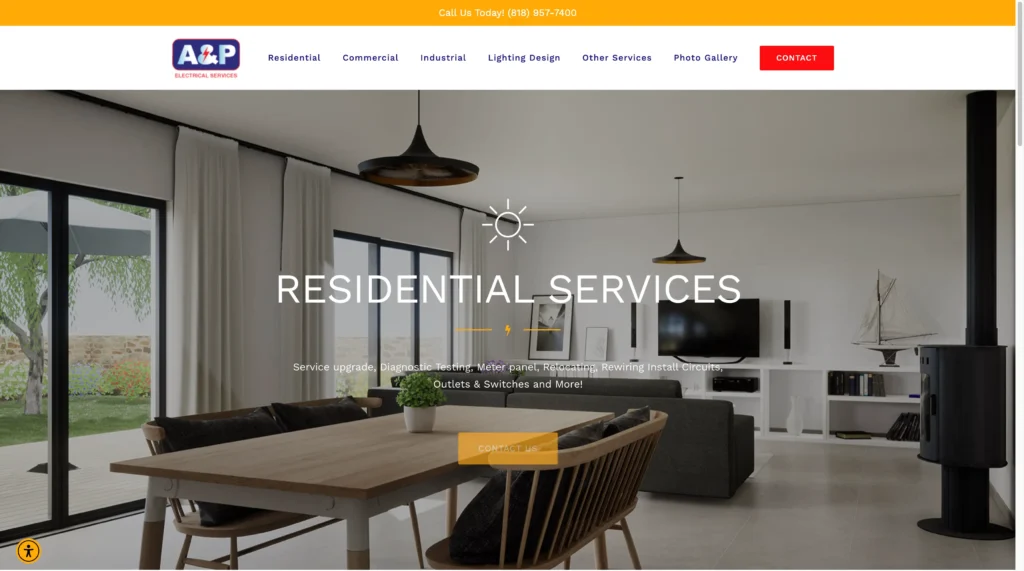
A&P Electrical’s website stands out for its clean, simple design that prioritizes trust. The business prominently displays HomeAdvisor badges at the bottom of the homepage, offering strong social proof that builds trust with visitors. The layout is professional and easy to navigate.
Highlights:
- Multiple contact numbers for easy access
- Emergency services clearly advertised
- Detailed service offerings for residential, commercial, and industrial clients
5. Powerful Electrical
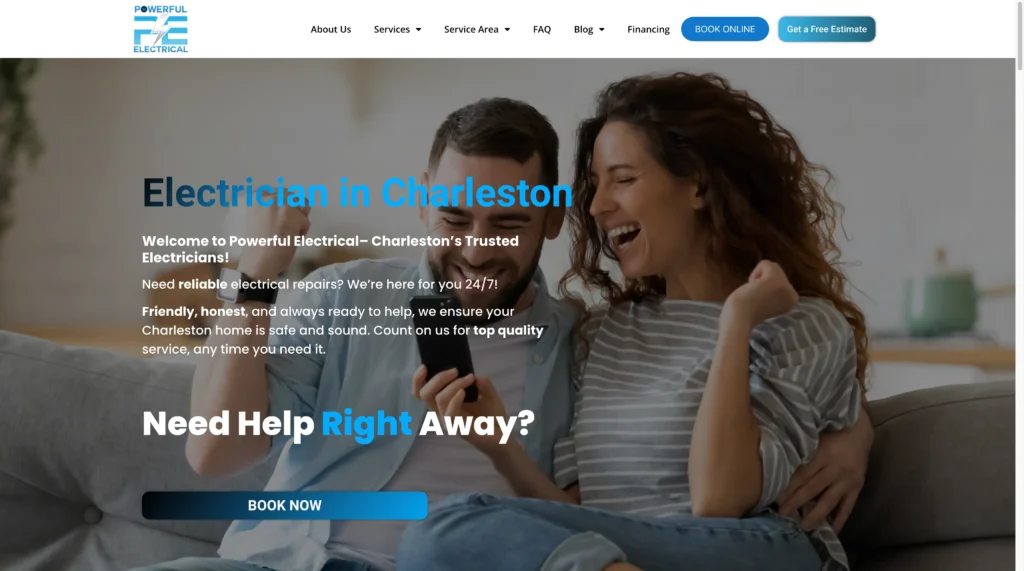
Powerful Electrical’s website focuses on effectiveness over flash. The clean layout and direct messaging guide visitors toward action, whether that’s calling or booking a service.
Highlights:
- Clear contact info and online booking
- Real photos of technicians
- Upfront pricing and financing options
- Service area pages for local SEO
6. Grounded Electric
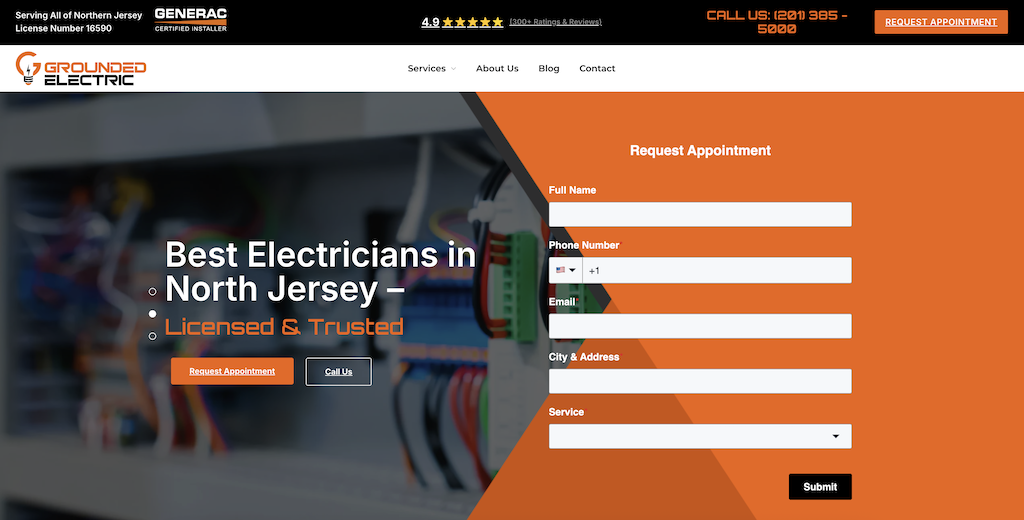
Grounded Electric’s website is a great model for small service-based businesses. A short appointment request form appears throughout the site, reducing friction and encouraging quick bookings.
Highlights:
- License number displayed for credibility
- Prominent phone number for fast contact
- Customer ratings featured to build trust
7. Casey’s Electric
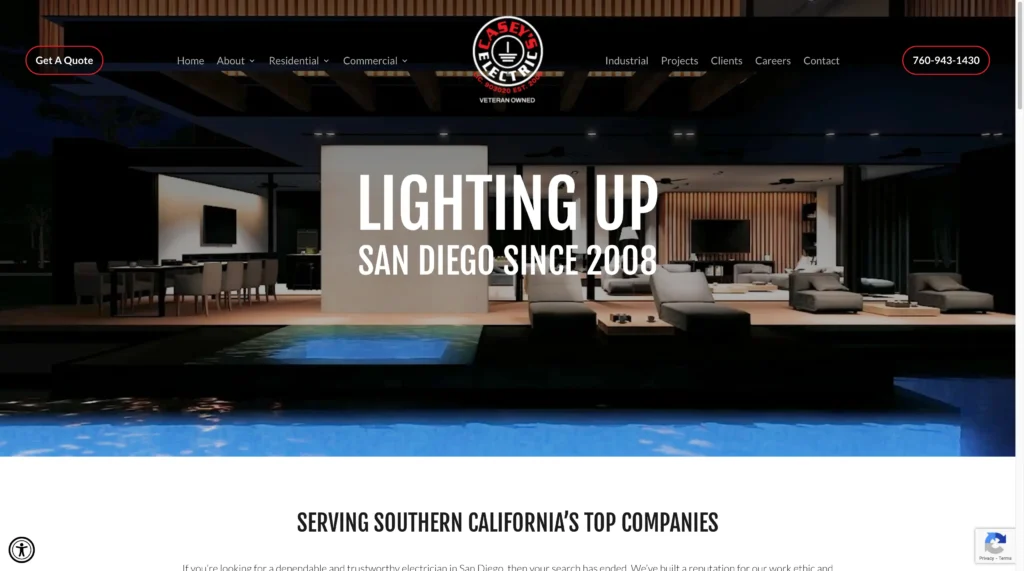
Casey’s Electric captures attention with a creative heading in the hero section, emphasizing their long-standing history. Strong social proof, including well-known commercial clients, helps establish credibility right away.
Highlights:
- Detailed About page with company history
- Emphasis on community involvement
- Clear call-to-action buttons for service requests
8. Art Electrical Services
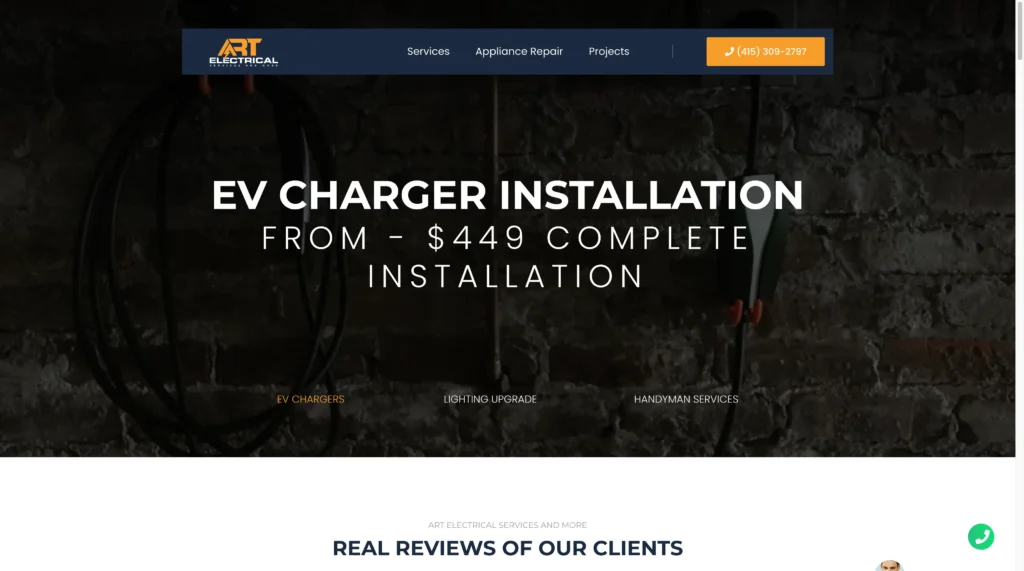
Art Electrical’s website uses a sleek, simple design that makes it easy for customers to get in touch. A strategically placed call button ensures visitors can reach out at any point.
Highlights:
- Focus on specialized services (energy-efficient lighting and EV charging)
- Detailed service offerings with eco-friendly options
- Clear contact information and service areas
9. TruTec Electric
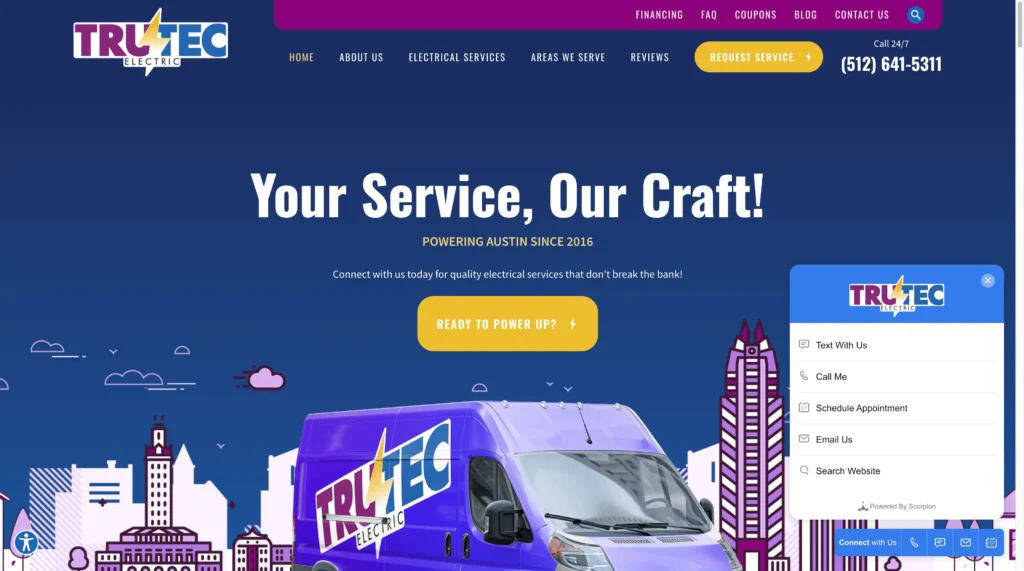
TruTec Electric combines strong branding with solid on-page SEO. Multiple contact options—text, call, or booking—make it easy for customers to engage in the way they prefer.
Highlights:
- Detailed service descriptions
- Clear contact information
- Emphasis on quality workmanship and customer satisfaction
10. Carlton Electric
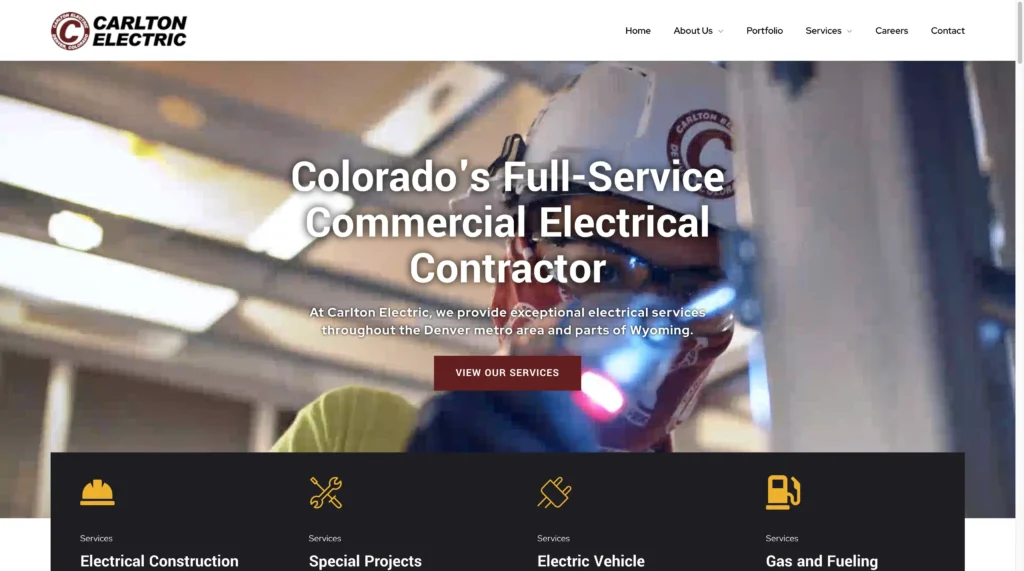
Carlton Electric makes a striking first impression with an engaging video header and high-quality project photography. The site does a great job showcasing commercial expertise while staying easy to navigate.
Highlights:
- Clear service area and contact information
- Detailed service offerings
- Emphasis on licensed and insured services
Should you hire a web designer or do it yourself?
Once you know what makes an electrician’s website work, the next decision is how to build it. That choice usually comes down to your budget, timeline, and how hands-on you want to be.
Both options can work well. The key is understanding the tradeoffs.
Build it yourself (DIY)
A simple DIY website is better than no website at all. Platforms like Wix, Squarespace, or WordPress allow you to build your own electrician website quickly and affordably. You don’t need web design experience; most platforms offer templates you can customize in a few clicks.
| Pros | Cons |
| Lower upfront cost with predictable monthly fees | You’re responsible for SEO setup, mobile optimization & lead capture |
| Full control to update content anytime | Requires time and basic technical knowledge |
| Templates make it easy to launch quickly | Customization can be limited as your business grows |
Best for: New electrician business owners or solo contractors who want a straightforward, professional site they can easily manage on their own.
Hire a professional web designer
Working with a designer or agency gives you a polished, customized website without taking time away from the field—but it comes at a higher cost.
| Pros | Cons |
| Professional design built to convert visitors into leads | Higher upfront investment |
| SEO, booking, and contact tools set up correctly | Ongoing updates may require outside help |
| Saves time and reduces trial-and-error | Longer build timeline than DIY options |
Best for: Growing electrical companies with multiple service areas, team members, or advanced marketing and lead-generation needs.
A middle-ground option
If you want something professional without the cost or complexity of custom design, Housecall Pro’s website builder offers an affordable way to launch a service-business-ready site—no tech skills required.
Electrician website SEO fundamentals (what actually helps you rank)
Strong SEO helps your site rank higher in search results and attract more potential customers. Google looks for three main signals when ranking electrician websites:
- Relevance: Your website needs dedicated pages for your main services. If you offer panel upgrades, EV charger installation, and emergency electrical repair, each service should have its own page. One generic “Services” page usually isn’t enough to rank well.
- Location signals: Electricians compete locally. Your website should clearly show where you work by referencing cities, neighborhoods, and service areas naturally throughout your pages.
- Trust: Reviews, licenses, certifications, real job photos, and clear contact details all signal legitimacy.
Good electrician website SEO is less about volume and more about clarity. When Google understands who you help, what you do, and where you operate, rankings follow.
Learn more: Electrician SEO: How to Rank Higher and Get More Leads
Common electrician website mistakes to avoid
Even small missteps can hurt your credibility, limit your visibility in search, or cost you real leads. These are some of the most common issues that hold electrician websites back—and why they matter.
- Hard-to-find contact info: If visitors can’t immediately see your phone number, contact form, or booking button, they won’t waste time looking for it. Most homeowners are comparing multiple electricians at once.
- Outdated photos or cluttered design: Old, low-quality images and crowded layouts make your business look unprofessional, even if your work is solid.
- No clear call to action: Every page on your electrician website should guide visitors toward the next step. Without a clear call to action—like “Call Now,” “Request a Quote,” or “Schedule Service”—people are left guessing. Clear CTAs increase conversions and make it easier for customers to reach you.
- Slow site speed: A slow-loading website frustrates users and hurts search rankings. Even a delay of a few seconds can cause visitors to leave before your page finishes loading.
- No tracking or analytics: Without basic tracking in place, you’re flying blind. Analytics help you understand where visitors come from, which pages generate calls or form submissions, and what needs improvement.
- Keyword stuffing: Repeating phrases like “[city] electrician” dozens of times won’t boost rankings. Search engines look for natural, relevant language and may lower rankings for too many keyword-heavy pages.
- Low-quality AI-generated content: Publishing large amounts of generic or lightly edited AI content can hurt visibility. Google prioritizes original, helpful content written for real users, not mass-produced text.
Avoiding these mistakes doesn’t require a full website rebuild. In many cases, small fixes can lead to noticeable improvements in traffic, trust, and lead volume.
Get the most from your electrician website with Housecall Pro
Your website works best when it’s connected to the systems you use to run your business, not operating on its own.
With Housecall Pro’s electrician software, you can:
- Capture more website leads: Online booking and contact forms make it easy for customers to request service anytime, even after hours.
- Respond faster: New inquiries are organized in one place so you can follow up quickly and win jobs before competitors do.
- Turn requests into booked jobs: Scheduling, estimates, and customer details stay connected, reducing manual work and missed opportunities.
- Keep everything organized: Calls, forms, and appointments flow into one system, so no lead slips through the cracks.
When your website and operations work together, it’s easier to stay organized, respond faster, and grow your electrical business with less effort. Start your free trial today.
Electrician website FAQ
-
How much does an electrician website cost?
-
Costs vary based on complexity, but most electrician websites range from a few hundred dollars for basic setups to several thousand for custom designs with SEO tools built in.
-
Do electricians need SEO to get leads?
-
Yes. SEO helps your website appear in local search results when homeowners are actively looking for electrical services.
-
How long does electrician SEO take to work?
-
Most electricians start seeing improvements within a few months, with stronger results building over time as trust and visibility increase.
-
What pages should an electrician website have?
-
At minimum, electrician websites should have a homepage, service pages, an About page, reviews, FAQs, and a contact page with clear service areas.