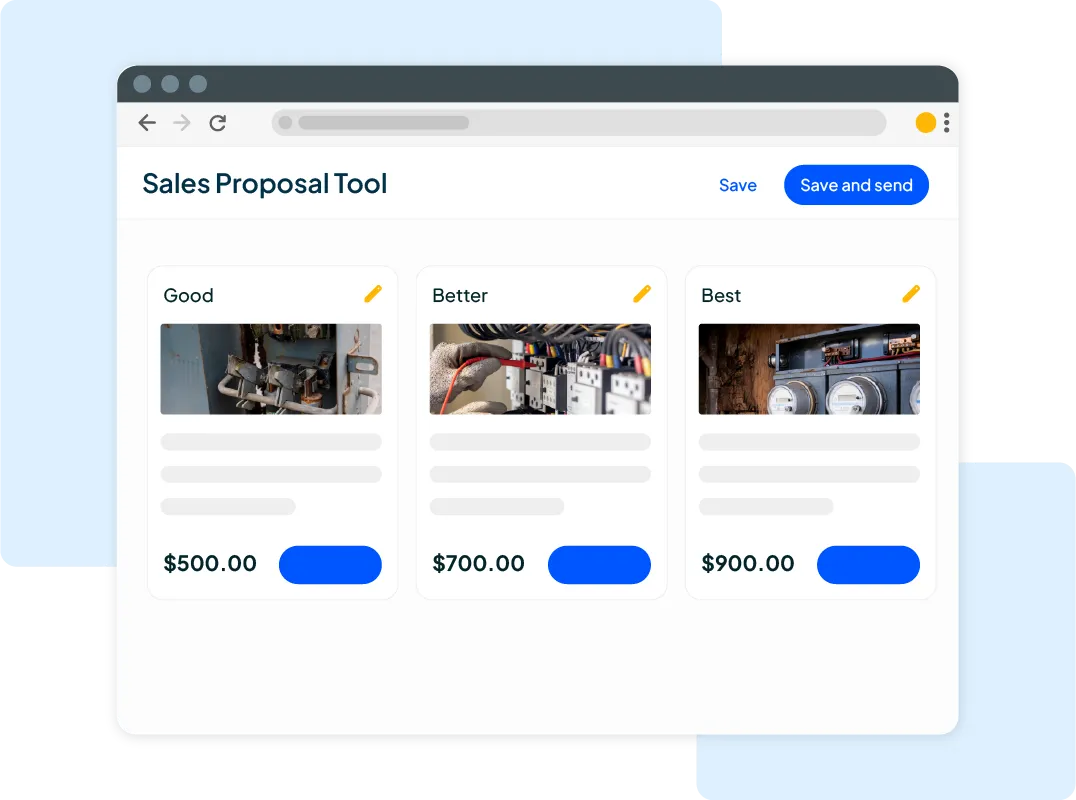
Want to win more jobs with less effort?
Grow your business and send quick quotes with our home service software.

Want to see your potential revenue?
See what businesses like yours earn with Housecall Pro in 1 - 2 minutes.
How do you request payment from a client after completing an electrical job? Do you fire off a quick text with your rate? Tell the customer the price on the spot? If so, you’re missing out on a smoother, more professional way to wrap up the job.
An electrician invoice lays everything out clearly—what you did, the materials you used, and the final cost—so there’s no confusion on either side. It also gives you a clean record to look back on, which makes tracking payments, managing cash flow, and getting ready for taxes way easier.
This guide outlines exactly how to write a professional electrical invoice. You can also download our free electrical invoice template to create a clean, ready-to-send invoice in seconds.
Here’s what’s included:
- Built-in formulas that calculate totals for you.
- Printable reports that can be sent to customers or used for company records.
- Quick, easy customization that allows customer information to be personalized or unique company branding to be added.
- Thorough, simple step-by-step instructions to allow for a complete understanding of the electrical invoice template.
Key takeaways
Here’s a quick look at how to write an electrical invoice that helps you get paid faster:
Choose the right invoice type: Match your invoice to the job type, whether you’re handling a quick repair, maintenance task, or high-cost project.
Include essential details: Add your business and customer details, service description, total amount due, and payment terms.
Send invoices promptly: Generate the invoice immediately after completing each job.
Add your branding: Use your logo and company colors to give your invoice a professional look.
Automate with Housecall Pro: Create, send, and track your electrical invoices all from one platform.
Jump ahead
Types of electrical invoices (and when to use them)
No two electrical projects are the same. Each job warrants a different timeline, cost structure, and level of complexity. By matching the correct invoice type to the project, your client will have complete transparency into what they’re paying for.
Here are some of the most common types of electrician invoices and when to use them.
Standard invoice
A standard invoice works best for small, one-time jobs like repairing a defective outlet, replacing a breaker, or installing a new ceiling fan. It includes the service description and the total amount your customer must pay.
For example, after completing an outlet repair worth $250, you’ll send the homeowner a standard invoice. This provides details about labor costs and shows the client how much you spent on supplies.
Itemized invoice
For larger projects with multiple stages, an itemized invoice keeps costs transparent. Instead of charging your clients a lump sum, you break down the price by each stage of work.
For example, after a full home rewiring, you can list charges separately for light circuitry, socket installations, and safety checks. Being specific helps the client understand what they’re paying for.
Deposit invoice
A deposit invoice helps cover your initial costs when completing expensive or custom jobs. For example, you might ask for a 40% deposit before starting an office building panel upgrade or major installation. Then, you’d send the remaining balance upon completion of the project. This approach saves you from having to front large material or labor costs out of pocket and protects you from last-minute cancellations.
Recurring or maintenance invoice
If you do regular maintenance or safety inspections, you can use a recurring invoice to bill clients on a set schedule without having to create a new invoice every time. For example, if a property management group hires you to do quarterly electrical inspections, you could set up a recurring invoice to automatically bill them every three months. Automated invoicing helps you save time and helps your clients stay on schedule with payments.
Pro tip: Use Housecall Pro’s automated invoicing to create, schedule, and send any type of electrician invoice in seconds. It comes with all the necessary fields and follow-ups built right in.
Get In Touch: 858-842-5746
Let us earn your trust
On average, Pros increase monthly revenue generated through Housecall Pro by more than 35% after their first year.
See plan options and feature breakdown on our pricing page.
What should an electrician invoice include?
Although the invoice type varies based on the work you do, the basic elements are the same. Here are the key details to include in every electrical invoice you create:
- Heading information: Write “invoice” at the top of the document to differentiate it from other financial documents like quotes or receipts. Include your business name, mailing address, phone number, and email so clients can reach you with any questions.
- Customer details: Add the customer’s full name and address. Fill in their email address and phone number so it’s clear who is being billed for what job.
- Unique invoice number and date: Give your invoice a unique number and include the issue date. This makes it easier to track transactions and maintain organized records for your business and clients.
- Subtotal and taxes: Detail the subtotal for all electrical services provided, then provide the tax breakdown. Separating the tax makes it easy to confirm all figures and simplifies bookkeeping and year-end reporting.
- Amount payable: Highlight the amount due for the electrical service provided and use bold formatting (or a slightly larger font size) for emphasis. This shows the customer exactly what they owe, reducing back-and-forth calls.
- Payment terms: State when payment is due and what forms of payment are acceptable. Include late fees and early payment discounts, if applicable.
Notes: Enter any additional notes on warranties and guarantees, or leave a short thank-you message. A friendly note adds a personal touch to your invoice and may help you get repeat business.
Tips for writing electrical invoices
Increase your chances of getting paid on time by following these invoicing best practices:
- Use a consistent invoice template: Stick to one format so every electrical invoice you create looks professional. This consistency builds trust and helps clients easily recognize and process your invoices.
- Add your branding: Include your logo, brand colors, and business name to make your invoices recognizable. Angel Garcia, owner of S4 Electric LLC, uses a dark blue and green color palette for his site after realizing that many of his competitors have a yellow color scheme. Whatever color you choose, keep it consistent across your website and invoices.
- Include detailed service descriptions: To avoid confusion and payment disputes, be specific about the work you delivered and the materials used. Clear descriptions help clients understand the value of your services.
- Offer multiple payment options: Make it easy for customers to pay via card, bank transfer, and online payment processors like PayPal. Flexible payment methods lead to faster payments.
- Track and follow up on unpaid invoices: Use dedicated electrician software to manage overdue payments. Automated reminders make sure you never miss out on what you’re owed.
It’s best to send invoices immediately after completing each job to keep cash flow steady and help clients remember the details of the work.
How to create an electrical invoice
Follow these steps to create an electrical invoicing system that saves time and reduces manual errors:
- Create a standard invoice template: Download an electrician invoice template that includes all key details. Using a standard invoice template helps you save time and ensures you don’t miss important fields.
- Customize the template for your business: Add your branding elements like logos, colors, and fonts. Replace placeholder text (such as the business name, client details, invoice number, etc.) with the correct information.
- Train your team: Make sure your team members know how to fill out and send invoices correctly. Consistent, accurate invoicing prevents confusion and keeps your records organized.
- Use industry software: Job invoicing software like Housecall Pro makes invoicing easy. You can create professional invoices in seconds, automate customer follow-ups, and get paid on time.
- Establish clear payment terms: Set expectations upfront by stating when payment is due and what methods you accept. Adding terms such as “Net 15” or “Payment due upon completion” helps avoid misunderstandings and ensures faster payment turnaround.
Pro tip: Once you’ve created your first invoice in Housecall Pro, save it as a template so every future invoice is ready to send in seconds.
How Housecall Pro’s electrician invoice software can help
Even the most skilled electricians struggle with invoicing frustrations like late payments, missing details, inconsistent templates, and hours spent tracking receivables. Manual billing leaves room for mistakes and delays that hurt your cash flow.
Housecall Pro eliminates these headaches by letting you create accurate, professional invoices in seconds, automate recurring billing, and track payments—so you get paid faster and stay on top of your finances.
Here’s what our electrician software can do:
- Mobile invoicing from the job site: Create and send invoices directly from your phone or tablet before you even leave the customer’s driveway.
- Automatic invoice numbering and templates: Save time by using prebuilt templates and auto-generating invoice numbers for every job. HousecallPro customers save an average of 8.6 hours per week.
- Quick payment processing: Accept credit cards and online payments instantly to close jobs and collect payment on the spot.
- Automatic reminders for overdue invoices: Automatically follow up with friendly reminders when clients miss a due date.
- Integration with accounting and reporting tools: Sync your invoices with QuickBooks or other systems to keep your books accurate and your reporting up to date.
Start simplifying your invoicing today. Sign up for a 14-day free trial and say goodbye to your outdated invoicing system.