Want to see your potential revenue?
See what businesses like yours earn with Housecall Pro in 1 - 2 minutes.
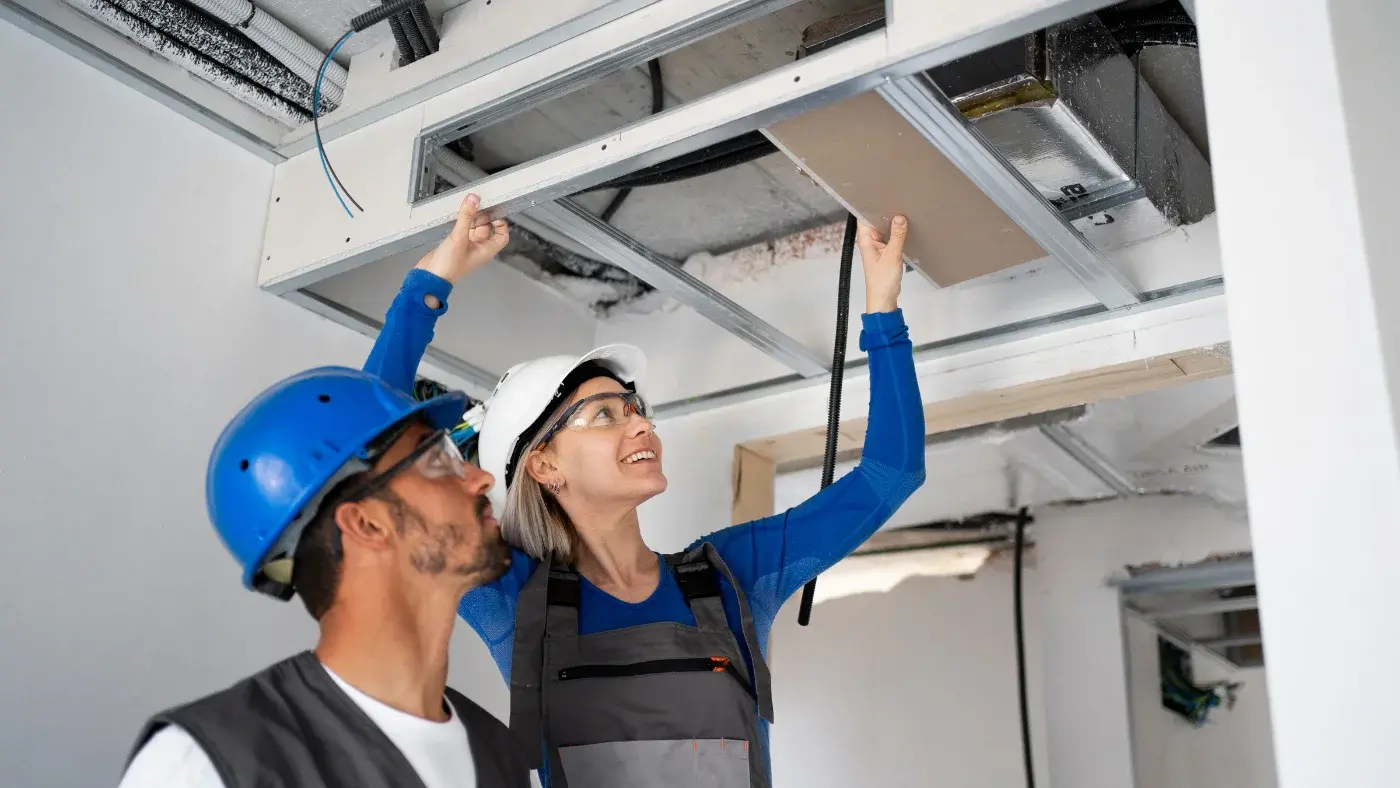
Air duct cleaning pricing can feel unpredictable, even for experienced pros. Two homes can look identical on paper and still take very different amounts of time, equipment, and effort once you access the system.
This 2026 guide breaks down current air duct cleaning prices, the pricing models most professionals use, and how to set rates that feel fair to customers and sustainable for your business. Whether you’re adjusting prices or building a pricing system from scratch, you’ll get a clear framework to price confidently and stay consistent across jobs.
Key takeaways
Here’s what you should know before setting or updating your air duct pricing:
Residential prices are rising: Higher labor, fuel, insurance, and equipment costs continue to push averages up.
Most homes fall into a wide range: Full-service duct cleaning typically costs $400–$1,000, depending on scope and system count.
Per-system pricing works best for most homes: It’s simpler to explain, faster to quote, and easier to standardize.
Commercial pricing needs custom quotes: Square footage, access, and system layout matter more than vent counts.
Add-ons protect profitability: Dryer vents, sanitizing, and component cleaning often determine true job value.
Table of contents
- Average price for duct cleaning in 2026
- Residential air duct cleaning prices
- Commercial air duct cleaning prices
- Popular air duct cleaning add-ons and upsells
- Common air duct cleaning pricing models
- Factors that affect air duct cleaning prices
- How to set air duct cleaning prices
- Example air duct cleaning price calculations
- Advanced air duct cleaning pricing tips
- How to explain air duct cleaning pricing to customers
- How Housecall Pro helps you price duct cleaning jobs
Average price for duct cleaning in 2026
Most air duct cleaning professionals charge between $400 and $1,000 per home, with many single-system homes landing closer to $450–$650.
Lower-priced offers—often advertised under $300—usually reflect partial cleanings, per-vent teaser pricing, or limited-scope services. On the other end, larger homes, multisystem properties, or jobs with heavy contamination regularly exceed $800–$1,000.
In cases where the scope is unclear or highly variable, some contractors use hourly pricing instead. Typical rates range from $90–$150 per technician, depending on market and equipment. This rate should cover total job costs, including overhead, travel time, equipment, chemicals, and nonbillable work, not just technician wages.
*These price ranges reflect 2026 national averages pulled from homeowner reports and service listings on platforms like Angi, HomeAdvisor, and Thumbtack. Use them as benchmarks, not fixed rules.
Residential air duct cleaning prices
Residential duct cleaning is most commonly priced per system or vent, with add-ons layered in based on condition and access.
Here’s what typical residential pricing looks like in 2026:
| Pricing type | Typical range |
| Per system | $400–$650 |
| Per vent | $30–$60 |
| Small home (1 system) | $400–$600 |
| Medium home (2 systems) | $650–$1,000 |
| Large home (3+ systems) | $1,000–$1,500+ |
A few practical pricing notes to keep in mind:
- System-based pricing is easier for homeowners to understand and accept
- Per-vent pricing works best when vent counts vary widely between homes
- Multi-system homes should always be priced higher, even if layouts look similar
- Add-ons often determine whether a job is minimally profitable or a strong win
Commercial air duct cleaning prices
Commercial duct cleaning is far less standardized than residential work. Buildings vary widely in layout, ceiling height, access points, and HVAC design, so most commercial jobs are quoted using square footage, hourly rates, or custom scopes.
Here are average commercial price ranges for 2026:
| Pricing type | Typical range |
| Per square foot | $0.30–$0.60 |
| Hourly | $90–$150 |
| Small commercial system | $600–$2,000 |
| Large facilities | Custom quote |
Factors that commonly affect commercial pricing:
- Number of HVAC systems and duct runs
- Ceiling height and access limitations
- After-hours or weekend work
- Safety requirements or regulatory standards
Many commercial clients prefer recurring maintenance. Offering a slightly lower per-visit rate in exchange for scheduled service can help lock in predictable revenue. With Housecall Pro, you can set up recurring service plans, automate scheduling, and manage ongoing commercial accounts without extra admin work.
Popular air duct cleaning add-ons and upsells
Add-ons are where many duct cleaning jobs become truly profitable. When you recommend upsells based on visible conditions, such as buildup, airflow issues, or safety concerns, customers are more likely to trust the recommendation and view it as helpful rather than salesy.
| Add-on | Typical price |
| Dryer vent cleaning | $100–$250 |
| Antimicrobial treatment | $75–$200 |
| Blower cleaning | $150–$400 |
| Coil cleaning | $150–$500 |
| Filter replacement | $25–$75 |
Common air duct cleaning pricing models
There’s no single “best” pricing model, but there is a model that works best for your business. The most successful duct cleaners pick one primary approach and apply it consistently.
System-based pricing
This is the most common model for residential duct cleaning. You charge a flat rate per HVAC system that includes setup, cleaning, and teardown.
Best for:
Standard residential homes with typical system layouts
Why it works:
- Easy for homeowners to understand
- Speeds up quoting
- Avoids disputes over vent counts
Watchouts:
- Additional systems must increase the total price
- Add-ons are often needed to protect margins
Per-vent pricing
Per-vent pricing charges for each supply and return vent individually.
Best for:
- Homes with unusually high or low vent counts
- Complex or nonstandard layouts
Why it works:
- Feels fair to customers
- Helps justify pricing on more involved jobs
Watchouts:
- Customers may count vents differently than you do
- Minimum service charges help avoid low-ticket jobs
Hourly pricing
You bill based on time spent, typically per technician.
Best for:
- Post-construction cleanups
- Severe contamination or neglected systems
- Partial system cleanings
- Commercial or industrial work
Why it works:
- Flexible when scope is unclear or highly variable
- Accounts for unexpected issues during the job
Watchouts:
- Customers may worry about open-ended costs
- Clear expectations and estimates are crucial
Square-footage pricing
Pricing is based on the total square footage of the property.
Best for:
- Office buildings
- Schools and universities
- Medical facilities
- Warehouses and industrial spaces
Why it works:
- Scales well for large properties
- Aligns with how commercial clients budget
Watchouts:
- Access difficulty can impact labor time
- Ceiling height and system complexity often require adjustments
Even with square-foot pricing, most pros adjust for access difficulty, ceiling height, and system complexity.
Pro tip: With Housecall Pro, you can build a digital price book for per-system, per-vent, and add-on services so every quote follows the same rules—no guessing, no on-the-fly math.
Get In Touch: 858-842-5746
Let us earn your trust
On average, Pros increase monthly revenue generated through Housecall Pro by more than 35% after their first year.
See plan options and feature breakdown on our pricing page.
Factors that affect air duct cleaning prices
No pricing model is truly one-size-fits-all. Several variables can influence the final quote, including:
- Number of systems: Each system requires its own setup, cleaning, and teardown. More systems mean more labor time and equipment use, even in the same home.
- Vent count and layout: Higher vent counts, long duct runs, or unusual layouts take longer to clean and often require more repositioning and passes.
- Accessibility: Tight crawl spaces, low attics, rooftop units, or crowded mechanical rooms slow work and increase physical effort and safety risk.
- Condition of ductwork: Heavy dust, pet hair, construction debris, or suspected mold requires additional agitation, more time on site, and sometimes specialized handling.
- Dryer vents: Dryer vent cleaning is typically priced separately due to different tools, higher fire risk, and frequent exterior or roof access.
- Internal components: Cleaning blowers, coils, and other internal parts adds labor, increases liability, and involves delicate components that require extra care.
- Local market rates: Labor costs, insurance, and operating expenses vary by location, with urban and high-cost areas generally supporting higher pricing.
Factor these in consistently to ensure you’re paid fairly for the time, effort, and resources each job requires.
How to set air duct cleaning prices
Knowing the going rates is helpful, but setting your prices starts with understanding your real costs from start to finish. Instead of guessing or copying competitors, use a simple, repeatable process that accounts for costs, job conditions, and profit.
Step #1: Calculate your baseline costs
Start with what it costs you to show up and complete a job, not just time spent cleaning. These costs set the minimum you need to charge before profit.
Factor in:
- Labor: Technician pay, payroll taxes, and workers’ comp
- Overhead: Insurance, vehicles, fuel, equipment, tools, and supplies
- Nonbillable time: Travel, setup, system access, teardown, and cleanup
Use these simple formulas to find your break-even price:
Labor cost per job
(Hourly wage × labor burden) × job hours
Overhead cost per job
Total monthly overhead ÷ monthly billable hours × (job hours + nonbillable hours)
Break-even job cost
Labor cost per job + overhead cost per job
Step #2: Choose your primary pricing model
Most duct cleaning businesses rely on one main pricing model, then adjust when needed. Pick the model that fits most of your jobs.
Common options include:
- Per-system pricing for standard residential duct cleaning and fast quoting
- Per-vent pricing when vent counts vary widely between homes
- Hourly pricing for post-construction cleanups or jobs with unknown scope
- Square-foot pricing for commercial and large facilities
Standardizing your pricing model makes estimates faster, more consistent, and easier for customers to understand.
Step #3: Account for system condition and access
INot every duct cleaning job takes the same amount of time. Instead of raising your base price, apply predefined adjustments when the duct cleaning itself is harder or slower than normal due to system conditions or access challenges.
Common factors to price for include:
- Heavy buildup or contamination: Thick dust, pet hair, debris, or suspected mold increases labor time
- System layout: Long duct runs, multiple returns, or older designs take more passes
- Access issues: Tight crawlspaces, low attics, rooftop units, or packed mechanical rooms slow work and increase risk
Estimate how much time each condition adds to a standard job. Multiply that time by your target hourly rate, then round to a flat, easy-to-quote adjustment.
Step #4: Add a profit margin
Your pricing should do more than cover today’s costs. It should fund growth, absorb slow weeks, and still leave profit at the end of the month. Most healthy duct cleaning businesses aim for 20%–40% profit margins, depending on market and service mix.
Use this formula to build profit into your rates:
Break-even cost ÷ (1 − target margin) = target rate
Step #5: Use add-ons to protect margins
Add-ons cover additional services beyond standard duct cleaning, not adjustments for job difficulty. Pricing them separately protects margins without inflating your base rate for customers who don’t need extra work.
Best practices:
- Price add-ons separately: Dryer vent cleaning, sanitizing, blower or coil cleaning
- Use consistent pricing: Quote the same add-ons the same way every time
- Recommend based on condition: Tie add-ons to visible issues, not pressure tactics
- Use clear line items: Transparent estimates help customers understand adjustments
Step #6: Review and adjust pricing regularly
Duct cleaning costs change over time, and your pricing should keep up.
Make it a habit to:
- Review pricing annually: Sooner if labor, fuel, or insurance costs increase
- Track job time: Compare estimated time versus actual time to spot underpricing
- Adjust minimums if needed: Small jobs should still be profitable
Pro tip: Housecall Pro helps you track job time, apply consistent pricing, and adjust rates as costs change so your margins don’t slip unnoticed.
Example air duct cleaning price calculations
These examples show how different pricing models, job conditions, and add-ons come together in real-world scenarios. Use them as reference points for building consistent estimates, not rigid templates.
Example 1: Single-system home
This is a common residential job with a straightforward scope and one add-on.
Scope: One HVAC system, average vent count
Pricing model: Per-system
Base price: $500
Dryer vent add-on: $150
Total: $650
Example 2: Two-system home
Multi-system homes require more setup time and equipment movement, especially when buildup is heavier than normal.
Scope: Two systems, heavy dust buildup
Pricing model: Per-system
Base price: $850
Sanitizing add-on: $150
Total: $1,000
Example 3: Small office building
Commercial jobs like this are often priced by square footage and adjusted for access timing.
Scope: 6,000 square feet, after-hours service
Pricing model: Square-foot
Rate: $0.45 per square foot
Total: $2,700
Advanced air duct cleaning pricing tips
Once you’ve got your base prices down, these strategies can help you increase profit without complicating estimates or creating friction with customers.
- Bundle services: Combine base duct cleaning with add-ons like dryer vent cleaning, sanitizing, or blower cleaning to raise average job value and make better use of drive time.
- Create tiered service levels: Package services into clear options (standard, deep clean, premium) to upsell without custom-quoting every job.
- Offer recurring discounts: Encourage scheduled maintenance for residential or commercial clients with modest discounts that improve routing and revenue predictability.
- Adjust pricing by demand or timing: Charge more for same-day, weekend, seasonal, or last-minute jobs to protect margins and manage schedule pressure.
- Track effective hourly revenue: Review completed jobs to confirm your flat or system-based pricing consistently hits your target hourly rate.
- Price to filter low-value work: Use minimum charges, service boundaries, or premium-only offerings to reduce low-margin or time-draining jobs.
How to explain air duct cleaning pricing to customers
Clear explanations around duct cleaning pricing help minimize pushback and build trust. Setting expectations early and clearly outlining what’s included makes customers more comfortable booking the service.
- Explain what’s included in the base service: Clarify that standard duct cleaning covers professional equipment, system setup, cleaning, and labor—not just time on site.
- Set expectations upfront: Let customers know pricing is based on system count, vent layout, and access, with adjustments for condition or additional services.
- Separate base service from add-ons: Present pricing in layers so customers clearly see the difference between the core service and optional add-ons like dryer vents or sanitizing.
- Use clear, confident language: Explain pricing matter-of-factly, focusing on how jobs are priced rather than apologizing for the cost.
- Put pricing in writing: Use written estimates and invoices with clear line items so customers understand how the final price was built.
How Housecall Pro helps you price duct cleaning jobs
How you price air duct cleaning services is up to you, but Housecall Pro makes it easier to stay accurate and consistent. With our cleaning business software, you can:
- Build digital price books: Create per-system, per-vent, hourly, or square-foot services with standardized pricing rules.
- Add common upsells: Include dryer vent cleaning, sanitizing treatments, blower cleaning, or coil cleaning as clear line items.
- Apply pricing instantly: Generate accurate quotes without manual math or on-the-fly adjustments.
- Offer online booking: Let customers schedule duct cleaning services without back-and-forth, even after hours.
- Present professional quotes: Use clean, consistent templates so every billable item is captured and easy to understand.
Housecall Pro helps you manage the entire job, not just pricing. From booking and scheduling to payments and customer communication, everything stays organized in one place. Start your free Housecall Pro trial today to see how we can support and grow your duct cleaning business.
Frequently asked questions
-
How much should I charge for air duct cleaning?
-
You should charge based on system count, scope, and add-ons, but most full-service residential air duct cleaning jobs fall between $400 and $1,000, depending on how many systems are being cleaned and which additional services are included.
-
Is per-system or per-vent pricing better for air duct cleaning?
-
Per-system pricing is usually simpler and faster to explain. Per-vent pricing works best when vent counts vary widely or when layouts are unusually complex.
-
Do customers expect dryer vent cleaning with air duct cleaning?
-
Many customers expect dryer vent cleaning to be offered alongside air duct cleaning, and it’s one of the most common and profitable add-on services when priced separately.
-
How often should I update my air duct cleaning prices?
-
You should review and update air duct cleaning prices at least once per year, especially when labor, fuel, insurance, or equipment costs increase.
-
Should I offer discounts on air duct cleaning services?
-
Yes. However, discounts for air duct cleaning work best when they’re tied to recurring service or bundled jobs, rather than one-time promotions, because they help stabilize scheduling and long-term revenue.