Want to win more jobs with less effort?
Grow your business and send quick quotes with our home service software.

Want to see your potential revenue?
See what businesses like yours earn with Housecall Pro in 1 - 2 minutes.
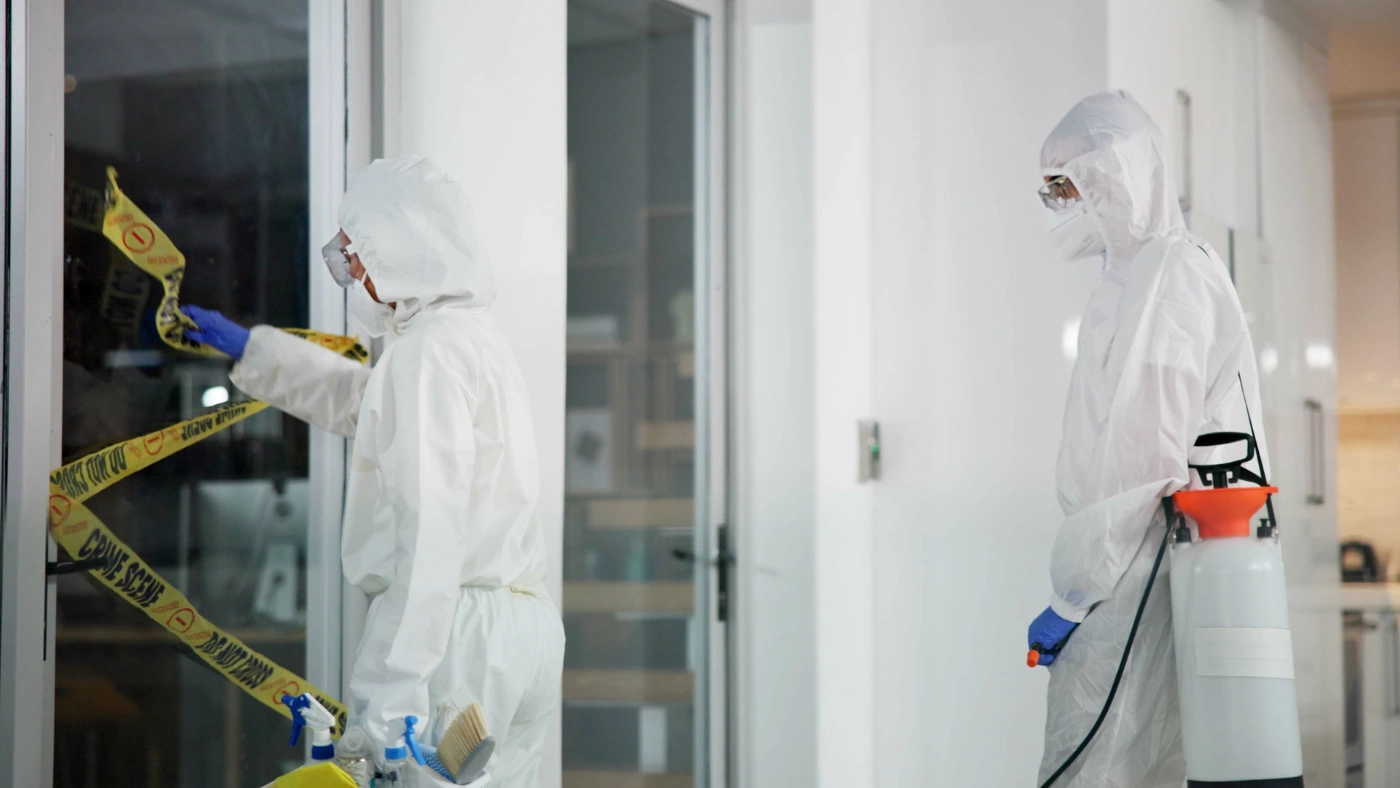
Crime scene cleaners handle biohazard removal, decontamination, and restoration in homes, businesses, and public spaces. The work is difficult and can be highly specialized, requiring specific training, strict safety protocols, and the ability to work in emotionally sensitive environments. Salaries reflect this level of skill and responsibility.
If you’re interested in getting into the field, this guide breaks down how much crime scene cleaners make in 2026, the factors that influence pay, and what you can expect as you build your career.
Key takeaways
Here's a quick look at what impacts crime scene cleanup pay and where you can earn the most:
Average crime scene cleaner salary: Most crime scene cleaners earn $55,000–$63,500 annually.
Crime scene cleaner hourly rates: Typical hourly pay falls in the mid‑$20s to mid‑$30s, depending on experience, specialization, and location.
Top-paying areas: Demand is typically strongest in large metro areas where there is more crime and more dense housing.
Major pay factors: Location and experience have the biggest influence on earnings.
Highest-paying roles: Managers and cleaners with multiple specialty certifications typically earn the most.
Jump Ahead
- Average crime scene cleaner salaries in the U.S.
- How much do crime scene cleaners make by state?
- What states pay crime scene cleaners the most?
- What states pay crime scene cleaners the least?
- Crime scene cleaner salary by experience
- What affects a crime scene cleaner's salary?
- How to increase your crime scene cleaner salary
- How to become a crime scene cleaner
- How to open your own crime scene cleaner business
Average crime scene cleaner salaries in the U.S.
In 2026, crime scene cleaners typically earn between $40,000 and $80,000 per year, depending on experience, certifications, and job volume. Cleaners who handle complex biohazard jobs, work on-call schedules, or operate in high-cost areas may earn significantly more.
Entry‑level crime scene cleaner roles tend to pay less. These positions average about $15.09 per hour, or $31,390 per year, with most wages between roughly $13 and $16 per hour. That translates to approximately $28,000–$40,000 per year, depending on hours worked.
In both categories, total pay can climb with overtime since many crime scene cleanup jobs are on‑call and often require night and weekend work.
*Salary information in this guide is based on 2026 data from ZipRecruiter.
How much do crime scene cleaners make by state?
Urban density and crime rates have the biggest impact on how much you can make as a crime scene cleaner. Pay in large cities with high violent crime rates, especially homicide, may be considerably more than in safer or more rural areas. The overall cost of living in your area can also affect wages, as with most other jobs.
Here are the state averages based on current U.S. salary data for crime scene cleanup roles:
| State | Hourly | Annual |
| Alabama | $21 | $44,542 |
| Alaska | $25 | $52,924 |
| Arizona | $22 | $45,795 |
| Arkansas | $20 | $40,636 |
| California | $23 | $48,499 |
| Colorado | $25 | $51,674 |
| Connecticut | $22 | $46,749 |
| Delaware | $29 | $60,444 |
| Florida | $22 | $45,130 |
| Georgia | $25 | $50,994 |
| Hawaii | $30 | $62,745 |
| Idaho | $27 | $56,822 |
| Illinois | $28 | $58,521 |
| Indiana | $28 | $57,467 |
| Iowa | $27 | $56,724 |
| Kansas | $26 | $53,860 |
| Kentucky | $25 | $52,452 |
| Louisiana | $25 | $51,642 |
| Maine | $28 | $58,471 |
| Maryland | $28 | $58,613 |
| Massachusetts | $32 | $65,955 |
| Michigan | $25 | $52,627 |
| Minnesota | $28 | $59,148 |
| Mississippi | $27 | $57,195 |
| Missouri | $27 | $56,648 |
| Montana | $27 | $55,430 |
| Nebraska | $28 | $57,581 |
| Nevada | $30 | $61,497 |
| New Hampshire | $28 | $58,732 |
| New Jersey | $29 | $61,312 |
| New Mexico | $28 | $58,524 |
| New York | $32 | $66,071 |
| North Carolina | $21 | $44,661 |
| North Dakota | $25 | $51,997 |
| Ohio | $28 | $57,414 |
| Oklahoma | $27 | $55,762 |
| Oregon | $31 | $63,851 |
| Pennsylvania | $29 | $60,537 |
| Rhode Island | $28 | $59,142 |
| South Carolina | $22 | $45,602 |
| South Dakota | $29 | $60,392 |
| Tennessee | $26 | $54,813 |
| Texas | $27 | $56,264 |
| Utah | $26 | $54,979 |
| Vermont | $31 | $64,212 |
| Virginia | $29 | $59,874 |
| Washington | $33 | $68,400 |
| West Virginia | $22 | $46,753 |
| Wisconsin | $29 | $60,957 |
| Wyoming | $28 | $58,050 |
| Washington, D.C. | $27 | $55,650 |
*Sourced from current ZipRecruiter crime scene cleanup salary data; figures are approximate and rounded.
What states pay crime scene cleaners the most?
The highest-paying states for crime scene cleaners have median salaries in the mid‑$60,000s, with top earners in the low‑ to mid‑$80,000s.
States like Washington, Oregon, New York, and Massachusetts have large metro areas, relatively high costs of living, and steady demand for biohazard and crime scene cleanup, increasing wages for experienced technicians. Vermont has generally higher average wages across many occupations, not just crime cleanup work.
| State | Low | Median | High |
| Washington | $47,003 | $68,400 | $88,343 |
| New York | $45,402 | $66,071 | $85,336 |
| Massachusetts | $45,323 | $65,955 | $85,185 |
| Vermont | $44,125 | $64,212 | $82,934 |
| Oregon | $43,877 | $63,851 | $82,457 |
What states pay crime scene cleaners the least?
Several states in the South and Southeast report median salaries in the low‑ to mid‑$40,000s for crime scene cleanup roles. This is due to lower overall wages and costs of living. Some of these states still have metro areas (like Miami or Charleston) with high crime rates, but statewide averages are still lower than in high-cost-of-living regions.
| State | Low | Median | High |
| Arkansas | $20,673 | $40,636 | $58,710 |
| North Carolina | $22,720 | $44,661 | $64,524 |
| Alabama | $22,660 | $44,542 | $64,354 |
| Florida | $18,682 | $36,724 | $53,058 |
| South Carolina | $23,199 | $45,602 | $65,885 |
Crime scene cleaner salary by experience
A crime scene cleaner’s experience level has a direct impact on pay. As workers gain hands-on training, certifications, and the ability to handle complex biohazard jobs independently, earnings tend to increase. In 2026, employers also value reliability and safety records, which can further influence pay.
| Experience level | Typical annual salary (2026) | What this usually includes |
| Entry-level (0–2 years) | $35,000–$50,000 | Training, supervised jobs, learning safety protocols |
| Mid-level (2–5 years) | $50,000–$70,000 | Independent work, on-call shifts, broader job types |
| Experienced (5+ years) | $70,000–$90,000+ | Complex cleanups, leadership, advanced certifications |
What affects a crime scene cleaner’s salary?
Experience is one of the biggest factors influencing how much crime scene cleaners get paid. Other factors include:
- Certifications and training: OSHA, bloodborne pathogen training, and biohazard certifications directly impact earning potential.
- On-call availability: Nights, weekends, and emergency response often come with higher pay.
- Type of cleanup: Trauma scenes, unattended deaths, and hoarding cleanup typically pay more than routine biohazard jobs.
- Location: Urban areas and regions with stricter regulations tend to offer higher wages.
Industry demand also plays a role. The Bureau of Labor Statistics (BLS) doesn’t track “crime scene cleaners” as a stand-alone occupation, but related work falls under hazardous materials removal workers. The BLS projects about 1% employment growth from 2024–2034 in that category.
How to increase your crime scene cleaner salary
Like most skilled trades, crime scene cleaners with more experience in a broader range of cleanup and biohazard remediation jobs typically earn more than entry-level cleaners.
Still, there are a few steps you can take to increase your pay as you gain more experience:
- Earn specialized certifications: Get training such as the Occupational Safety and Health Administration’s (OSHA) Bloodborne Pathogens Certification, meth lab remediation training, and Trauma and Crime Scene Technician (TCST) certification to show advanced expertise.
- Work in higher-paying markets: Relocate to (or serve) larger metro areas and higher cost-of-living regions where demand for crime scene and biohazard cleanup is stronger.
- Move into leadership roles: Supervisors, lead technicians, and managers take on more responsibility and earn higher pay.
You can also start your own crime scene and hazardous materials cleaning business. As a business owner, you shoulder more responsibility in marketing, estimates, staffing, and compliance. But you also have the potential to earn substantially more, especially if you offer niche services that other companies don’t.
High-value specialties include industrial accident cleanup, meth lab remediation, unattended death cleanup, and hoarding cleanup. These types of jobs often come with premium pay.
How to become a crime scene cleaner
As a crime scene cleanup pro, you’re responsible for thoroughly cleaning and sanitizing indoor and outdoor locations after criminal incidents like assaults, homicides, or drug labs. You’ll encounter hazardous substances, including blood and bodily fluids, as well as chemicals that pose serious health threats to you and your cleaning crew. Strict safety protocols are crucial.
Because crime scenes can pose a public health risk, cleanup and remediation are heavily regulated through workplace safety and biohazard rules. With these responsibilities come specific training and compliance requirements, and they vary by state.
Crime scene cleaner education, training, and certification
You don’t need a specific college degree to be a crime scene cleaner, though an associate degree in forensics, environmental health, or a related field can be helpful (especially if you plan to run your own business).
Most states don’t issue a license for crime scene cleaners, but employers and owner-operators must comply with OSHA’s Bloodborne Pathogens Standard (29 CFR 1910.1030). It requires employers to protect workers from health hazards associated with blood and other potentially infectious materials. This includes:
- Providing proper training on handling biohazardous materials and biological waste
- Supplying appropriate personal protective equipment (PPE)
- Maintaining a written exposure control plan and following decontamination and disposal protocols
Your state may require specific certifications for crime scene cleanup techs and business owners. Most states require cleaners and company owners to have a current Bloodborne Pathogens Certification.
Even if your state doesn’t require them, holding one or more of these certifications can make you competitive:
- Bloodborne Pathogens Certification
- TCST certification
- Certified Bio Recovery Technician (CBRT) certification
Most employers provide on-the-job training for crime scene cleaners because every scene can require different techniques and tools. Completing the CBRT program offered by the American Bio Recovery Association (ABRA) or similar programs can improve your chances of getting a job and help you better protect yourself from the biohazards involved.
Crime scene cleaner state permit requirements
You usually don’t need a state-issued personal license to work as a crime scene cleaner, but your business may need one or more permits or registrations related to medical or biomedical waste. Requirements vary by state, so it’s important to check with your state Department of Health or Environmental Protection Agency.
Examples of permits or registrations for crime scene cleanup businesses include:
- California: Trauma Scene Waste Management Practitioner registration with the California Department of Public Health if your company commercially removes trauma scene waste.
- Alabama: Medical Waste Transporter Permit from the Alabama Department of Environmental Management if your company transports untreated medical or biomedical waste.
- Florida: Biomedical waste generator/storage permit from the Florida Department of Health if your facility generates or stores biomedical waste.
- Ohio: Infectious/biomedical waste generator registration with the Ohio EPA if your business generates more than a certain amount of infectious waste every month.
Business license requirements for crime scene cleaners
If you want to open a crime scene cleaning business, you’ll also need to make sure the company itself is properly licensed to operate. Depending on where you live, that can include:
- A state or local business license
- Entity registration (LLC, corporation, etc.)
- Any required tax registrations (state sales/use tax, employer accounts, etc.)
- Contractor licensing
Check with your Secretary of State, Department of Revenue, or local licensing office to confirm what licenses you need in your area.
How to open your own crime scene cleaner business
Owning a crime scene cleanup business gives you more control over your rates and services and can boost your earning potential. If you scale by hiring a team, expanding into other markets, or eventually offering franchise opportunities, you can realistically earn six figures a year.
Excellent cleaning skills and training for hazardous materials handling are essential, but so is a solid business system. The right tools help you stay organized, reduce admin workload, and streamline your operations.
Housecall Pro can help you deliver a standout customer experience, all from one easy platform. You can:
- Schedule and dispatch jobs so the right tech gets to the right scene on time, every time.
- Automate invoices and payments to cut down on paperwork and get paid faster.
- Track performance metrics and profitability to understand which services and technicians drive the most revenue.
- Manage customer relationships to boost repeat business, referrals, and long-term loyalty.
Ready to streamline your operations? Start your free 14-day trial of Housecall Pro today and see the difference for yourself.
Get In Touch: 858-842-5746
Let us earn your trust
On average, Pros increase monthly revenue generated through Housecall Pro by more than 35% after their first year.
See plan options and feature breakdown on our pricing page.
FAQ
-
Do crime scene cleaners earn overtime?
-
Yes. Overtime is common for crime scene cleaners because many jobs are emergencies that happen on nights, weekends, or holidays.
-
Do crime scene cleaners earn more for biohazard-heavy jobs?
-
Yes. Trauma or hoarding cleanups often include hazard pay due to the increased risk. Jobs are typically priced based on the severity of the damage and the volume of hazardous waste.
-
Does crime scene cleaner certification affect salary?
-
Yes. While basic OSHA training is required, advanced certifications in biohazard remediation or meth lab cleanup can lead to higher salaries.
-
Is travel required for crime scene cleanup, and is it paid?
-
Sometimes. Many companies cover a large service area, so it depends on your situation. Employers often provide paid travel time, mileage reimbursement, or a per diem for multi-day jobs.
-
Can crime scene cleaners earn more by specializing?
-
Yes. Niches like decomposition cleanup, tear gas removal, or meth lab remediation pay premium rates because they require advanced skills and equipment.