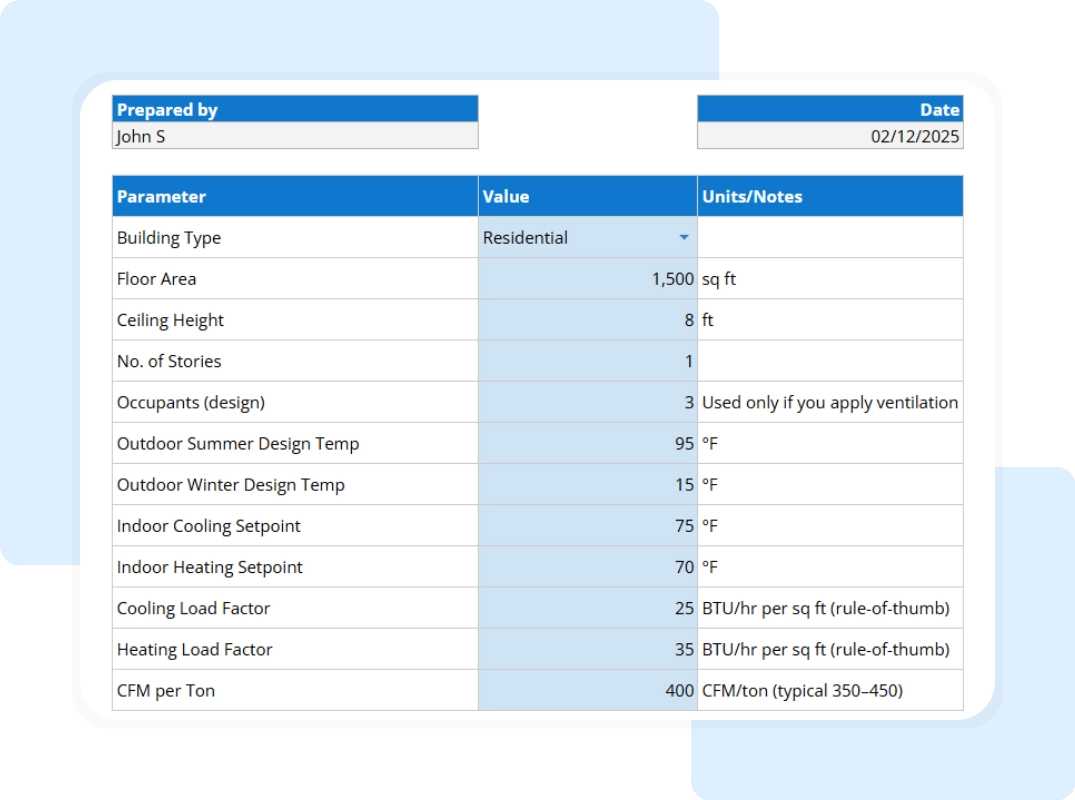
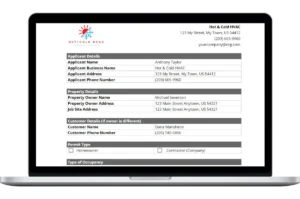
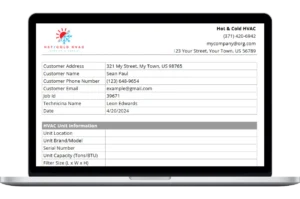
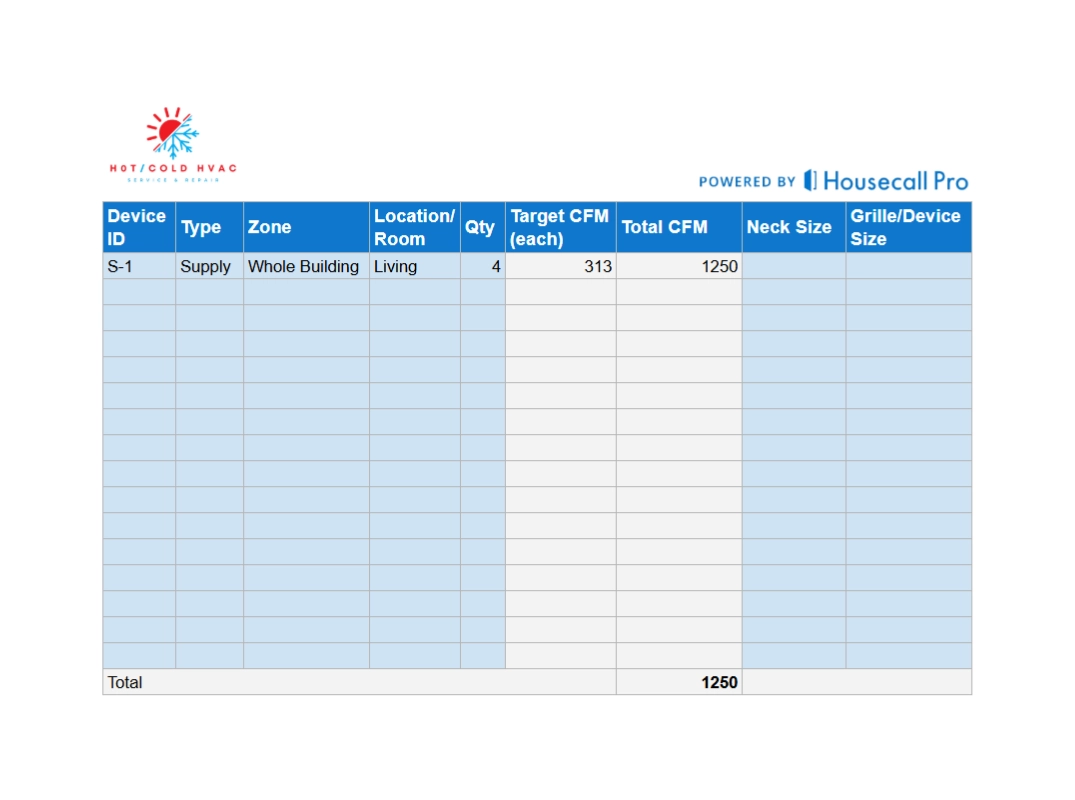
The accuracy of an HVAC layout depends on the data entered at the start. In the Design Inputs tab, professionals must evaluate the building envelope. Entering the correct Floor Area and Ceiling Height is the first step in determining the volume of air to be conditioned. Local climate data also plays a massive role.
By inputting Outdoor Summer and Winter Design Temps, the template applies the correct Load Factors. This ensures the system handles the year’s hottest and coldest days, preventing emergency calls during extreme weather. You must also include Occupants, which is essential for calculating ventilation requirements in modern, tight-envelope homes.
Calculating Zone-Specific Thermal Loads
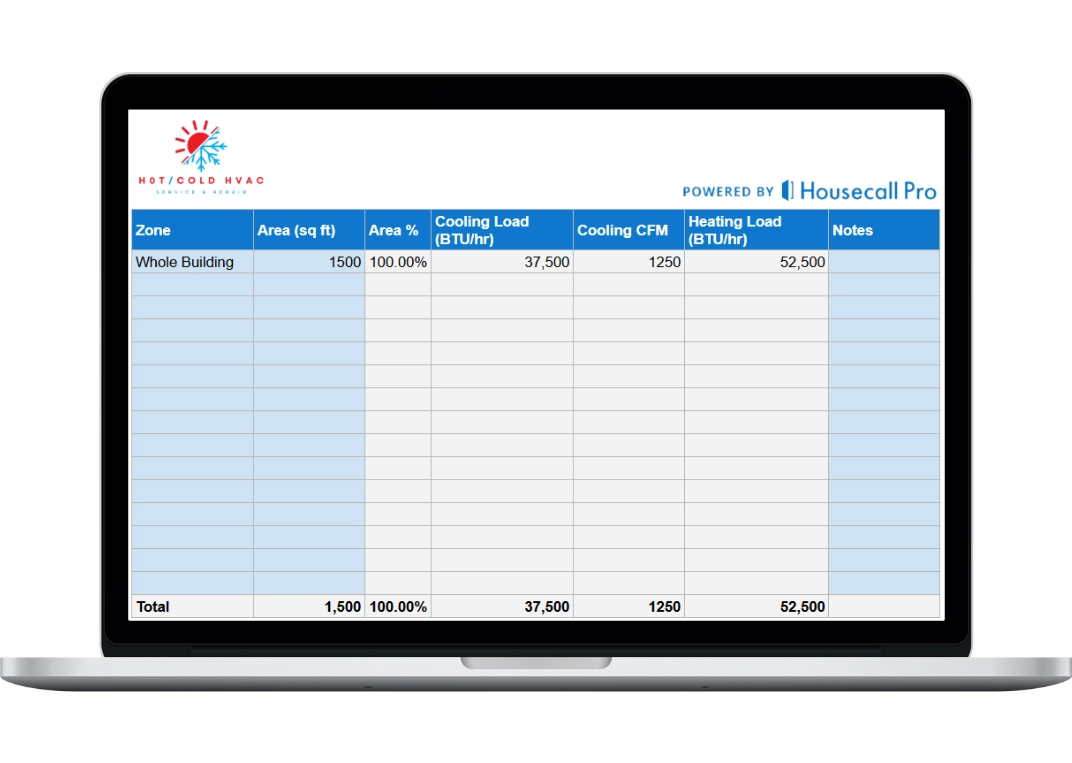
A common mistake in HVAC design is treating a building as a single thermal block. The Zone Loads tab lets you break the project down by room or area. By assigning an Area % to each zone, you can see the specific Cooling Load (BTU/hr) required for that space. This granularity is essential for multi-story homes or commercial buildings with varying sun exposure.
It ensures the Cooling CFM delivered to a south-facing room is sufficient while a shaded area isn’t overcooled. For instance, if the building requires 37,500 BTU/hr, this tab verifies that the sum of individual room loads matches your total. Balancing these loads prevents “hot spots” that lead to customer callbacks.
Technical Verification of Equipment Capacity
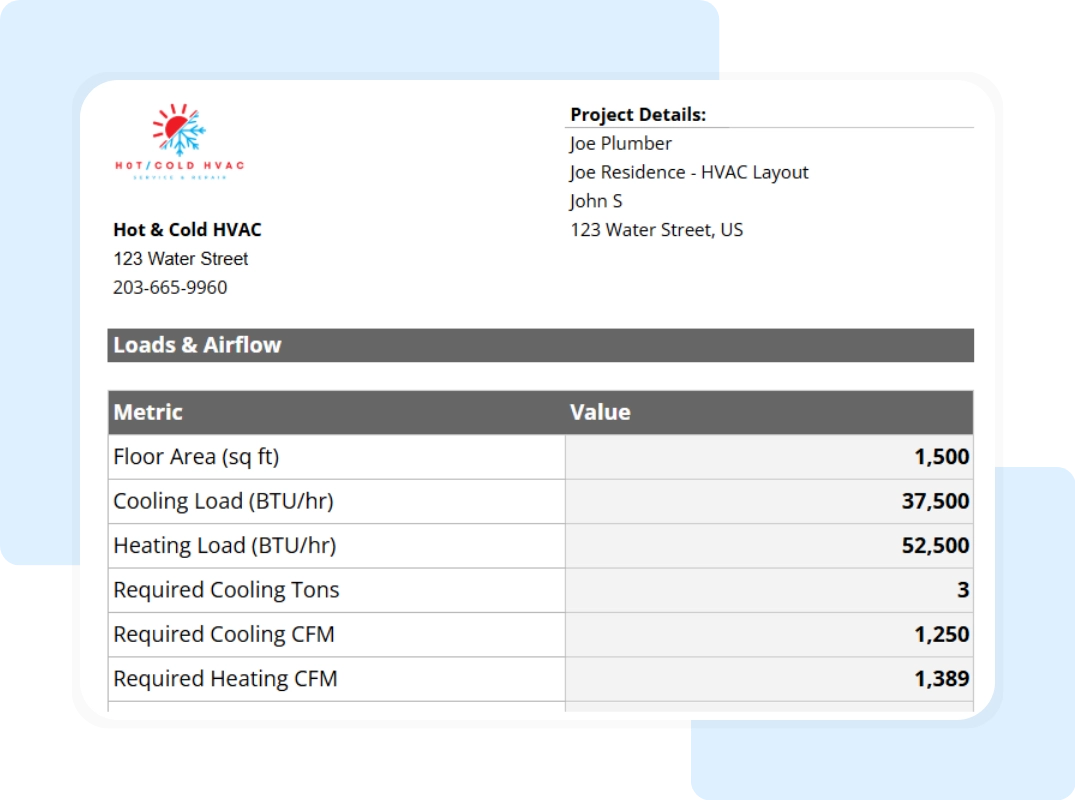
Once building needs are known, you must select equipment that performs under site-specific conditions. The HVAC Equipment tab allows you to input the Mfr and Model of your proposed unit. The template then performs an automated check against the Required Cooling Load (BTU/hr). The most critical metrics are the Cooling Margin and Airflow Margin. For example, if your building needs 37,500 BTU/hr but your unit only provides 36,000, the template shows a Cooling Margin of -1,500 and flags the Overall Status as “Review”. This verification is your final safeguard against installing a system that cannot handle the Total Design Airflow (CFM) or Rated ESP required by the building.