Why You Need an HVAC Warranty Certificate Template
A warranty certificate is a formal document that outlines the terms and coverage of a product or service warranty. In the HVAC industry, warranty certificates are essential for:
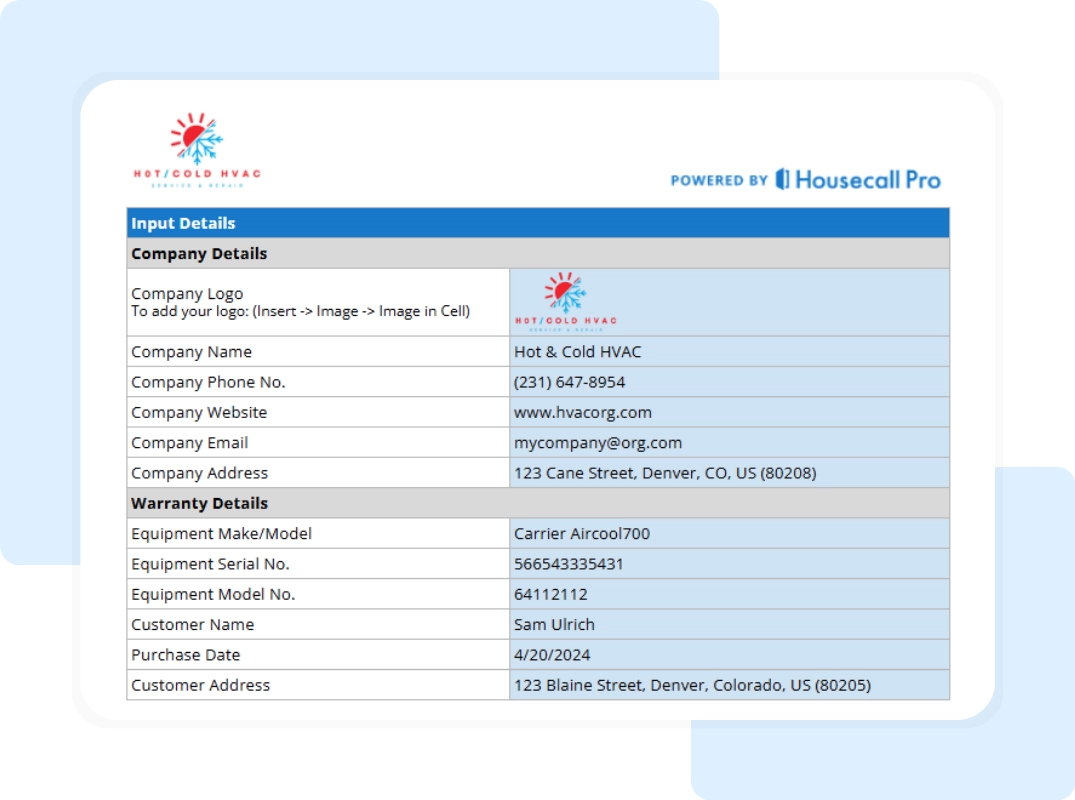
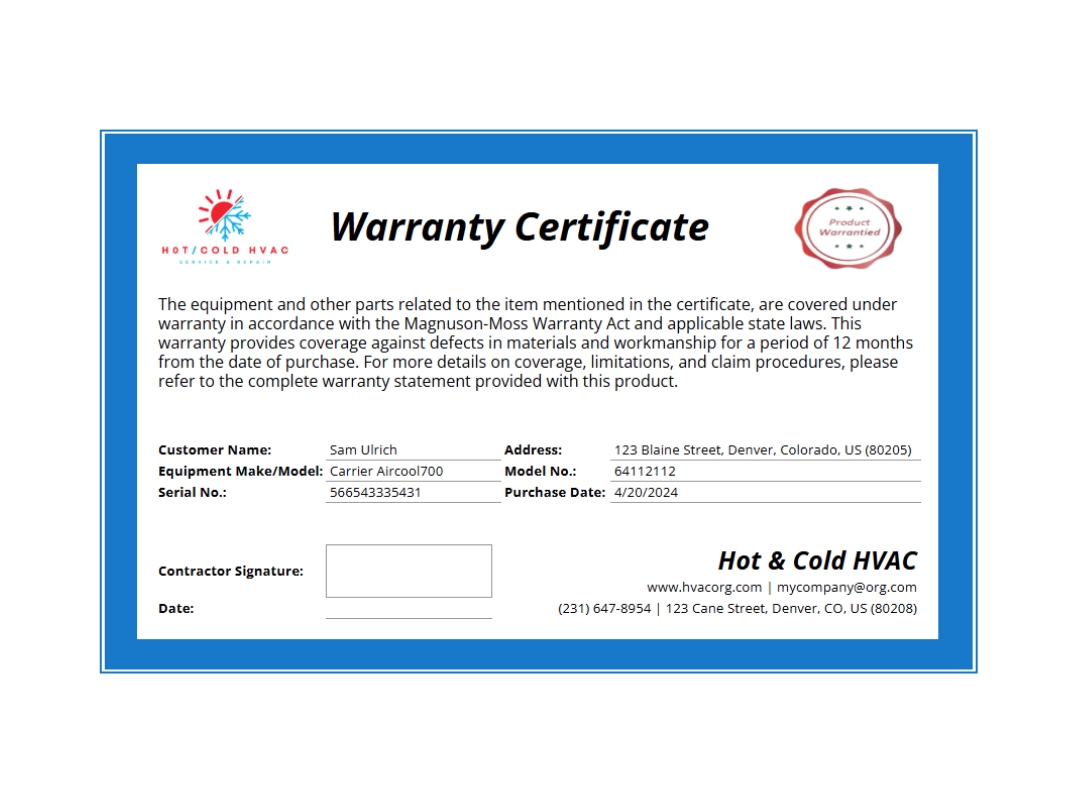
Communicating what is covered (parts and labor) Transparency is the bedrock of customer satisfaction. Without a clear certificate, homeowners are often left guessing which components are protected. By using the Company & Warranty Details tab to specify the Equipment Make/Model, you provide a definitive answer. This prevents “sticker shock” during future service calls and ensures the customer understands the exact value of the protection plan they’ve received.
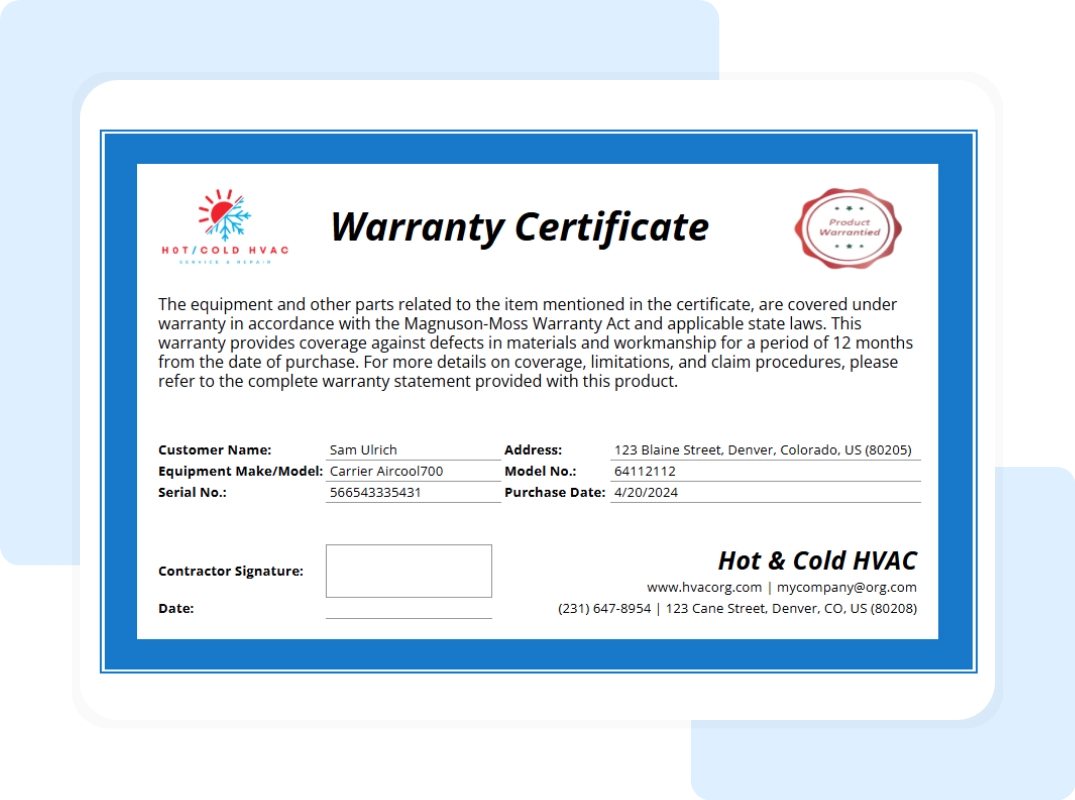
Defining coverage duration and start dates Vague timelines are a recipe for disputes. A professional certificate clearly states the Purchase Date, which acts as the official “day zero” for the warranty period. Having a dated document ensures there is no confusion three or four years down the road. This technical record-keeping is vital for managing long-term liability and ensuring your office team knows exactly when a client transitions from “under warranty” to “billable service.”
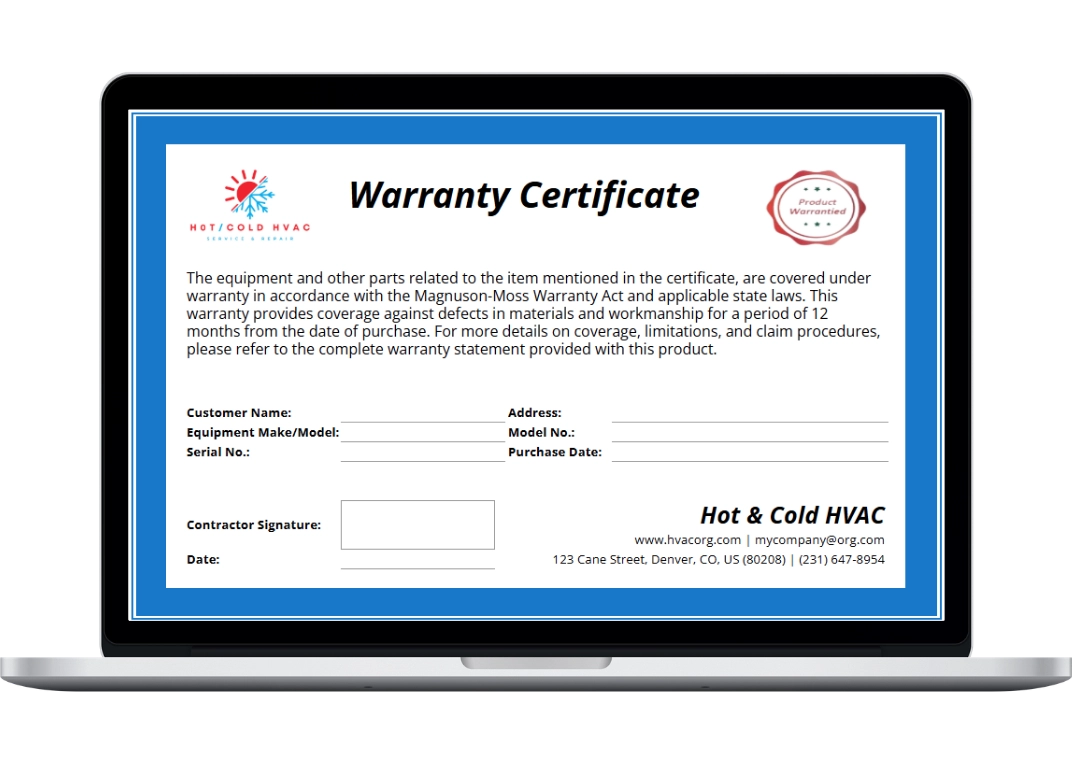
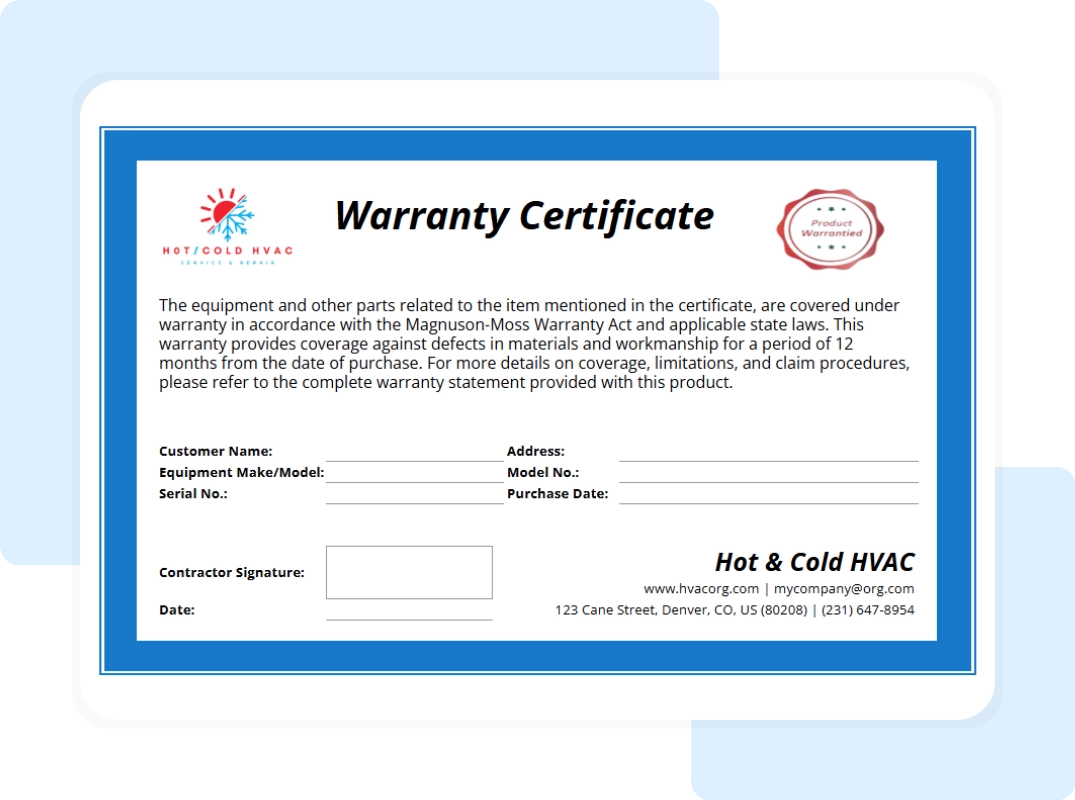
Limiting liability and clarifying exclusions Not every failure is a warranty issue. Damage from lightning or lack of maintenance should be clearly excluded. The Printable Certificate – Full Summary includes standard language referencing the Magnuson-Moss Warranty Act to set professional boundaries. By documenting the Equipment Serial No. and Model No., you protect your business against claims on equipment you didn’t install, ensuring you don’t provide “free” service outside the agreement scope.
Demonstrating professionalism and trust In a crowded market, small details make the difference. Handing a customer a branded document with your Company Logo signals that you are a high-authority business. It moves the relationship beyond a transaction and establishes you as a long-term partner. Issuing a clear certificate reassures homeowners they are protected and provides a reference for future repairs. Without standardized documentation, customers may misunderstand coverage, leading to disputes and reduced satisfaction.