How This Template Helps Your HVAC Business
Implementing a standardized HVAC contract template is a strategic move that pays dividends in efficiency, protection, and sales conversion.
Reduce Legal and Financial Risk
Including clear language on Permits and Inspections and Damage to Equipment’s protects your business from liability on complex job sites. If a guest misuses equipment or authorities require specific approvals, your contract defines responsibilities, preventing expensive litigation or uncompensated work.
Close Jobs Faster with Professionalism
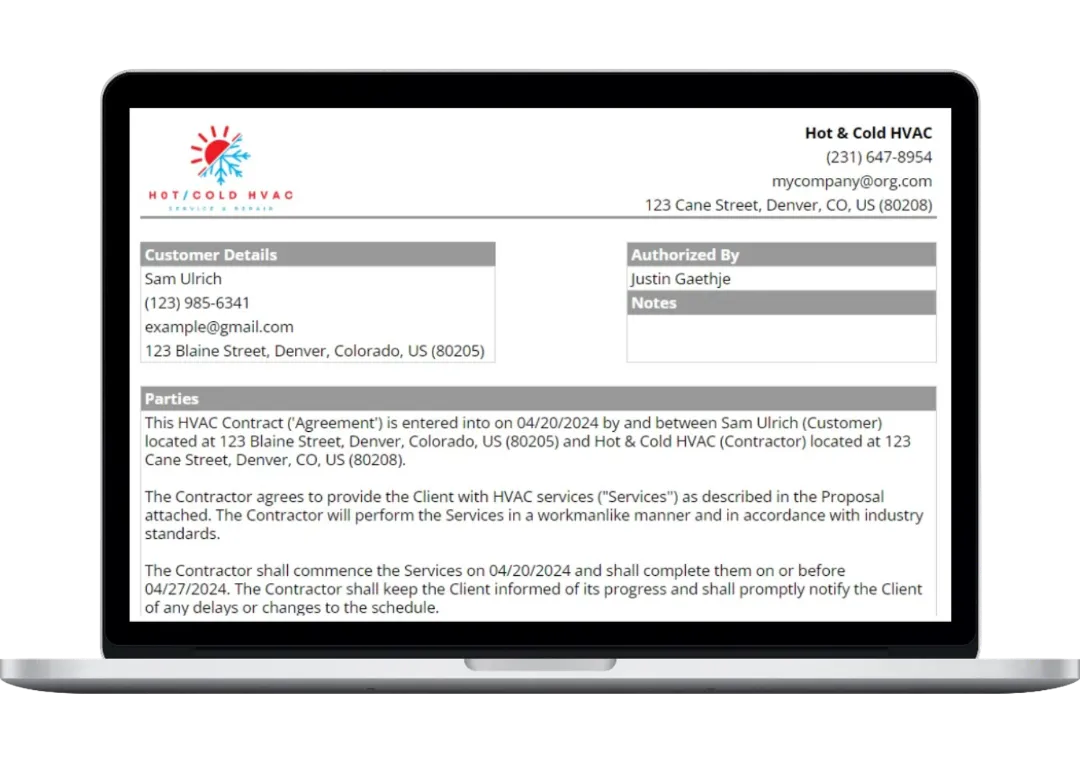
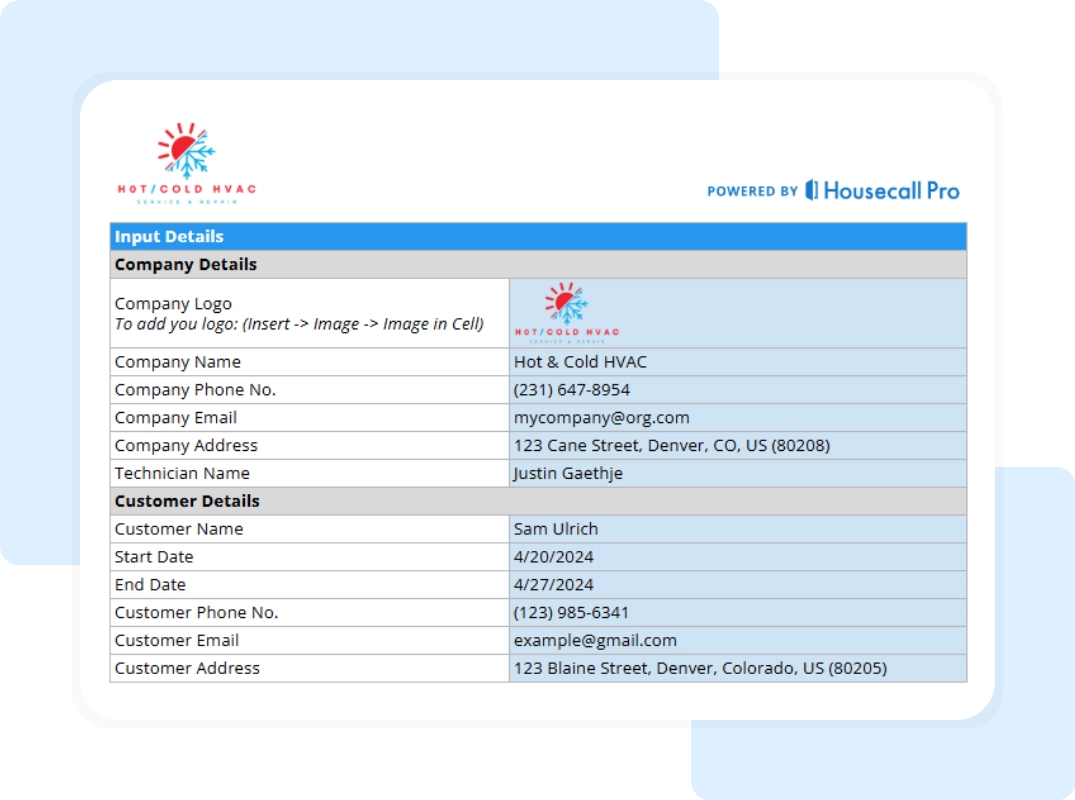
First impressions matter. Branded, itemized contracts with your Company Logo separate you from “trunk slammer” competitors. Generating a Printable Contract from audit data allows you to get signatures before leaving the driveway, closing jobs faster through high-tier professional documentation.
Improve Cash Flow and Collections
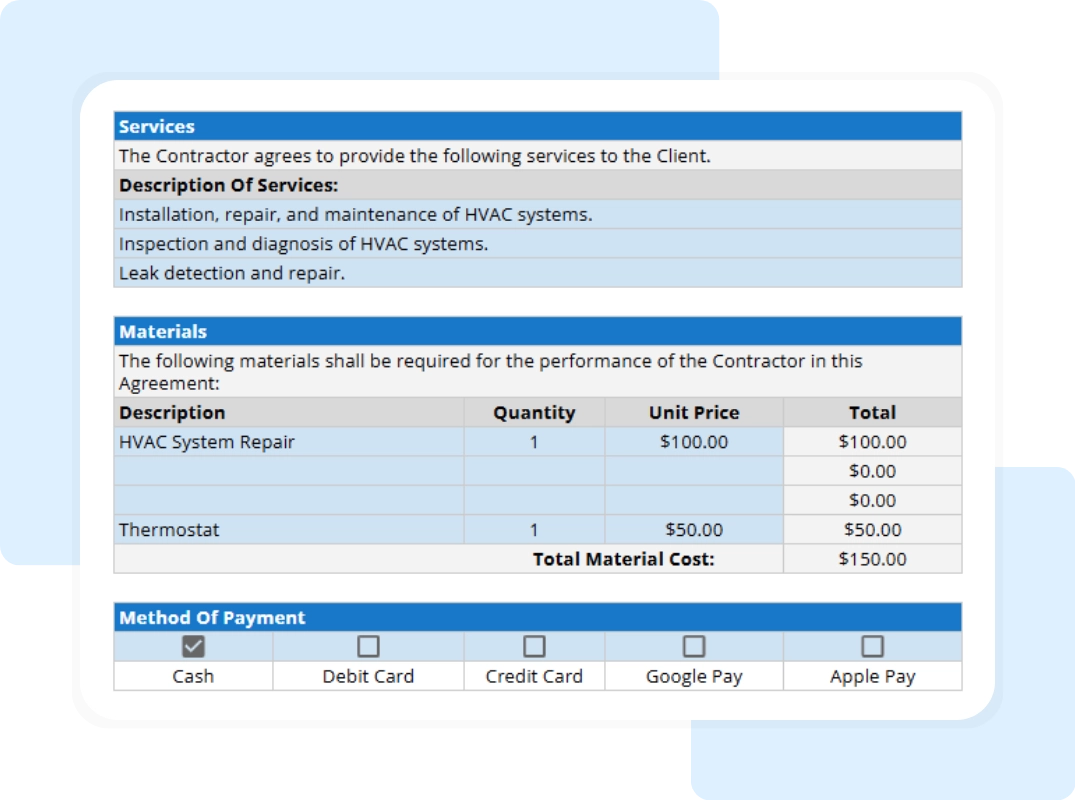
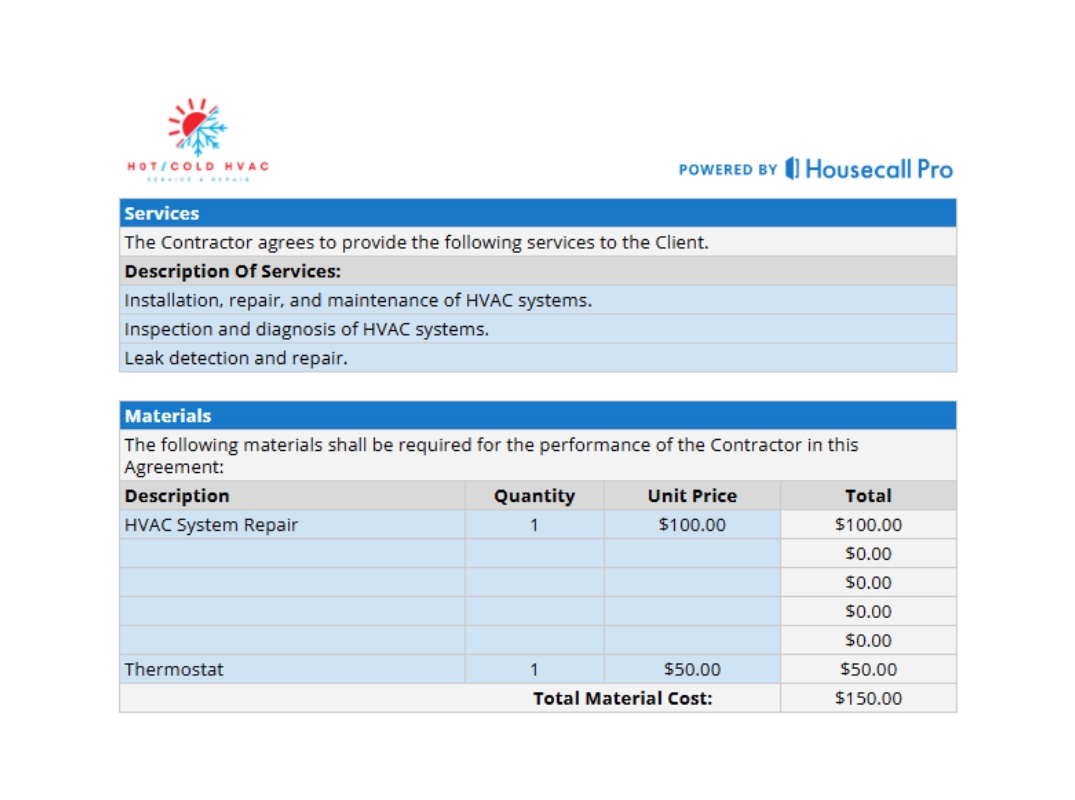
Payment disputes often stem from unclear terms. By specifying the Method Of Payment—like Cash, Debit, or digital wallets—and providing a Total Material Cost breakdown, you remove ambiguity. Customers pay on time when a signed agreement clearly defines their financial obligations.
Enhance Project Management
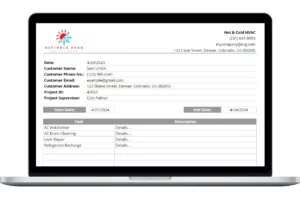
The Start Date and End Date fields help your office manage schedules effectively. This forces technicians to plan timelines and keep customers informed of progress, which is a top factor in positive service reviews. Professional planning ensures smoother project execution and client satisfaction.
What Is an HVAC Contract?
An HVAC contract is a formal agreement that outlines the relationship between a service provider and a customer. It provides a legal framework for delivering services, scheduling payments, and resolving disputes. Contracts may be used for single jobs, ongoing maintenance plans, seasonal agreements, or recurring service plans.
Use this template to document:
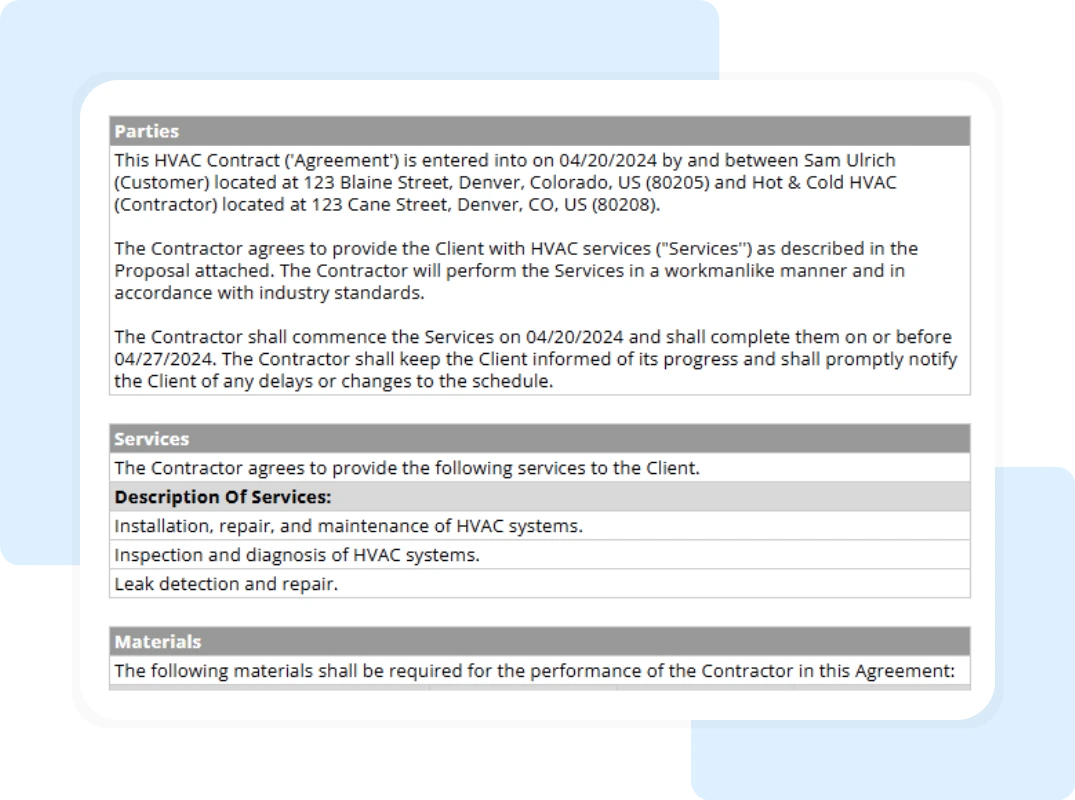
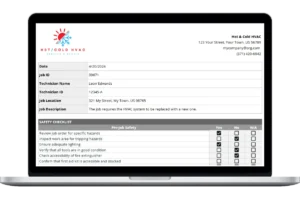
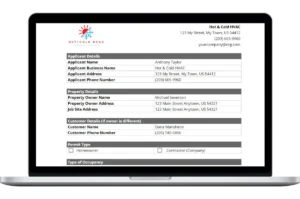
- Detailed Scope of Work: Use Description Of Services to specify “Installation, repair, and maintenance,” “Inspection and diagnosis,” or “Leak detection and repair”.
- Payment Obligations: Select the Method Of Payment (Cash, Debit, Credit Card, Google Pay, or Apple Pay) and calculate Total Material Cost to set clear financial expectations.