Want to win more jobs with less effort?
Grow your business and send quick quotes with our home service software.

Want to see your potential revenue?
See what businesses like yours earn with Housecall Pro in 1 - 2 minutes.

Garage door work looks simple until you actually open the system up. Suddenly, you’re staring at springs under tension, worn rollers, frayed cables, tracks that aren’t quite right, and an opener that’s acting possessed. What starts as a “quick repair” can easily turn into a longer, riskier job—and if your pricing isn’t built for that reality, your margin disappears fast.
The contractors who stay profitable don’t price by guessing or chasing the cheapest truck in town. They price based on what the job will actually cost them. That means labor time, real parts cost, what’s sitting on your truck, your overhead, and the risk of a callback or warranty issue.
This guide covers 2026 garage door repair and installation price ranges, then walks you through a repeatable, math-based way to estimate so you know exactly where your profit is coming from—not just what the final number looks like.
2026 garage door pricing overview
In 2026, garage door repair pricing typically ranges from $150–$600. Torsion spring replacements average $200–$600, opener replacements fall between $300–$800, and full garage door installation costs commonly range from $800–$2,500+ for residential projects. Commercial garage door installations often start around $2,000 and can exceed $7,000+, depending on size, hardware grade, and access requirements.
Garage door pricing is primarily driven by labor hours, door weight, hardware quality, spring cycle rating, and scheduling urgency—not just the cost of the door itself. A “simple” spring swap can become a higher-risk job once you factor in tension handling, safety checks, travel time, and warranty exposure.
Profitable contractors don’t guess at garage door repair pricing. They calculate it in three steps:
- Determine the true labor and overhead cost per job
- Add hardware and material costs
- Apply a target profit margin (commonly 25%–45%)
Garage door pricing formula
Labor + Materials + Overhead = Break-even
Break-even ÷ (1 − target margin) = Final price
Most garage door businesses standardize around one primary pricing model—flat-rate repair, parts-plus-labor, or project-based pricing—and apply structured add-ons for insulated doors, high-cycle springs, structural framing repairs, emergency calls, and commercial hardware upgrades.
Using a consistent pricing structure is what keeps two similar garage door jobs from producing two very different profits.
Key takeaways
Here’s what matters most when pricing garage door jobs in 2026:
Labor time drives margin: Technician hours matter more than hardware markup.
Inventory has carrying cost: Springs and openers on your truck aren’t free.
Emergency pricing must be preset: Never improvise.
Separate parts and labor clearly: Transparency reduces back-and-forth.
Minimum service fees protect profit: Diagnostics and travel always carry a cost.
Table of contents
- Average garage door repair and installation prices in 2026
- Residential vs. commercial garage door pricing
- Garage door pricing by job type
- Common pricing models for garage door services
- What impacts garage door pricing?
- How to set garage door prices
- Example garage door price calculations
- Advanced garage door pricing strategies to improve profit
- How to explain garage door pricing to customers
- How Housecall Pro helps you price garage door jobs
Average garage door repair and installation prices in 2026
Garage door work typically falls into two categories: repair and installation. Repairs are usually labor-driven with some parts involved, while installations come with higher material costs and a bit more scheduling risk.
The table below shows common garage door jobs and their average 2026 prices:
| Service Type | Typical Price Range | What Influences Cost |
| Basic service call | $75–$150 | Travel time, diagnostics |
| Cable replacement | $150–$350 | Tension system, access |
| Torsion spring replacement | $200–$500 | Spring type, door weight |
| Opener replacement | $300–$800 | Motor type, smart features |
| Single-car door install | $800–$1,800 | Material, insulation |
| Double-car door install | $1,200–$2,500+ | Size, hardware grade |
Lower-end pricing generally reflects standard steel doors and basic openers. Higher pricing applies to insulated doors, wood overlays, smart integrations, structural reframing, or commercial-grade hardware.
*All price ranges reflect aggregated 2026 industry data from Angi, HomeAdvisor, and Thumbtack.
Residential vs. commercial garage door pricing
Residential and commercial garage door jobs work differently and your pricing should reflect that.
Residential jobs are usually service-driven and time-sensitive. Homeowners care about safety, access to their vehicles, and quick turnaround. Pricing is typically built around flat-rate repairs or clearly defined installation packages.
Commercial projects are more complex. Doors are larger and heavier, downtime directly impacts revenue, and jobs often require lift equipment, high-cycle hardware, stricter insurance coverage, and tighter scheduling windows. These added requirements increase labor, material, and overhead costs, and your pricing should reflect that.
Residential garage door prices
Most residential garage door repairs are structured as flat-rate jobs, while full replacements are structured as complete projects with parts and labor separated. The table below shows typical 2026 prices for residential garage door jobs:
| Job | Typical Range |
| Cable replacement | $150–$350 |
| Torsion spring replacement | $200–$600 |
| Opener replacement | $300–$800 |
| New single door install | $800–$1,800 |
Lower-end pricing typically reflects standard steel doors and basic hardware. Higher pricing applies when doors are insulated, oversized, custom-finished, or when structural or electrical adjustments are required.
Homeowners expect clear, itemized pricing. Separating parts, labor, and upgrades reduces objections and speeds up approvals.
Commercial garage door prices
Commercial jobs are often quoted per project due to variations in door size, hardware grade, safety requirements, and scheduling constraints.
The table below shows typical 2026 prices for commercial garage door jobs:
| Job | Typical Range |
| Rolling steel door repair | $300–$900 |
| Commercial opener install | $600–$1,500 |
| Sectional door replacement | $2,000–$7,000+ |
| Dock-leveler integration | Bid-based |
Lower-end pricing usually reflects straightforward repairs with easy access. Pricing trends higher when projects involve lift equipment, reinforced hardware, electrical upgrades, dock integration, or phased scheduling around business operations.
Because commercial systems vary widely, custom estimates are common for large facilities, high-cycle doors, or integrated loading dock systems.
Garage door pricing by job type
Most garage door work falls into predictable repair categories. Turning those into standardized price ranges makes quoting faster and keeps technicians from improvising numbers in the field.
Even small repairs should be structured to cover travel, diagnosis, and safety handling—not just the part being replaced.
Small jobs
Small repair jobs require technical skill but limited material costs.
The table below shows typical 2026 pricing for small garage door repairs:
| Job | Price Range | Factors Affecting Cost |
| Roller replacement | $100–$250 | Part type, labor time |
| Safety sensor repair | $100–$250 | Electrical diagnostics |
| Track alignment | $125–$300 | Adjustment time |
| Cable repair | $150–$350 | Tension reset |
Don’t underestimate time; a 20-minute repair can easily turn into 45 minutes once you factor in travel, setup, safety checks, and customer questions. Without minimum charges, short calls quietly eat into your margin.
Minimum service fees typically range from $100–$200, depending on your market. That base charge ensures dispatch, diagnostics, and safety setup are covered before parts and additional labor are applied.
If your tech leaves the shop, the job needs to produce revenue—even if the repair is simple.
Large jobs
Large garage door projects involve more than swapping hardware. You’re coordinating material delivery, lifting and securing heavy panels, installing track systems, dialing in spring tension, and sometimes adjusting framing or ceiling clearance. The added materials, labor, and complexity justify higher pricing.
The table below shows typical 2026 pricing for large garage door jobs:
| Job | Price Range | Factors Affecting Cost |
| High-lift conversion | $500–$1,500 | Structural modifications |
| Double-insulated door | $1,200–$3,500 | Door quality |
| Custom wood door | $2,500–$6,000+ | Fabrication |
Lower pricing usually reflects standard insulated steel doors with straightforward installs. Costs increase with custom fabrication, heavier materials, reinforced tracks, upgraded spring cycles, or framing adjustments.
Because bigger jobs come with more moving parts, small estimating mistakes get expensive fast. A few extra install hours or an unexpected delivery delay can wipe out the profit you thought you had. That’s why you should compare estimated hours to actual job time—so you can fix pricing gaps before they turn into ongoing margin leaks as your volume grows.
Emergency services
Emergency garage door calls usually mean a door won’t open, a spring has snapped, or access to the property is blocked after hours. Contractors often charge more due to the urgency and schedule disruption required to respond quickly..
The table below shows typical pricing for emergency garage door repairs:
| Service Type | Price Range |
| Emergency service call | $150–$300 |
| After-hours labor | 1.5–2x standard rate |

Common pricing models for garage door services
Most garage door businesses operate more efficiently when they standardize around one primary pricing structure and apply consistent adjustments for job conditions.
The goal isn’t complexity; it’s repeatability. When your team knows exactly how pricing is built, quotes go out faster and margins stay predictable.
Flat-rate pricing
Flat-rate pricing means charging one fixed price for a clearly defined repair. This model works well for common service calls where the time and materials needed is predictable.
Best for:
- Spring replacement
- Cable repair
- Roller service
Why it works:
- Speeds up quoting
- Keeps pricing consistent for technicians
- Limits back-and-forth with customers
Watchouts:
- Hidden damage should trigger add-ons
- Misdiagnosing the issue can wipe out your margin
- The scope must be clearly defined in writing
If the repair changes mid-job, your pricing structure needs a clear path for adjusting.
Parts-plus-labor pricing
Parts-plus-labor pricing separates the cost of hardware from technician time. It works well when parts fluctuate in price or when the scope varies from job to job.
Best for:
- Opener replacement
- Full installations
- Commercial hardware upgrades
Why it works:
- Keeps labor pricing stable even when parts costs change
- Protects margin when supplier pricing fluctuates
- Makes larger jobs feel more transparent to customers
Watchouts:
- Markup percentages must stay consistent
- Labor rates should be documented clearly
- Parts pricing needs regular updates
Project-based pricing
Project-based pricing bundles labor, hardware, disposal, coordination, and installation into one structured total.
Best for:
- Full door replacement
- Commercial installations
Why it works:
- Captures labor, hardware, disposal, and coordination in one number
- Simplifies customer approvals
- Reduces negotiation
Watchouts:
- Underestimating install time quickly reduces profit
- Structural modifications, delivery fees, and disposal costs must be included
What impacts garage door pricing?
Even if you standardize around one pricing model, no two garage door jobs are identical. Certain conditions should always adjust your estimate because they change labor time, risk level, or hardware requirements.
Factors that impact garage door pricing include:
- Door size and weight: Larger doors require more labor and sometimes additional technicians.
- Spring type: Torsion systems require more precision and safety planning than extension systems, which affects labor time.
- Insulation level: Insulated doors are heavier and often require upgraded hardware and higher-cycle springs.
- Opener horsepower and features: Larger motors or smart systems add setup and programming time.
- Electrical upgrades: New outlets or wiring increase scope.
- Framing condition: Damaged jambs or headers must be repaired before installation.
- Access constraints: Tight garages, low ceilings, or limited driveway access slow installation.
- Emergency timing: After-hours work justifies premium rates.
- Local labor costs: Regional wage differences, insurance premiums, and fuel costs affect baseline pricing.
Applying these adjustments consistently keeps your pricing defensible and your margins intact.
How to set garage door prices
Garage door pricing works best when it’s structured and math-based, not based on gut feel or whatever the guy across town is charging.
Below is a repeatable framework you can use to price garage door repairs and installs profitably.
Step 1: Calculate baseline costs
Start by understanding what it actually costs to complete a job safely and professionally. That means accounting for technician time, truck costs, inventory, and overhead—not just the part being replaced.
Factor in:
Labor: Technician wages, payroll taxes, workers’ comp, and benefits
Overhead: Vehicles, fuel, insurance, tools, marketing, office costs
Truck inventory: Springs, rollers, cables, and openers are carried in stock
Nonbillable time: Travel, diagnostics, safety setup, and cleanup
Use these formulas:
Labor cost per job
(Hourly wage × labor burden) × total labor hours
Overhead cost per job
Total monthly overhead ÷ monthly billable hours × job hours
Break-even job cost
Labor cost + overhead cost + parts cost
This break-even point is the minimum you must charge to turn a profit.
Step 2: Research local garage door rates
Once you understand your costs, look at local market pricing. This isn’t about copying competitors—it’s about understanding what homeowners and commercial clients expect to pay in your area.
Market awareness helps you:
- Explain the differences from low-cost competitors
- Position higher-quality hardware
- Justify emergency premiums
Your internal costs determine your minimum. Local expectations help shape your positioning.
Step 3: Choose your primary pricing model
Most garage door businesses run more smoothly when they standardize around a single pricing structure and then layer adjustments on top.
Common models include:
- Flat-rate pricing for predictable repairs like spring or cable replacement
- Parts-plus-labor pricing for opener installs or hardware upgrades
- Project-based pricing for full door replacements or commercial installs
Consistency speeds up quoting and prevents tech-to-tech pricing differences.
Step 4: Add a profit margin
Your pricing should leave room not only to complete the job, but to strengthen the business behind it. Profit is what pays for new trucks, better tools, inventory upgrades, marketing, hiring, and building cash reserves for slower seasons. Without it, you’re just covering expenses and staying busy.
Many garage door businesses target profit margins between 20% and 40%, depending on market competition and risk level.
Use this formula to calculate your target price:
Break-even cost ÷ (1 − target margin)
Example:
$800 ÷ 0.70 = $1,143
Step 5: Set minimum charges and diagnostic fees
Even small repairs require travel, inspection, and safety checks. Without minimums, short calls quietly drain margin.
To determine your minimum:
- Calculate the cost of dispatching a technician
- Include diagnostic and safety inspection time
- Apply profit margin
Many garage door businesses set service minimums between $100 and $200, depending on market conditions. Emergency jobs should have higher base fees.
Step 6: Use add-ons to adjust for job complexity
Not every garage door job fits neatly into a base repair rate. Instead of raising your overall pricing, create predefined adjustments for conditions that increase time or hardware cost.
Examples include:
- High-cycle spring upgrades
- Oversized or insulated doors
- Structural framing repair
- Smart opener integrations
- High-lift or low-headroom conversions
Estimate the additional labor, convert it to a flat fee, and apply it consistently. Always show add-ons as separate line items.
Step 7: Use pricing tools and software
When a repair changes mid-job or a customer asks about upgrading to high-cycle springs, your tech shouldn’t be recalculating numbers on the fly. Pricing software makes adjustments automatic, so upgrades, add-ons, and emergency premiums are applied correctly every time.
With Housecall Pro, you can set up a digital Price Book that reflects how you actually price spring swaps, opener tiers, and full installs. Techs can build clear, itemized estimates using Estimates and track install hours against revenue in Reporting.
When your pricing lives in a system instead of in someone’s head, consistency is a lot easier to maintain—especially as you scale.
Step 8: Review and update pricing regularly
Costs change. Your pricing needs to keep up.
- Review pricing at least annually
- Compare estimated labor hours to actual job time.
- Adjust minimum fees if small jobs begin underperforming.
Example garage door price calculations
Pricing makes the most sense when you can see the math working on real jobs. Below are a few example garage door estimates built from labor time, parts cost, overhead, and profit margin. Use them as templates you can plug your own rates into (and adjust for door size, travel time, and warranty coverage).
Example 1: Residential torsion spring replacement
Scope: Single-car garage, standard torsion spring replacement
Pricing model: Flat-rate repair
Estimated baseline cost: $372
Target margin: 30%
Add-ons: None
Calculation:
$372 ÷ (1 − 0.30) = $372 ÷ 0.70 = $531
Total price: $531
This is a straightforward repair with predictable labor time.
Example 2: Double-insulated door installation
Scope: Two-car garage, insulated steel door
Pricing model: Project-based
Estimated baseline cost: $2,300
Target margin: 30%
Add-ons: None
Calculation:
$2,300 ÷ (1 − 0.30) = $2,300 ÷ 0.70 = $3,286
Total price: $3,286
Using a project-based price captures everything in one number. Because the materials make up a big portion of the job, even small estimating mistakes can cut into your profit. That’s why holding your full 30% margin matters on installs like this.
Example 3: Emergency opener replacement
Scope: Same-day opener replacement after system failure
Pricing model: Parts-plus-labor + emergency premium
Estimated baseline cost: $450
Target margin: 35%
Add-on: Emergency scheduling
Calculation:
$450 ÷ (1 − 0.35) = $450 ÷ 0.65 = $692
Applying emergency scheduling premium (1.1–1.2x adjustment):
$692 × 1.10–1.15 = $760
Total price: $760
The higher margin reflects scheduling disruption and urgency.
Advanced garage door pricing strategies to improve profit
Once your pricing foundation is in place, the next step is fine-tuning it. A few smart adjustments can lift your average ticket, protect your margins, and help you avoid low-value jobs that eat up your schedule.
- Offer tiered packages: Bundle installs into Basic, Standard, and Premium options with defined hardware quality, insulation, and opener features. It makes the decision easier and cuts down on back-and-forth negotiation.
- Lead with premium options price anchors: Show insulated doors or smart opener packages first. When customers see the high-end choice upfront, mid-tier options feel more reasonable — and your average ticket naturally goes up.
- Track effective hourly revenue: Divide total job revenue by actual technician hours worked. This helps you spot which jobs consistently miss your target hourly rate.
- Raise minimums strategically: If small service calls are filling your calendar without generating real profit, raise your minimum service fee to protect your time.
- Standardize hardware markups: Set consistent markup ranges for springs, openers, and accessories. This keeps margins steady when supplier prices change and prevents inconsistent quotes between techs.
How to explain garage door pricing to customers
To a homeowner, a small repair might seem like a quick fix—so the price can catch them off guard. Clear, confident communication makes all the difference. When customers understand what’s involved, they’re much more comfortable approving the work.
- Clarify what’s included: Explain that the price covers labor, hardware, tension adjustments, safety testing, and full system balancing—not just the visible repair.
- Set expectations early: Let customers know pricing starts with a proper diagnosis and depends on factors like door size, spring type, hardware quality, and overall system condition.
- Separate parts from labor: Itemized estimates build trust. Itemized estimates build trust. When customers can see hardware and labor separately, the total is easier to understand.
- Explain safety requirements: High-tension springs and heavy doors require trained technicians, proper tools, and insurance coverage. That expertise is built into the price.
- Put everything in writing: Provide clear, line-item estimates before work begins so there are no surprises once the job is done.
How Housecall Pro helps you price garage door jobs
As your garage door business grows, keeping pricing consistent gets tougher. One tech quotes one way, another does it differently. Parts costs change. Emergency calls get priced on the fly. Over time, those small gaps add up — and your margins take the hit.
A structured system keeps that from happening. It protects your profit while making estimates faster and more professional.
With Housecall Pro’s garage door software, you can:
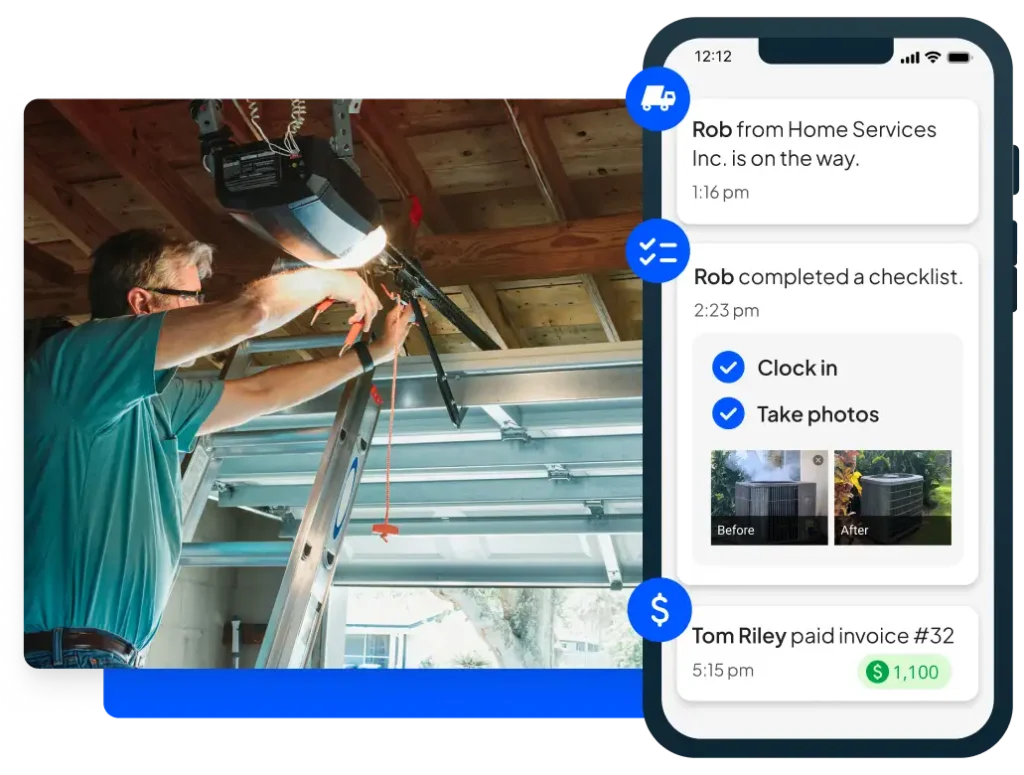
- Create digital price books: Standardize repair and installation pricing so every technician quotes from the same structure.
- Automate parts markup: Keep hardware pricing consistent, even when supplier costs shift.
- Apply complexity adjustments: Apply emergency fees, oversized door adjustments, high-lift conversions, or premium upgrades with a few taps.
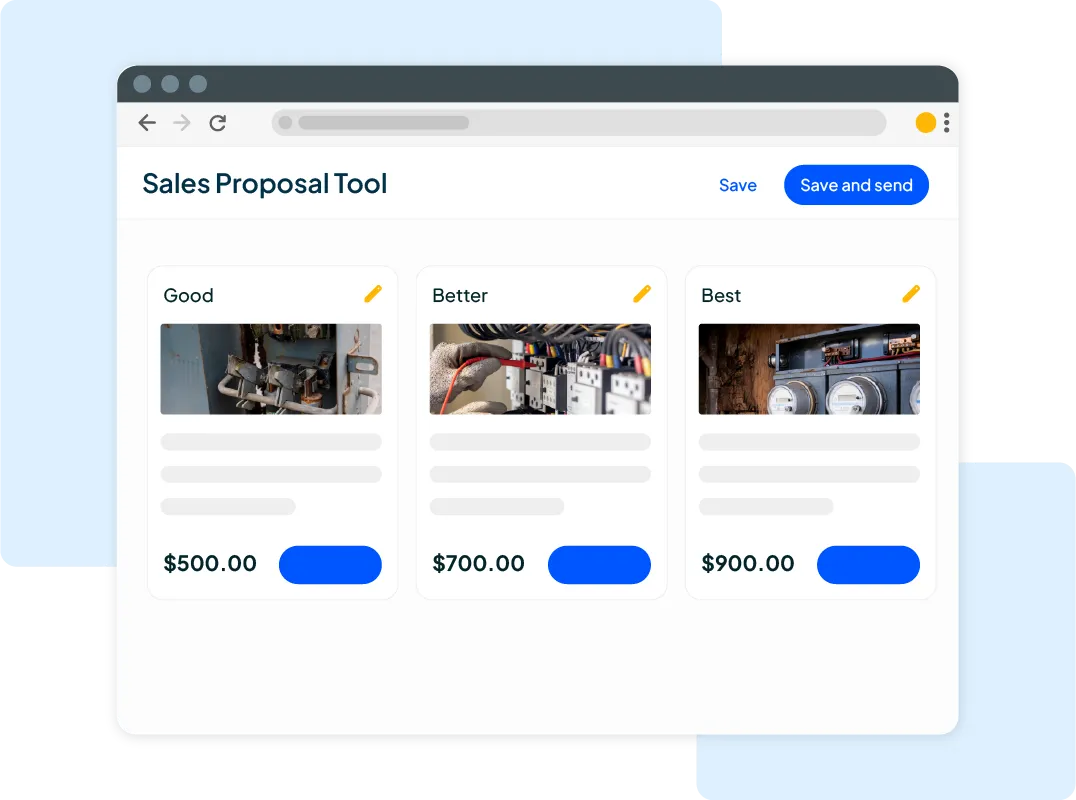
- Generate professional estimates: Build clean, itemized quotes without manual math or guesswork.
- Track profitability: Compare estimated labor hours to actual job performance so you can fine-tune pricing over time.
Structured pricing protects your margins. Systemized quoting protects your growth.
Start a free Housecall Pro trial and see how standardized pricing can simplify your operations and support long-term profitability.
Garage door pricing FAQ
-
How much should I charge for garage door spring replacement in 2026?
-
Most contractors charge $200–$600 for garage door spring replacement in 2026. Pricing depends on spring type (torsion versus extension), door weight, cycle rating, and labor complexity. Heavier insulated doors and high-cycle torsion systems typically justify higher pricing due to added safety risk and installation precision.
-
Should I charge a service call fee for garage door repairs?
-
Yes. Most garage door businesses charge a $100–$200 service call fee to cover travel, diagnostics, and safety inspection time. A service fee protects your margin on short repairs and ensures small jobs are still profitable.
-
What profit margin should a garage door business target?
-
Most garage door companies aim for 25%–45% profit margins, depending on competition and risk exposure. Because garage door work involves liability, warranty callbacks, and fluctuating hardware costs, your pricing should account for more than just labor.
-
Do emergency garage door repairs cost more?
-
Yes. Emergency or after-hours garage door repairs typically increase labor rates by 1.5–2× standard pricing. Higher rates reflect overtime pay, schedule disruption, and urgency. Emergency premiums should be predefined in your pricing system, not decided on-site.
-
How often should garage door pricing be reviewed?
-
Review garage door pricing at least once per year, or sooner if parts costs, fuel, insurance, or wages increase. Regular reviews keep your pricing aligned with actual operating costs and protect long-term profitability.